NEW: AutoMynd Unveils Patient-Centered AI EMR, Automating Episodes From Referral to Reimbursement Read more →
.svg)
.svg)

Ask a home health nurse what they’d change about the job and you won’t hear about the driving or the patients. You’ll hear about the charting. Specifically, the charting that happens at the kitchen table at 9pm, hours after the last visit, reconstructed from memory and coffee.
The industry has a cute name for it, pajama time, which makes it sound harmless. It isn’t. It’s unpaid cognitive overtime, it’s the top complaint in exit interviews, and it produces worse documentation than bedside charting because memory is a lossy format.
Not because they’re slow. Because the visit is full. A start of care runs an hour of assessment, education, and care, and the OASIS alone is dozens of items. Between visits there’s a drive. The documentation debt compounds through the day and comes due after dinner. Any tool that just moves the same typing to a different screen hasn’t solved this.
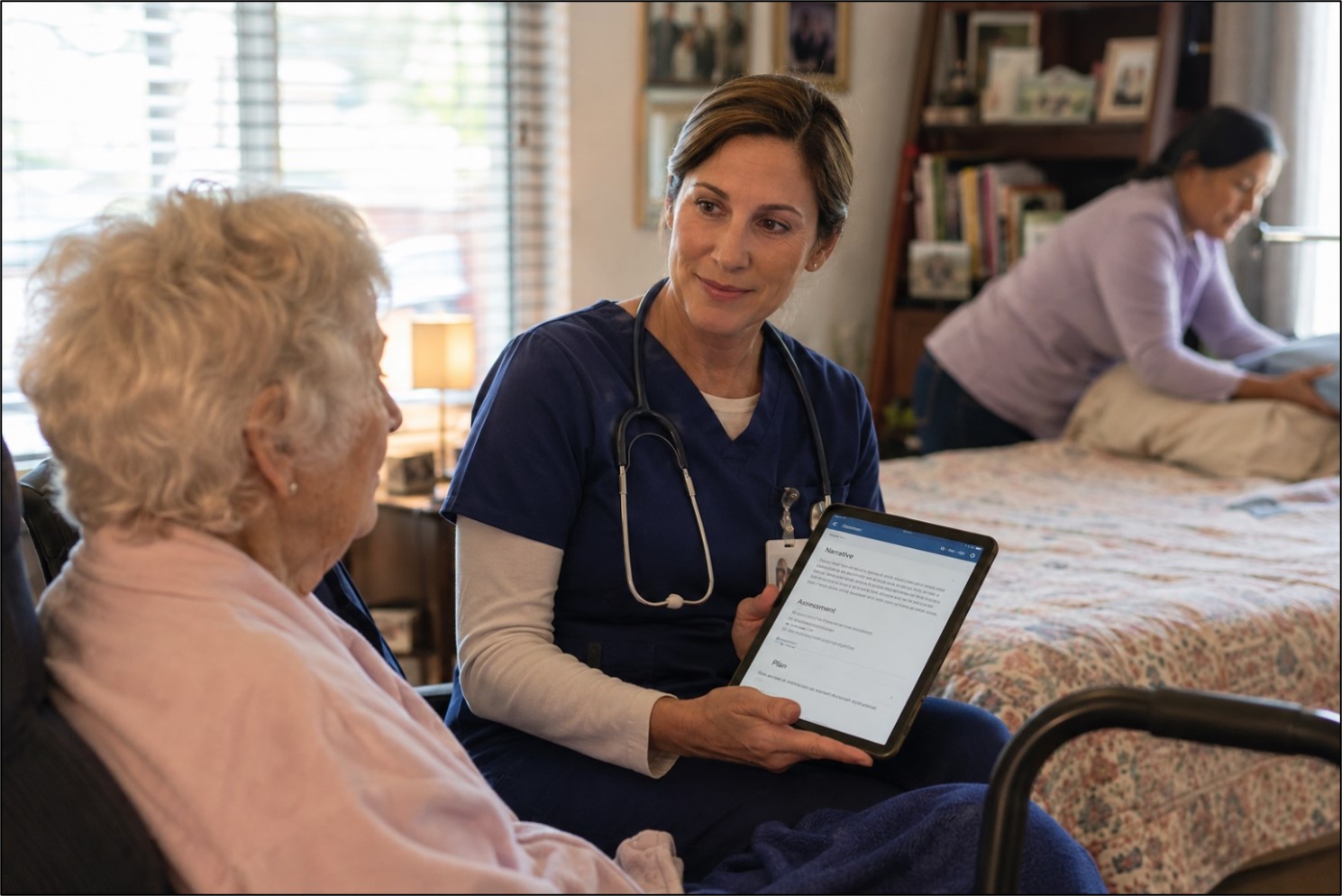
The visit itself contains almost everything the chart needs. The nurse asks about the medication change, watches the transfer, hears the caregiver’s concern. Ambient AI captures that encounter and drafts the documentation from it: the narrative, the assessment items it touched, the flags worth a second look. The nurse reviews and confirms at the point of care, looking at the patient instead of a screen, and leaves the driveway with the chart done.
That’s what we built Copilot to do, and the design principle matters as much as the technology: the AI drafts, the nurse decides. Every clinical judgment stays human. Confidence and evidence stay visible. In healthcare, human-in-the-loop isn’t a disclaimer, it’s the architecture.
Documentation drafted from the encounter is more complete and more defensible than documentation reconstructed hours later. It catches what memory drops. It supports the OASIS scores with narrative evidence. And under 2026’s enforcement climate, with expanded pre-claim review and site visits, defensibility is a first-order feature. The same tool that gives your nurses their evenings back strengthens the chart an auditor reads.

Replacing a home health RN costs real money and months of capacity. If documentation burden is a leading driver of turnover, and every DON I talk to says it is, then AI nursing documentation is a retention investment that happens to also improve compliance. Few line items in an agency budget do both.
Your nurses became nurses to take care of people, not to type. The technology finally exists to honor that. This is our contribution to the clinicians who carry this industry. See it at automynd.com.
One AI-native EMR for intake, documentation, QA, coding and billing, built for home health agencies.
Book a demo.svg)