NEW: AutoMynd Unveils Patient-Centered AI EMR, Automating Episodes From Referral to Reimbursement Read more →
.svg)
.svg)

Most definitions of a home health EMR are written by people who have never watched a nurse chart in a driveway at 8pm.
The textbook answer says an EMR is an electronic medical record, a digital version of the paper chart. That definition was fine twenty years ago. For home health and hospice, it misses almost everything that matters.
Here's the honest version. A home health EMR is the operating system of your agency. It decides how fast a referral becomes an admission, whether your OASIS supports the payment you're claiming, whether your clinicians finish their documentation at the bedside or at their kitchen table, and whether a CMS auditor's request is a ten-minute export or a three-week fire drill. Get it right and the agency runs. Get it wrong and every workflow in the building routes around it.
Home health is not a smaller version of a hospital. It runs on different rules, and the software has to be built for them.
The care setting is the patient's home. There's no workstation down the hall, no reliable Wi-Fi, no second nurse to grab. Documentation happens in the field, on a tablet or phone, sometimes offline, between a morning visit in one county and an afternoon visit in another.
The assessments are regulatory instruments. OASIS-E2 for home health. HOPE for hospice. These aren't progress notes. They're structured assessments that directly determine payment and publicly reported quality scores. A single mis-scored functional item changes reimbursement and star ratings at the same time.
The payment model is episodic. PDGM pays home health in 30-day periods driven by clinical groupings, functional levels, and comorbidity adjustments pulled from coding and OASIS. Hospice has its own per-diem structure with its own compliance triggers. Fee-for-service EMRs built for clinics simply don't model any of this.
And the scrutiny is intensifying. CMS froze new home health and hospice enrollments nationwide in May 2026 and paired it with expanded pre-claim review, site visits, and a public hospice scoring system. The chart is no longer just a clinical record. It's your evidence.
So, when someone asks what a home health EMR is, the real question underneath is: what does it have to do?

Six jobs. If a system can't do all six, you'll end up buying other tools to fill the gaps, and every gap between tools is where revenue and compliance leak out.
Intake and referral management: Referrals still arrive as faxes and portal PDFs. The EMR has to turn those documents into a patient profile, verify eligibility and authorization at the point of entry, and get to admission fast. Referral response time decides which agency gets the patient. This is where we built IntakeIQ: the referral arrives, and the work arrives already drafted.
Clinical documentation at the point of care: Visit notes, OASIS, HOPE, care plans, medication reconciliation, all of it structured, all of it completable in the home. If your clinicians describe their evenings as "pajama time charting," the EMR is failing at its most basic job. Ambient AI has changed what's possible here. Our Copilot captures the encounter as it happens and structures it for the assessment, so the documentation comes from the visit itself instead of being reconstructed from memory hours later.
Quality assurance before the claim: Traditional QA reviews charts days after the visit. By then the clinician has done six more visits and the claim is queued. A modern home health EMR validates documentation against clinical evidence, coding guidelines, and CMS rules while the chart is still open. QAgent does this with a hybrid approach: deterministic rules that are authoritative, and AI analysis of the narrative that flags discrepancies with verbatim evidence quotes. The AI recommends. Your team decides.
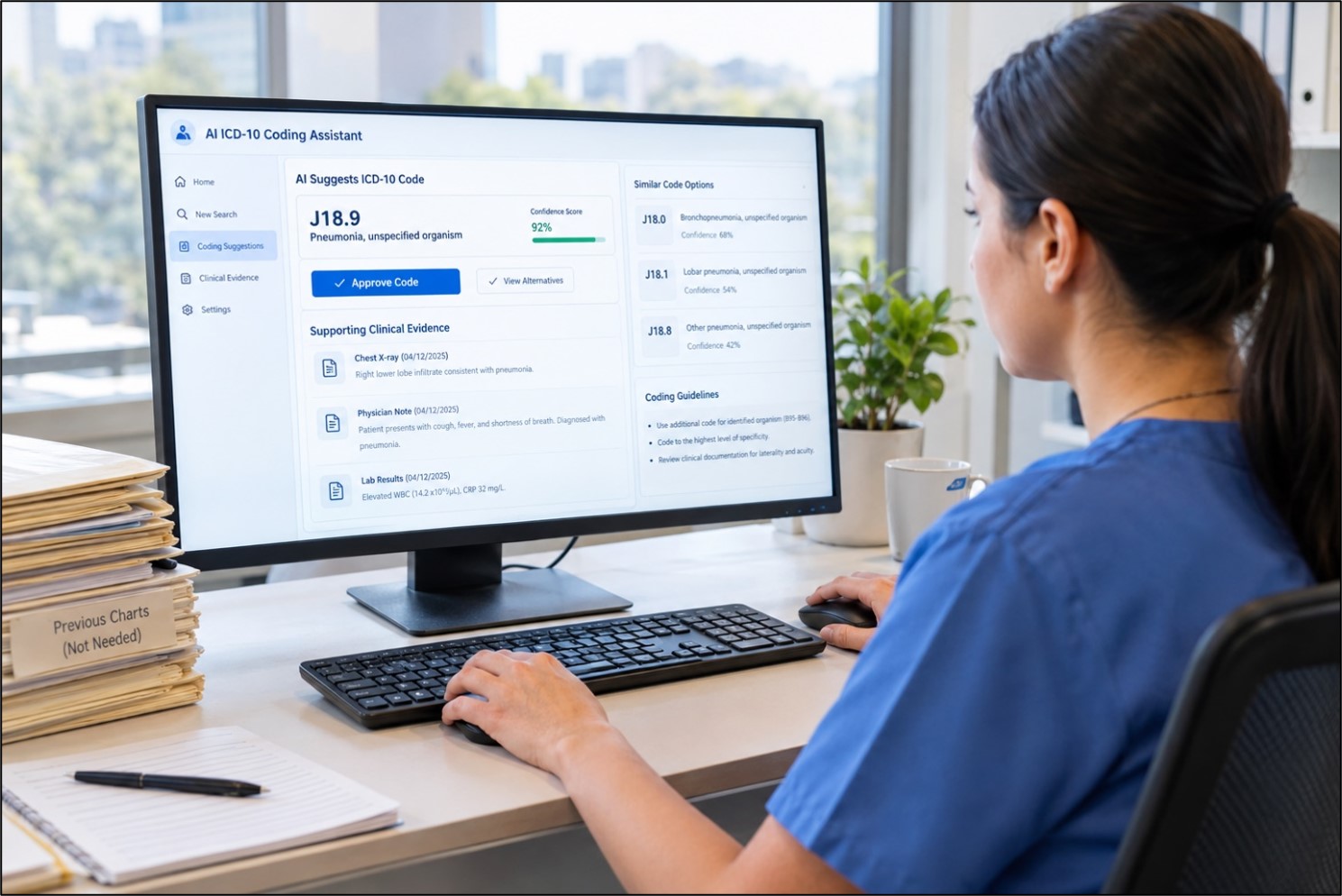
Coding and payment integrity: ICD-10 coding to full specificity, PDGM grouping, comorbidity capture. Most agencies capture comorbidity adjustments inconsistently, and every miss is revenue that never arrives. The EMR should surface this before billing, ranked by dollars at risk.
Revenue cycle: Claims, NOAs, remittances, denials, and the follow-up work each one creates. Not a separate billing system that syncs nightly. One environment where the clinical record and the claim are the same data.
Scheduling and the patient connection: Visit scheduling that respects authorizations and discipline frequencies, and a patient-side connection for visit confirmation, medication logging, and communication between visits. Patient-generated data is quietly becoming compliance evidence. A patient who confirms visits in an app is external validation no fraudulent operator can manufacture.
Here's the distinction I'd tell any operator to evaluate on, because it's the one that actually separates platforms.
A system of record stores what happened. You chart, it holds the chart. Every legacy EMR does this, and honestly, storing data was the hard problem in 2005. It isn't anymore.
A system of action tells your team what happens next. The OASIS gets submitted and the inconsistency is flagged before QA ever opens the chart. The referral arrives and the eligibility check has already run. The denial comes back and the appeal work lands in someone's queue, drafted, with the supporting evidence attached. Work arrives ready to finish instead of waiting to be found.
When I started AutoMynd, I struggled to explain why this distinction mattered more than any feature list. Then CMS scrutiny intensified, margins compressed, and agencies started living the difference: the ones with systems of record reconstruct answers, and the ones with systems of action already have them.
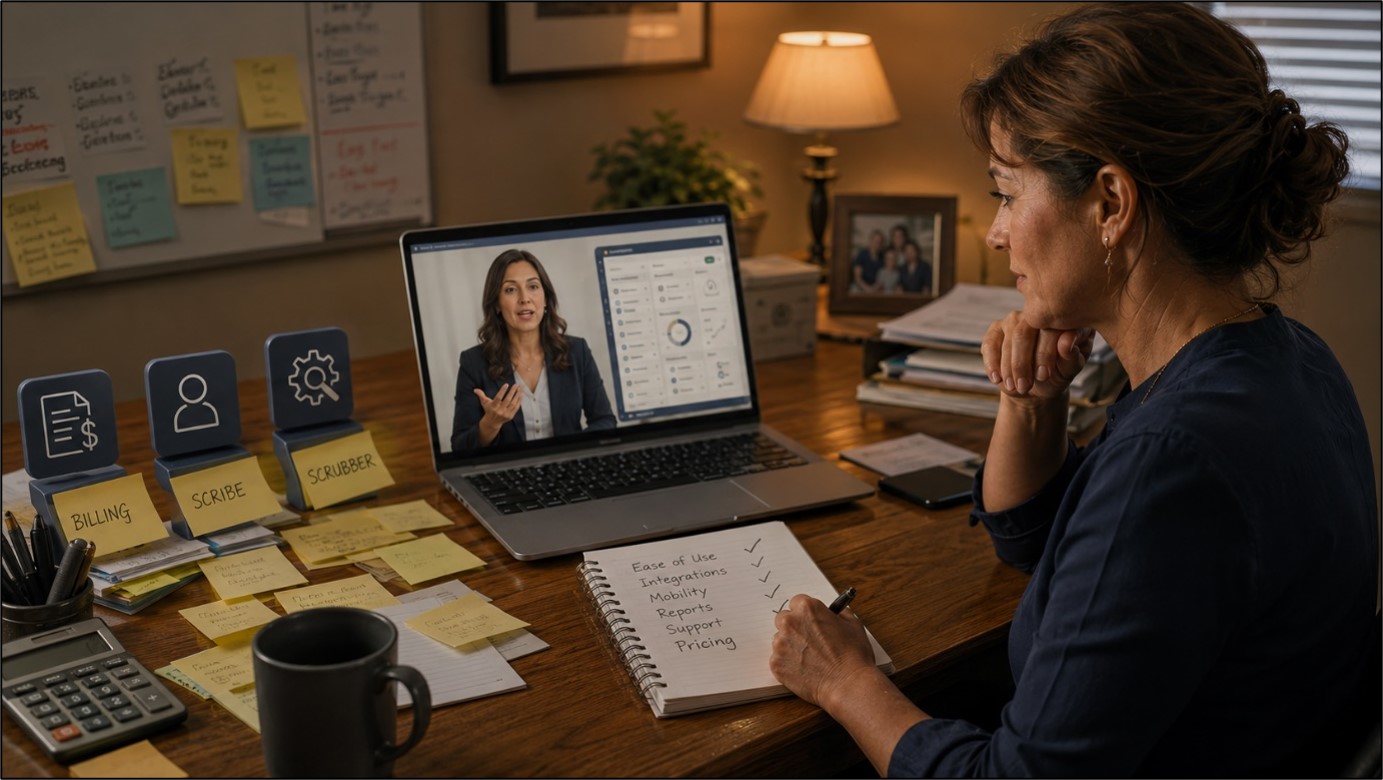
Four questions cut through most demos.
Ask where documentation happens. If the honest answer involves clinicians finishing charts at home, keep looking.
Ask when QA happens. Days after the visit is the old standard. At the point of care is the new one.
Ask how many systems the workflow touches. Count the EMR, the coding vendor, the scrubber, the scribe add-on, the billing tool, the patient app. Every handoff is a gap, and gaps are where audits find you.
Ask what the AI actually does. "We have AI" means nothing. Does it draft the work? Does it cite its evidence? Does it keep a human in the loop on every clinical decision? Those answers separate architecture from marketing.
The agencies that will do well over the next five years aren't the ones with the most software. They're the ones whose system does the six jobs as one, from referral to reimbursement to patient satisfaction.
That's the standard we're building toward at AutoMynd. This is our contribution to the home health community.
Want to see what an AI-native home health EMR looks like in practice? Book a demo at automynd.com.
.svg)


.png)