NEW: AutoMynd Unveils Patient-Centered AI EMR, Automating Episodes From Referral to Reimbursement Read more →
.svg)
.svg)
Every 60-day home health episode moves through nine stages. Referral. Patient setup. Scheduling. The visit. Documentation. QA. Coding. Billing. Payment.
Read that list again. Only one of those stages delivers care.
The other eight are administration, and they add up to roughly 12 to 15 hours of work and 50 to 70 human touch points per episode. Documentation alone consumes more admin time than every other stage combined, and most of it follows clinicians home after their last visit. We call this the administrative tax, and the entire industry has been paying it for so long that it stopped feeling like a choice.

The first generation of EMRs digitized paper. That was the whole idea. The chart moved from a filing cabinet to a database, and the work of filling it moved from a pen to a keyboard. Nothing disappeared. It just changed format.
Every generation since has added screens, portals and modules on top of that foundation. More software, same tax. Ask a clinician how many clicks stand between a completed visit and a completed chart. Ask a biller how many systems she touches before a claim goes out clean.
The problem was never that agencies lacked software. The problem is that the software was built to record work, not to do it.
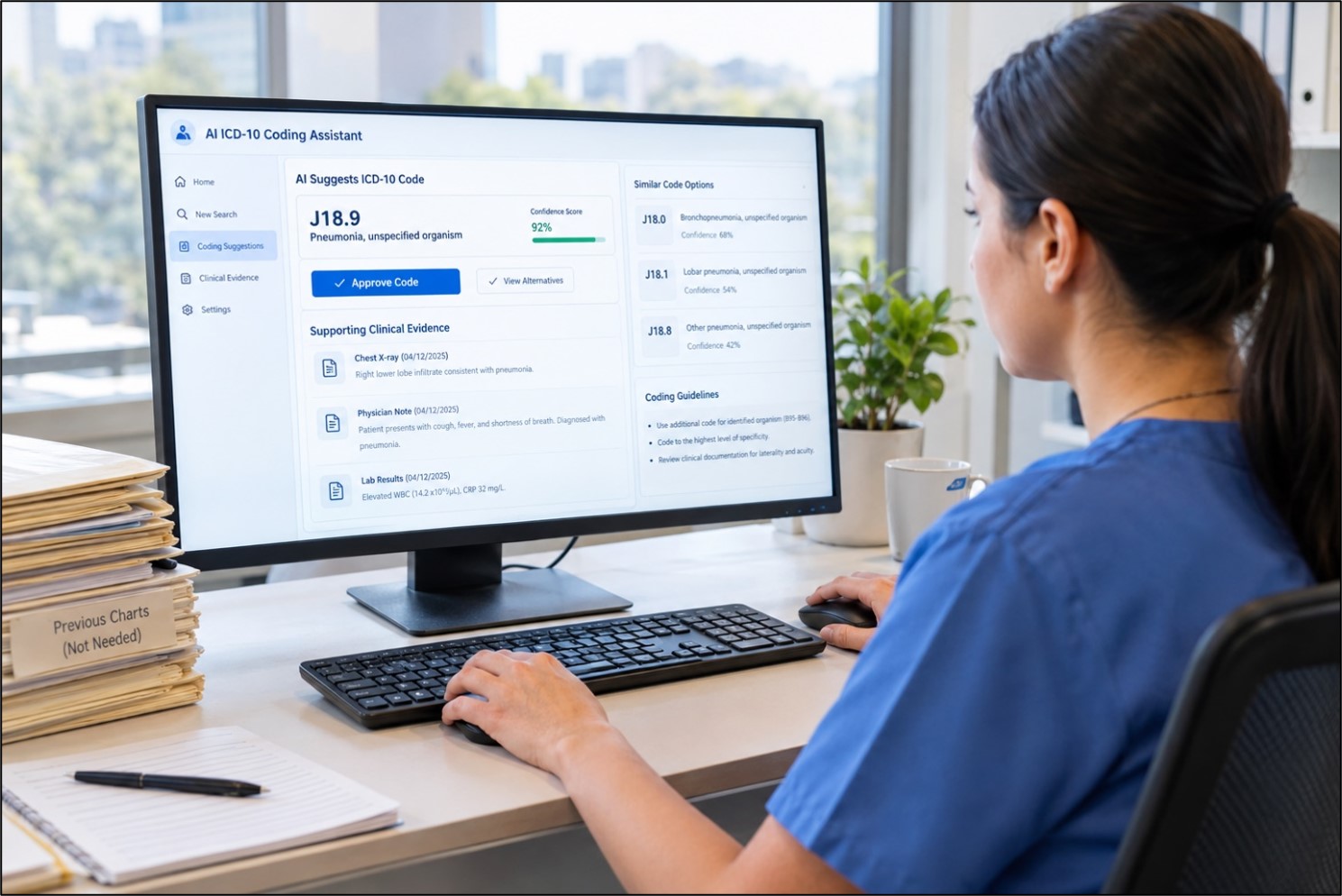
There's a difference between an EMR with AI features and an AI-First EMR, and it isn't marketing. An AI feature summarizes the referral packet you were about to read. An AI-first system reads it, checks eligibility, flags what's buried on page 40, builds the patient record and routes the work before your coffee is done.
That's the standard we built AutoMynd to: the system does the work, and your team reviews and decides. Referrals screen themselves. Schedules build themselves around the right clinician for each patient. Documentation drafts itself during the visit, not after bedtime. Claims are checked against payer rules before they're ever billed, then move concurrently across multiple clearinghouses. Statuses and remits flow back on their own.
We didn't bolt this onto someone else's EMR. AutoMynd is the EMR.

Here's the part we care about most. When the administration disappears, what's left is the reason everyone got into this work: the patient.
Every workflow in AutoMynd is organized around one longitudinal view of the human being receiving care. Their history, their clinical journey, their risks, their engagement. Not the claim. Not the form. The patient. We built the platform alongside more than 50 agency owners, administrators, clinicians, billers and patients, and that principle survived every design review: the care stays human, the administration disappears.
Home health is moving into a decade where quality ratings, staffing capacity and margins will decide who grows and who consolidates. Agencies that spend 8 of every 9 stages on paperwork will lose to agencies that spend them on care.
Today, AutoMynd is live. The AI-First EMR for Home Health. From Referral to Reimbursement.
See it run a schedule, draft a note, and pre-flight a claim in real time: book a live demo.
Episode figures are illustrative estimates based on a standard 15-visit, 60-day episode.
.svg)


.png)