NEW: AutoMynd Unveils Patient-Centered AI EMR, Automating Episodes From Referral to Reimbursement Read more →
.svg)
.svg)

A home care executive sits at a desk cluttered with open tabs for job boards, recalculating sign-on bonuses for the third time this month. The local talent pool is entirely bone-dry, and competing agencies are bidding wages up to unsustainable levels. Recent industry benchmarking reveals a staggering annual churn rate of nearly eighty percent for community caregivers, meaning most agencies spend more time replacing departing clinicians than growing their business. Trying to recruit your way out of this deficit is a losing battle because the math simply does not add up. To survive this unprecedented labor crunch, organizations must stop viewing software as a mere recording ledger and start utilizing a fully integrated AI EMR for home health and hospice as a major multiplier for workforce capacity.
The traditional answer to a thin staff has always been a heavier recruitment drive. However, when highly trained nurses spend up to one-third of their shifts wrestling with clunky drop-down menus and complex Medicare compliance paperwork, the real bottleneck becomes painfully obvious. This blog details how transitioning to an intelligent, automated digital system creates massive operational headroom, unlocking hidden hours from your existing team without causing severe staff burnout.

Most agencies operating today are caught on an expensive hiring treadmill. They pour thousands of dollars into recruitment agencies, offer massive cash incentives, and onboard new field staff, only to watch those same employees walk out the door a year later. When you dig into why these clinicians quit, the story is always the same. They did not leave because they lost their passion for patient care; they left because they grew to despise the grueling, late-night charting requirements.
Relying on old software structures means your business growth is completely tethered to your total headcount. If you want to accept twenty more patients, you are forced to find and hire two more full-time nurses. In a severe national labor shortage, that linear growth model is fundamentally broken. The only sustainable path forward is expanding the amount of care a single clinician can comfortably deliver each day by stripping away administrative friction.
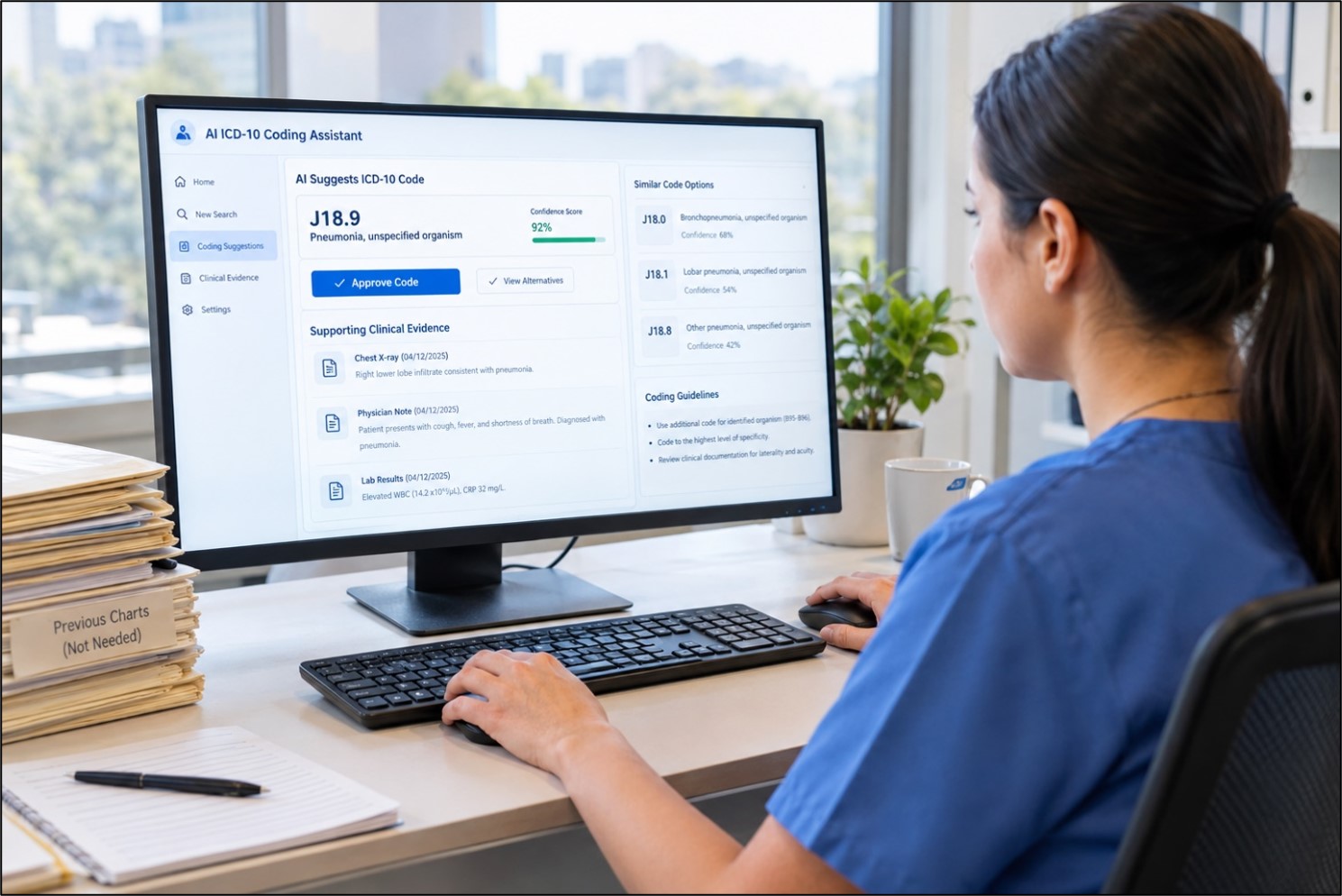
An intelligently constructed software architecture does not act like a passive digital filing cabinet. It serves as a highly capable, invisible administrative partner that handles the heavy lifting of documentation in real-time. By moving the burden of data entry from the human to the software, agencies instantly recover immense amounts of productive field time.
The system expands your team's internal bandwidth through several primary technical avenues:
• Real-Time Clinical Scribing: While a therapist or nurse interacts naturally with a patient, the software securely listens, extracts relevant medical facts, and automatically constructs comprehensive structured notes, ending the need for late-night typing marathons.
• Mobile Travel Briefings: Instead of requiring staff to log into a portal to read lengthy histories before a visit, the application utilizes intelligent audio tools to brief clinicians on patient backgrounds safely through car speakers while they travel.
• Automated Compliance Protection: Rather than relying on managers to manually audit charts for errors, the platform continuously scans the entire documentation trail across visits to flag conflicting information or missing data points instantly.
• Frictionless Intake Routing: Specialized parsing technology automatically reads messy hospital discharge papers, inputs demographics, and builds patient files in minutes, allowing office teams to process referrals with minimal manual effort.

When you maximize the capabilities of your current staff, the financial health of your entire operation changes dramatically. Recovering just one hour of administrative waste per nurse each day allows your existing field staff to complete additional visits without extending their working hours. This directly increases your agency's total census capacity without adding a single dollar to your permanent salary overhead.
Furthermore, fixing the daily workflow is the most effective retention strategy available. Providing your field staff with tools that respect their personal time eliminates the primary catalyst for professional exhaustion. Stable, happy nurses deliver significantly better clinical outcomes, build deeper relationships with families, and protect your agency from the massive operational disruptions caused by constant staff turnover.
Evaluating your operational readiness should involve looking closely at your internal technical bottlenecks. If your clinical coordinators and field nurses are constantly buried under manual documentation requirements, a lack of bodies is not your primary issue. The real obstacle is an outdated digital infrastructure that active drains your team's energy.
True operational scale requires an environment where technology absorbs the tedious, repetitive tasks of healthcare delivery. This transition allows your staff to focus entirely on their clinical calling, creating a balanced, high-performing organization capable of thriving in a challenging market.
The agencies that lead the next era of home-based care will not be the ones with the largest recruiting budgets. They will be the ones that learn to maximize every single minute of their existing clinical talent. Continuing to throw money at the hiring crisis without fixing the underlying workflow issues is a recipe for operational failure. AutoMynd provides a fully native platform engineered specifically to eliminate administrative waste, expanding your workforce capacity from within and allowing your agency to scale efficiently while delivering top-tier patient care.
By shifting the burden of data entry to intelligent background software, the system eliminates hours of tedious paperwork after hours. Clinicians can finish their charts during the actual patient visit, restoring a healthy work-life balance and removing the main cause of professional exhaustion.
Yes, by automating the manual extraction of data from referral sheets and streamlining the quality assurance review process, the existing office team can handle a significantly higher volume of patient charts without feeling overwhelmed or falling behind.
Look closely at how data moves through the system. A truly automated setup will feature ambient listening capabilities, offline processing functionality for rural areas, and cross-chart auditing that proactively flags compliance issues without requiring human intervention.
When clinicians are freed from typing into tablets or staring at screens during a visit, they can provide undivided attention to the patient. This human-centric approach directly improves the overall care experience and leads to higher clinical performance marks.
.svg)


.png)