NEW: AutoMynd Unveils Patient-Centered AI EMR, Automating Episodes From Referral to Reimbursement Read more →
.svg)
.svg)
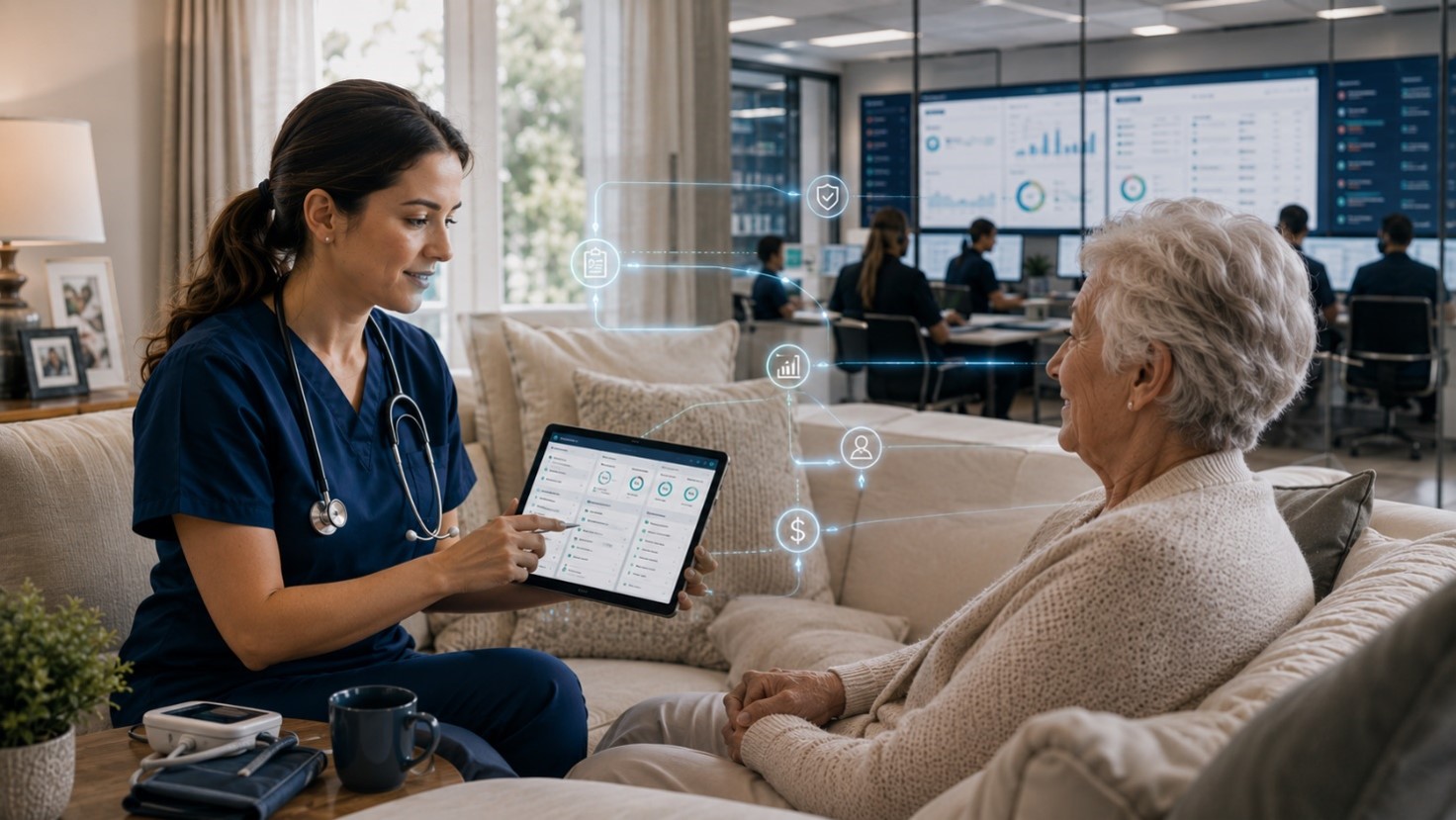
In skilled home health, documentation accuracy isn't a quality metric. It's the whole basis of getting paid and staying compliant.
The OASIS drives your reimbursement. The visit note is your evidence that care happened and was appropriate. Get either one wrong and you're not looking at a typo you're looking at a denial, an ADR, or a survey finding.
And yet the way most agencies capture documentation almost guarantees error. Not because clinicians are careless. Because the workflow is working against them.
Ask a home health nurse when they chart. The honest answer is often: later. After the visit, between visits, or at night from memory.
That gap between the encounter and the record is where accuracy dies. Details blur. The wound looks a little better in memory than it did in the room. The OASIS item gets answered from a general impression instead of the specific observation. None of it is dishonest. It's just what happens when you reconstruct instead of capture.
A traditional EMR does nothing about this. It's a blank form waiting to be filled. It has no idea what happened in the home it only knows what got typed in, whenever it got typed.
An AI-native EMR flips the order. Instead of a blank form to fill later, it captures the visit as it happens ambient AI listening to the encounter and structuring it into documentation while the details are still real.
The clinician isn't transcribing. They're reviewing something already drafted from the actual visit, correcting what needs correcting, and signing. The record reflects the encounter because it was built from the encounter.
That single shift from reconstruction to capture is the biggest accuracy gain available in skilled home health right now.
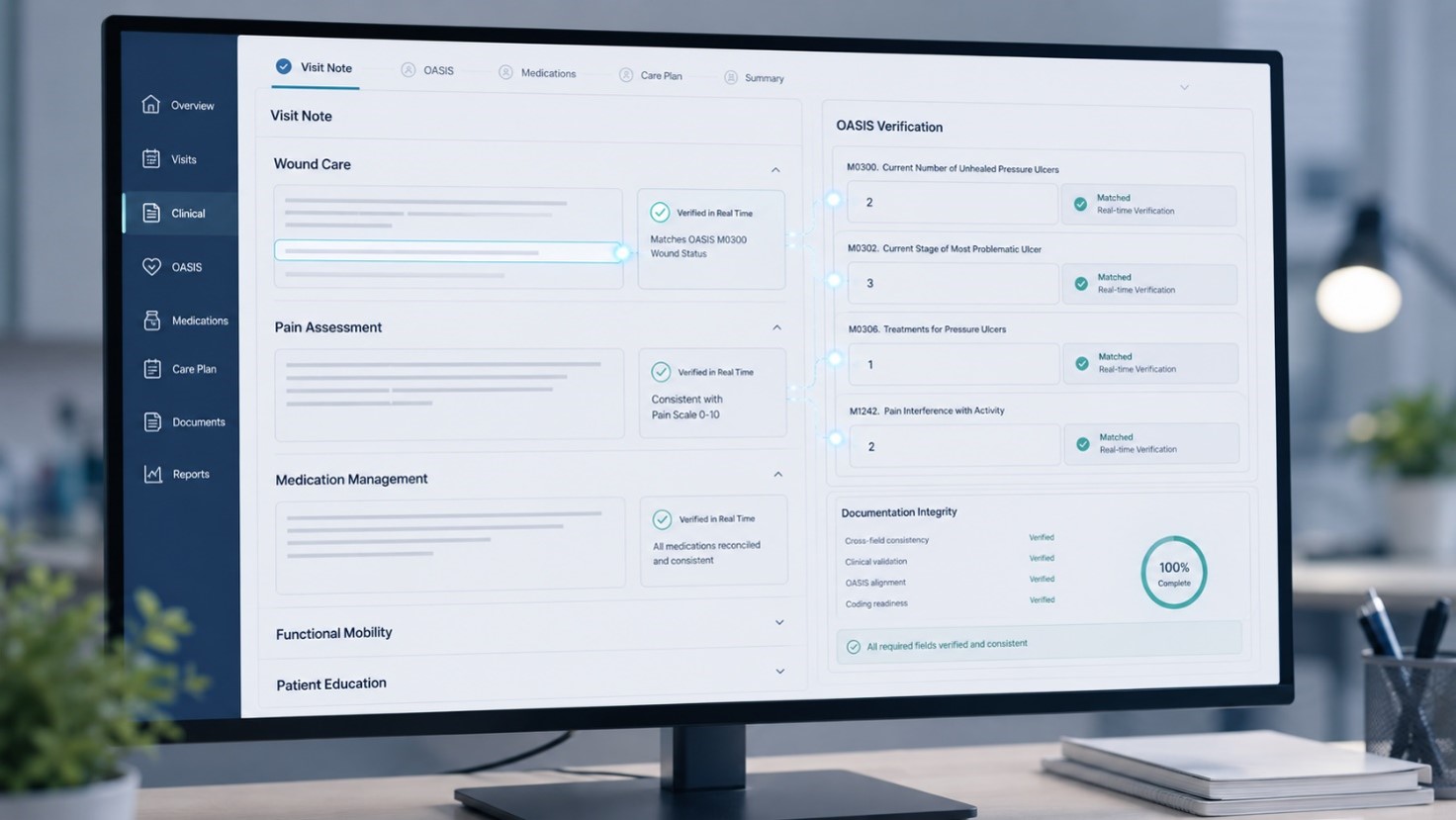
Capture is the first half. The second is verification, and this is where native architecture matters again.
Because the AI is part of the EMR, it can check the documentation against itself and against requirements as it's created. Does the OASIS scoring match the narrative? Does the note support the acuity being coded? Is there a gap that would look thin under an ADR? These checks run continuously, with the specific evidence quoted, so nothing depends on a reviewer happening to catch it two weeks later.
The compliance-critical logic stays deterministic and authoritative the rules that must be exact aren't left to a probabilistic guess. The narrative-quality judgment is where AI advises, always showing its work, never silently overruling the clinician.
Accurate documentation at the visit isn't just good on its own. It makes everything downstream better.
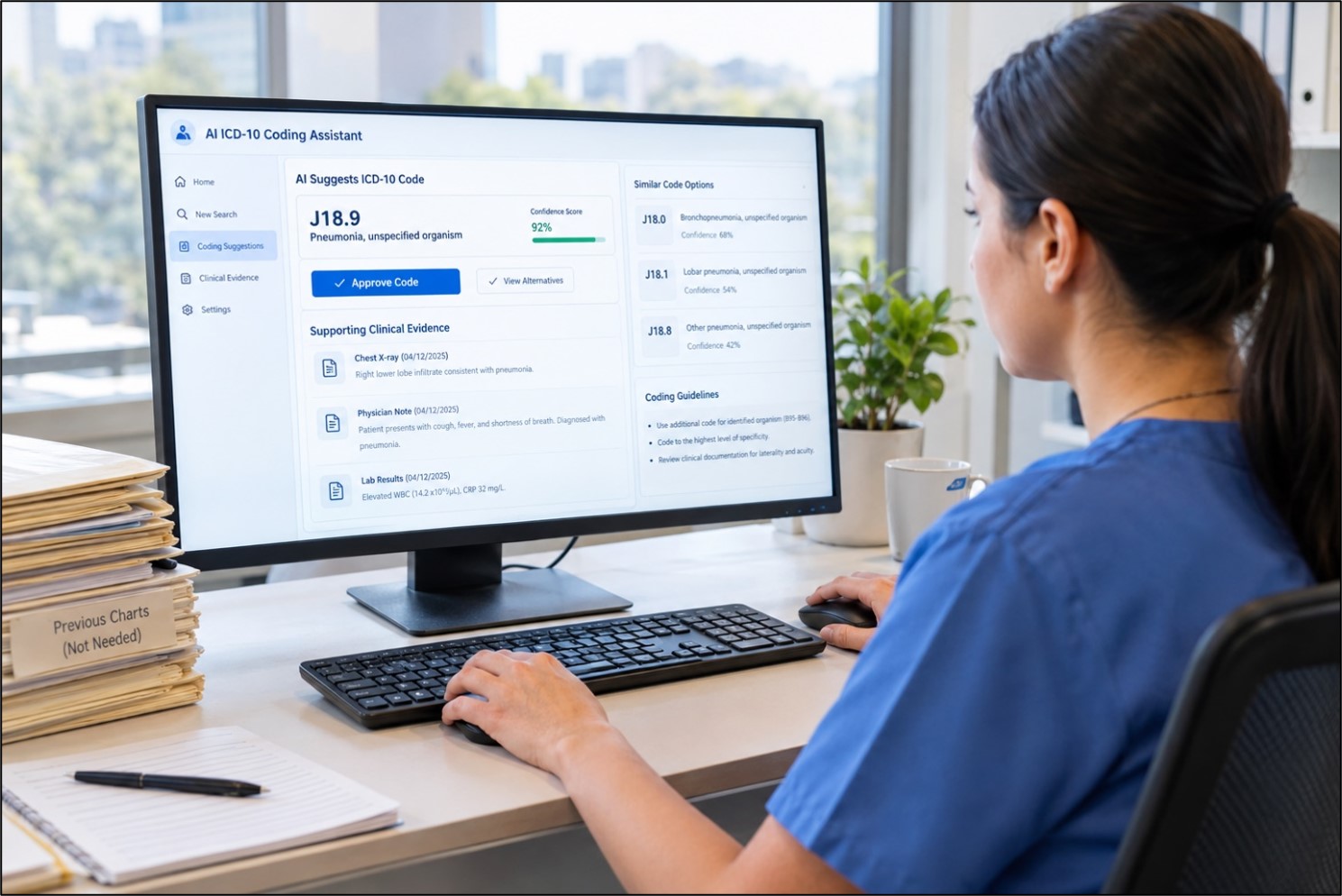
Coding is more accurate, because the clinical picture is complete. QA is faster, because there's less to fix. Claims are cleaner, because they're built on a solid record. And your compliance evidence is stronger, because the documentation was captured in real time and verified as it went exactly the kind of support you want when CMS comes asking whether a visit was valid.
One accurate record at the source pays off five times over the life of the episode.
Documentation accuracy has always been the quiet foundation everything in skilled home health sits on reimbursement, compliance, outcomes, survey readiness. The reason it's been so hard isn't effort. It's that the tools asked clinicians to rebuild the visit from memory and then hoped a reviewer would catch what slipped.
An AI-native EMR removes the gap. Capture the visit as it happens, verify it as it's built, and accuracy stops being something you chase after the fact. It becomes something the system protects by design.
That's the standard we think skilled home health deserves and it's what we're building for the community.
See how AutoMynd Copilot captures documentation at the visit.
.svg)


.png)