NEW: AutoMynd Unveils Patient-Centered AI EMR, Automating Episodes From Referral to Reimbursement Read more →
.svg)
.svg)
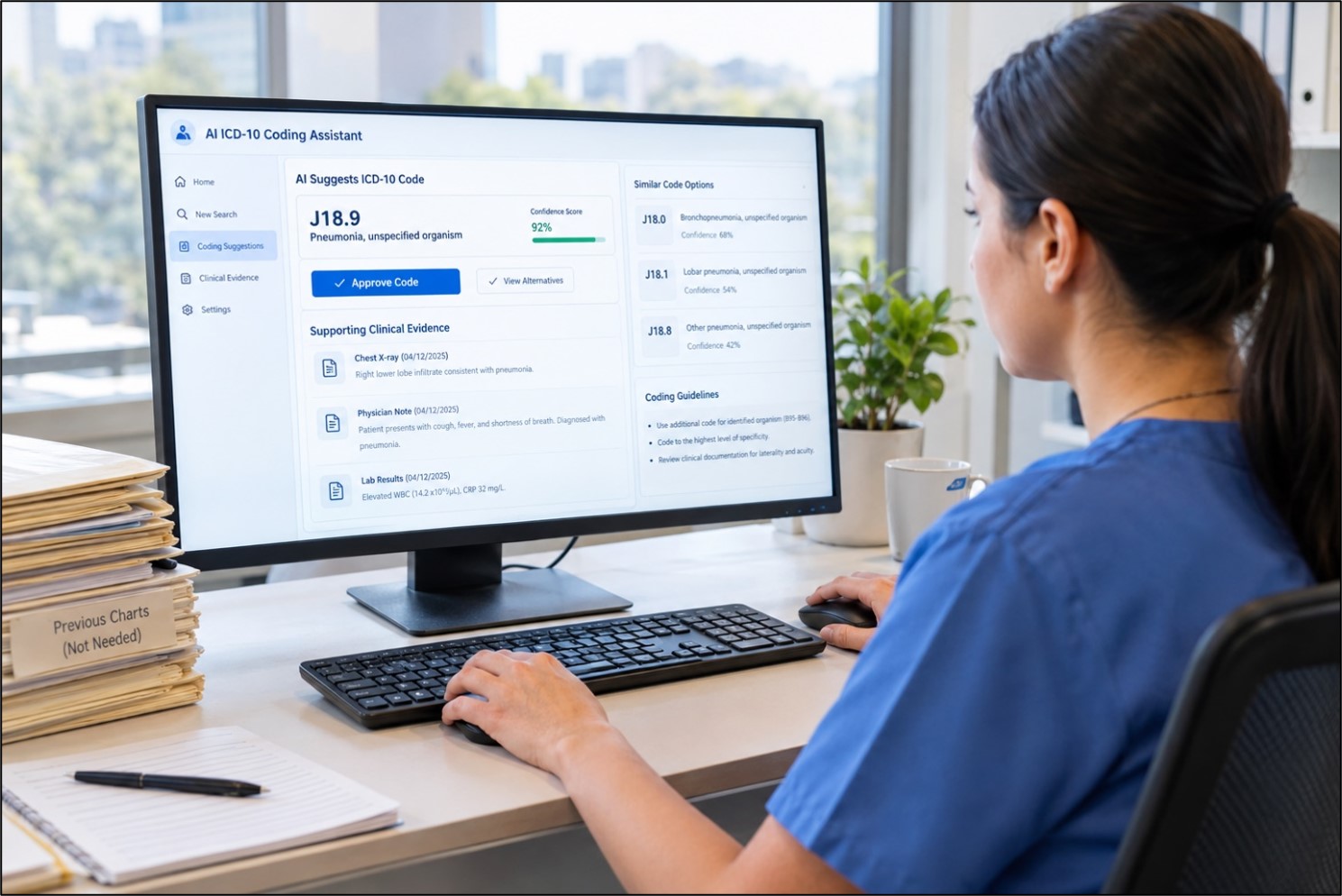
The coding review industry runs on a simple model: you send charts out, a certified coder reads them, and you pay per chart for the reading. Forty to seventy dollars, one to two days of turnaround, multiplied by every start of care and recert you produce. It’s a good business. It’s just increasingly not the best deal for the agency.
Here’s the tell: the coding services themselves now run AI internally to make their coders faster. The software does more of the work every year. The per-chart price doesn’t move. Agencies are paying human-review prices for increasingly machine-assisted work, without getting to use the machine.
It reads the whole record, not just the OASIS: visit notes, H&P, discharge summaries, medication lists. It assigns ICD-10 codes to the specificity the documentation supports and shows the specific clinical evidence behind each one. It validates the assessment against the narrative. And it hunts for what’s missing, especially the PDGM comorbidity adjustments, where a qualifying secondary diagnosis sits in the hospital paperwork and never makes it to the claim. Most agencies capture those inconsistently, and every miss is revenue that simply never arrives.
The review that took two days in a vendor’s queue happens in minutes, in your own workflow, with citations your QA nurse can check. The human still approves. The waiting disappears, and so does the per-chart meter.

Two hundred episodes a month at fifty dollars a chart is ten thousand dollars a month, every month, scaling with your census. Platform-based review is a flat cost that doesn’t care whether you code two hundred charts or six hundred. And the revenue side moves too: comorbidity capture rates climb when something is actively looking for qualifying diagnoses across the whole record, and faster coding means faster claims, which means cash arrives sooner. After the CY 2026 rate cuts, agencies don’t have the margin to leave either side of that on the table.
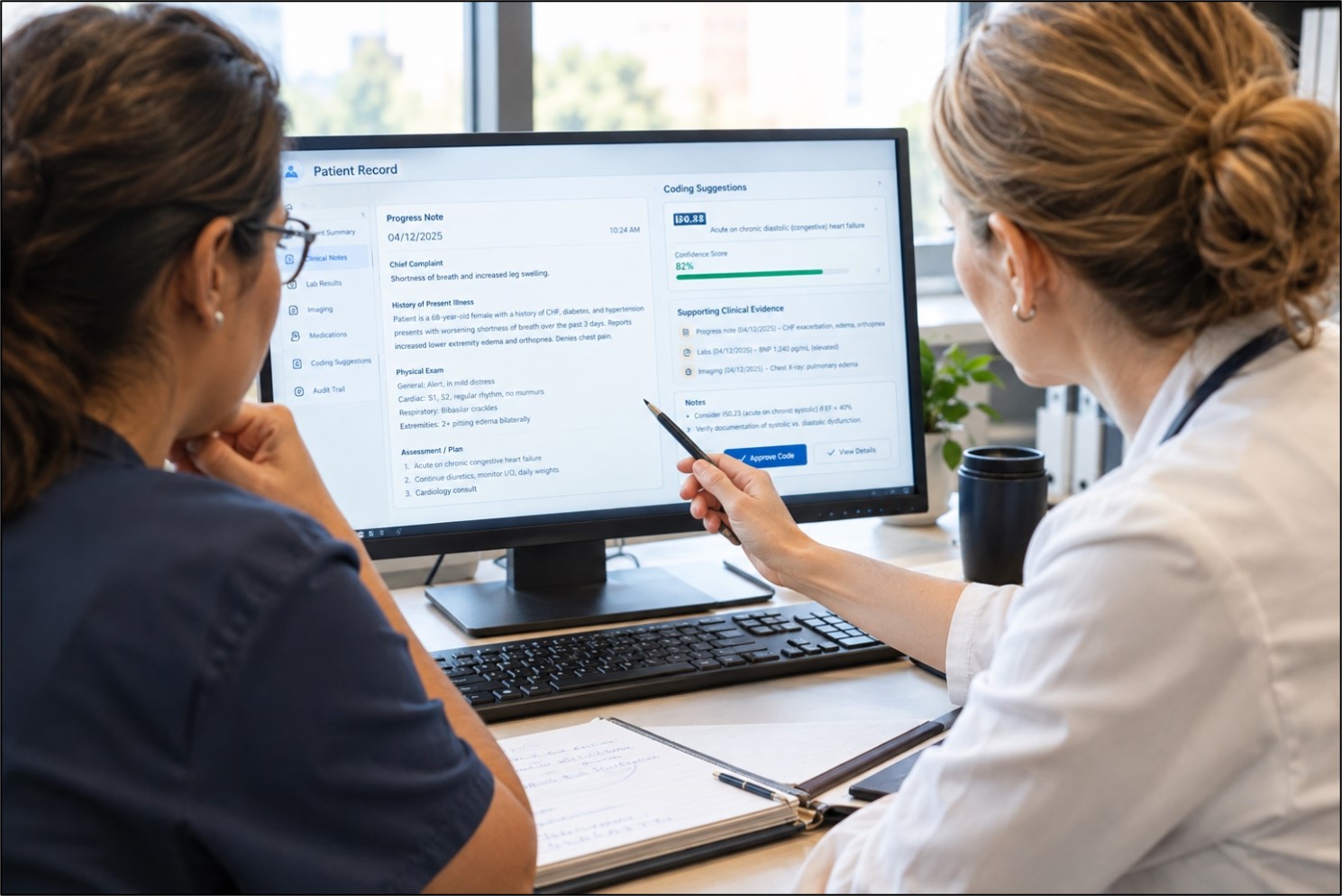
Genuinely ambiguous cases, complex specialty admissions, and audit defense where you want a coder walking a reviewer through a chart. The right posture is AI for the routine ninety percent, expert humans for the ten percent that deserves them. What ends isn’t human coding judgment. It’s paying per-chart prices for the routine work software does better and faster.
Run the test yourself: take fifty charts you already paid to have coded, run them through an AI review, and compare codes, comorbidities, and time. The math will tell you what to do. We’ll happily be the platform you test at automynd.com.
.svg)