NEW: AutoMynd Unveils Patient-Centered AI EMR, Automating Episodes From Referral to Reimbursement Read more →
.svg)
.svg)
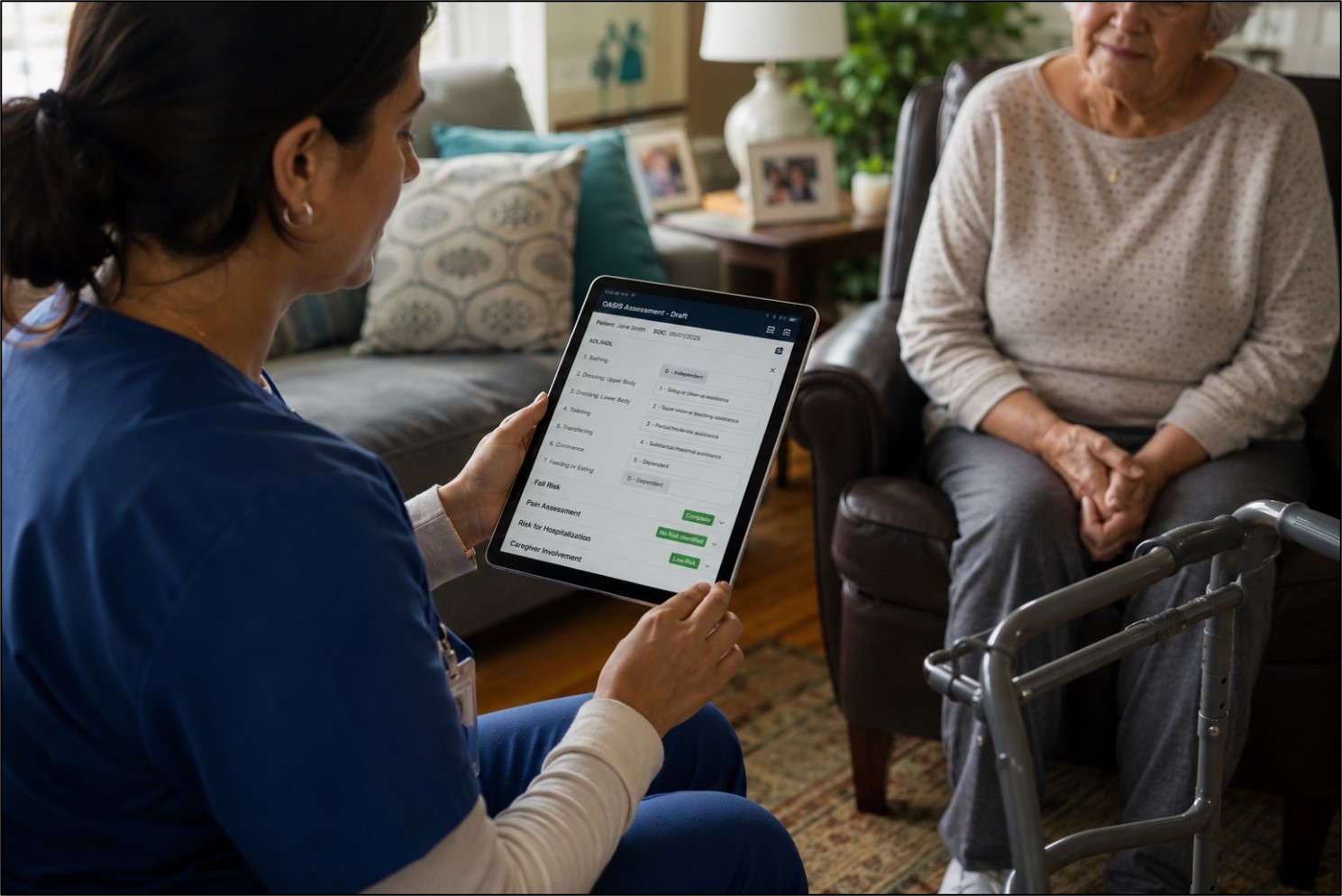
Every OASIS error your QA team catches was already three days old when they found it. The clinician has done a dozen visits since. The context is gone. The correction cycle starts, the claim waits, and everyone involved does the work twice.
That’s not a people problem. Your QA nurses are good. It’s a timing problem, and timing is exactly what AI changes.
OASIS-E2 isn’t a progress note. It drives the PDGM clinical grouping, the functional level, and the case-mix weight that decides what the episode pays. It also feeds star ratings and publicly reported quality measures. A mis-scored functional item moves revenue and reputation at the same time. Industry data puts coding and documentation errors in a meaningful share of claims, with hundreds of dollars at stake per affected episode, and the CY 2026 rate cuts made every one of those dollars matter more.
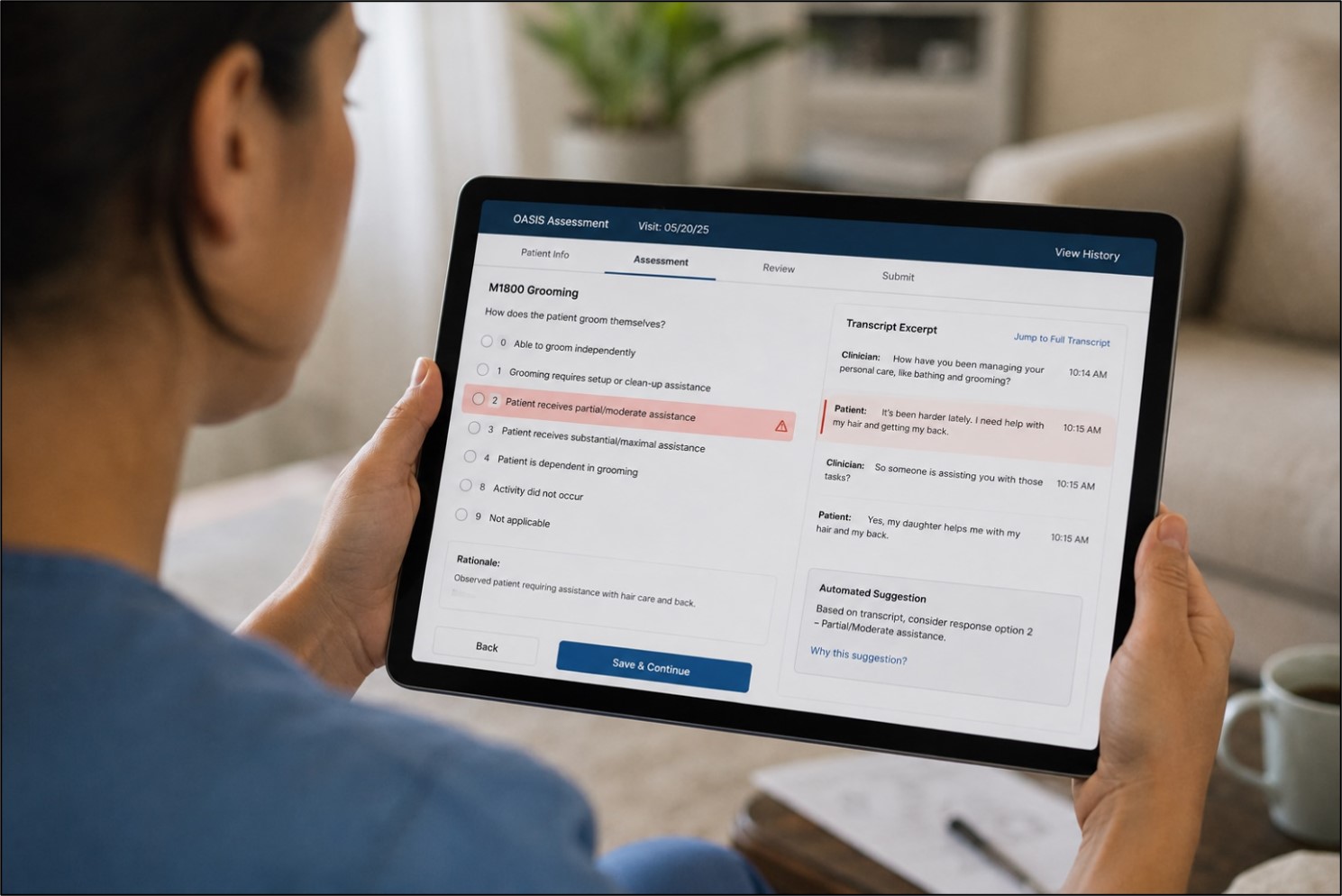
Done right, it does three jobs at the point of care. It drafts assessment items from the encounter itself: ambient capture from the visit, structured into the OASIS, so the clinician confirms instead of recalling. It validates responses against the clinical narrative: if the transcript describes a patient who needed help to the bathroom and the functional items say independent, that discrepancy gets flagged with the verbatim evidence, while the clinician is still in the workflow. And it surfaces what’s missing: the secondary diagnosis mentioned in the hospital discharge summary that qualifies for a comorbidity adjustment nobody coded.
In our platform, Copilot handles the capture and drafting, and QAgent runs the validation, deterministic rules first because those are authoritative, AI narrative analysis second, always advisory, always with evidence quotes. The human confirms every clinical judgment. The AI just makes sure nothing waits three days to be noticed.
OASIS-E2 took effect April 1, 2026, with item and edit changes that made stale tooling quietly wrong. If a vendor’s AI was trained and tested on OASIS-E, ask them directly what changed in their system for E2 and when. A tool that looks like it’s working while validating against the old instrument is worse than no tool.

Agencies that move OASIS validation to the point of care see the correction loop collapse: fewer QA touches per chart, faster time to claim, and clinicians who improve because feedback arrives the same day, tied to the visit they still remember. The QA team stops rebuilding assessments and starts approving them. That’s a better job, and in this labor market, better jobs are retention.
The assessment that pays you and grades you deserves to be right the first time. That’s the standard we build for. See it on your own charts at automynd.com.
One AI-native EMR for intake, documentation, QA, coding and billing, built for home health agencies.
Book a demo.svg)