NEW: AutoMynd Unveils Patient-Centered AI EMR, Automating Episodes From Referral to Reimbursement Read more →
.svg)
.svg)

Few documentation requirements cause as much quiet friction in home health as the face-to-face (F2F) encounter. It rarely makes headlines, but it sits on the critical path between a referral and a payable episode. When it is missing, late or vague, the start of care slips, the certification stalls and the claim is at risk.
The requirement is simple. The workflow around it is where agencies lose days.
For Medicare home health, a physician or an allowed practitioner must certify that the patient is eligible for the benefit. Part of that certification is a documented face-to-face encounter that relates to the primary reason the patient needs home health services.
In plain terms, someone has to have seen the patient, for the condition driving the referral, and the record has to show it.
Warning: requirements and interpretations change. Always confirm current details against CMS guidance and your compliance team.
The trouble is where the requirement lives in the workflow. Referral packets arrive by fax, portal and email. The encounter note may sit in a hospital record, a clinic note or a separate attachment. Intake staff then have to find it, check the date, confirm it ties to the diagnosis and chase the physician when it does not.
Every one of those steps is manual, and each one can quietly add days before the first visit.
Agencies that handle F2F well treat it as an intake gate rather than a back-office cleanup task. Use this as a working checklist:
Tip: assign one named owner per open referral. Shared ownership is how encounter notes go missing for a week.
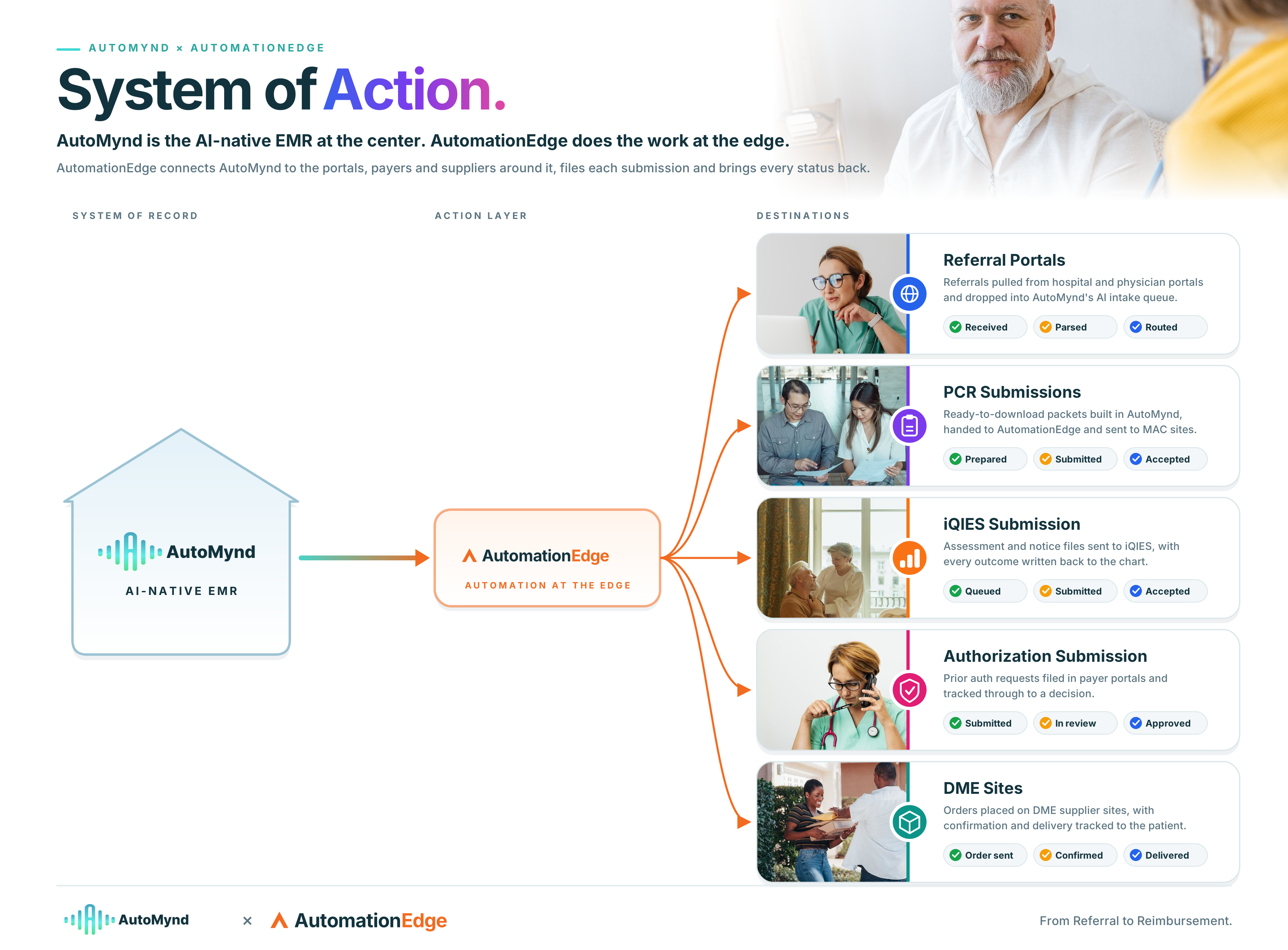
This is a good fit for software that reads the referral packet, pulls out the encounter date and note, flags gaps against the timing window and routes the follow-up to the right person. It does not replace clinical or compliance judgment. It removes the searching and re-keying that slow teams down, and it makes sure nothing sits unnoticed until billing.
At AutoMynd, we build the home health EMR around this idea: the work between referral and reimbursement should flow as one connected process, so documentation gaps surface when they are cheap to fix.
Not always. It can be performed by other permitted practitioners, but the certifying practitioner must document the date of the encounter. Check current CMS guidance for who qualifies.
It generally will not satisfy the requirement on its own. Agencies usually need a more recent qualifying encounter, or one that occurs within 30 days after the start of care.
Often yes, when the visit was performed by a permitted practitioner and relates to the reason for home health. The documentation still needs to support it, so confirm the note before relying on it.
At intake, before the start of care is scheduled. Catching a gap at referral costs a phone call. Catching it at billing costs a delayed claim.
A clean face-to-face encounter is less about paperwork and more about timing. Catch it at intake, tie it to the diagnosis and keep ownership visible, and it stops being the thing that delays your start of care.
One AI-native EMR for intake, documentation, QA, coding and billing, built for home health agencies.
Book a demo.svg)

.png)