NEW: AutoMynd Unveils Patient-Centered AI EMR, Automating Episodes From Referral to Reimbursement Read more →
.svg)
.svg)
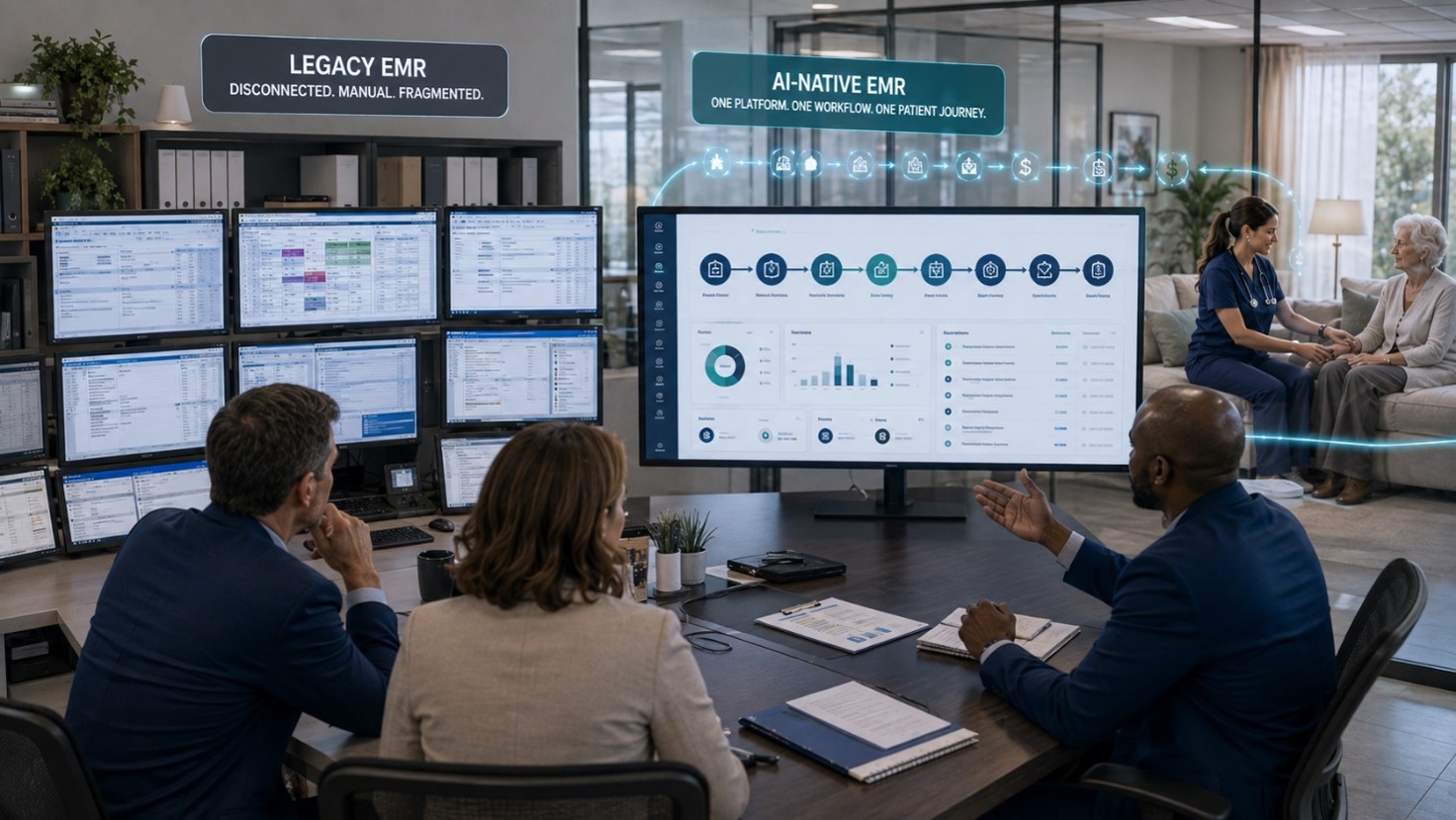
Put three skilled home health EMRs side by side on a feature grid and they'll look almost identical. Everyone has OASIS. Everyone has scheduling. Everyone has billing. Everyone now has a checkbox that says "AI."
That's exactly why the feature grid is the wrong way to compare them. The checkmarks are table stakes. Honestly, they're already dated. Two systems can both check "AI documentation" and be nothing alike underneath.
If features and price won't tell you the difference, what will? Here's what actually separates skilled home health EMRs once the demo is over.
The first real dividing line is architecture. Some EMRs are one system where intake, documentation, QA, coding, and revenue cycle were designed together. Others are a collection of modules or acquisitions bolted into a shared login.
You feel the difference in the gaps. In a stitched-together system, data hands off between parts, and every handoff is a place things break. In a system built as one, the episode flows without seams.
The feature grid can't show you this. Ask to follow one patient from referral to paid claim and watch how many times the demo has to jump somewhere else.
Both say "AI." Only one built around it.
A bolted-on feature sees its slice and stops there. Native AI runs under the whole workflow and compounds accurate intake makes documentation better, accurate documentation makes coding better, and so on. The question that exposes the difference: does the AI see the whole episode, or just one screen?
And ask where it's deterministic. In skilled home health, the compliance and billing rules that must be exact can't be left to a probabilistic guess. A serious system is clear about what's authoritative and what's advisory. A shallow one hand-waves.
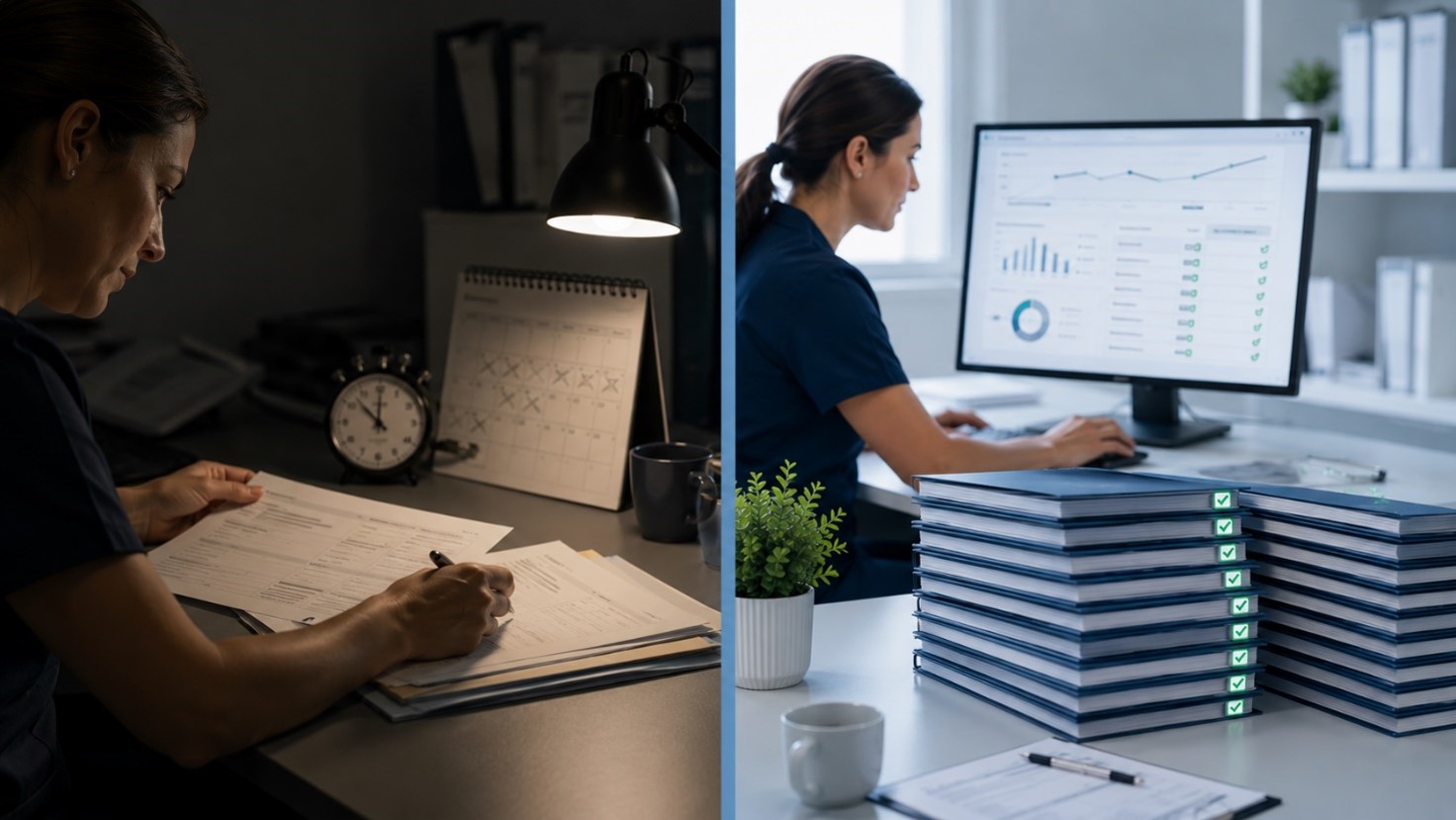
This is where the real dollars hide, and it never shows up on a price sheet.
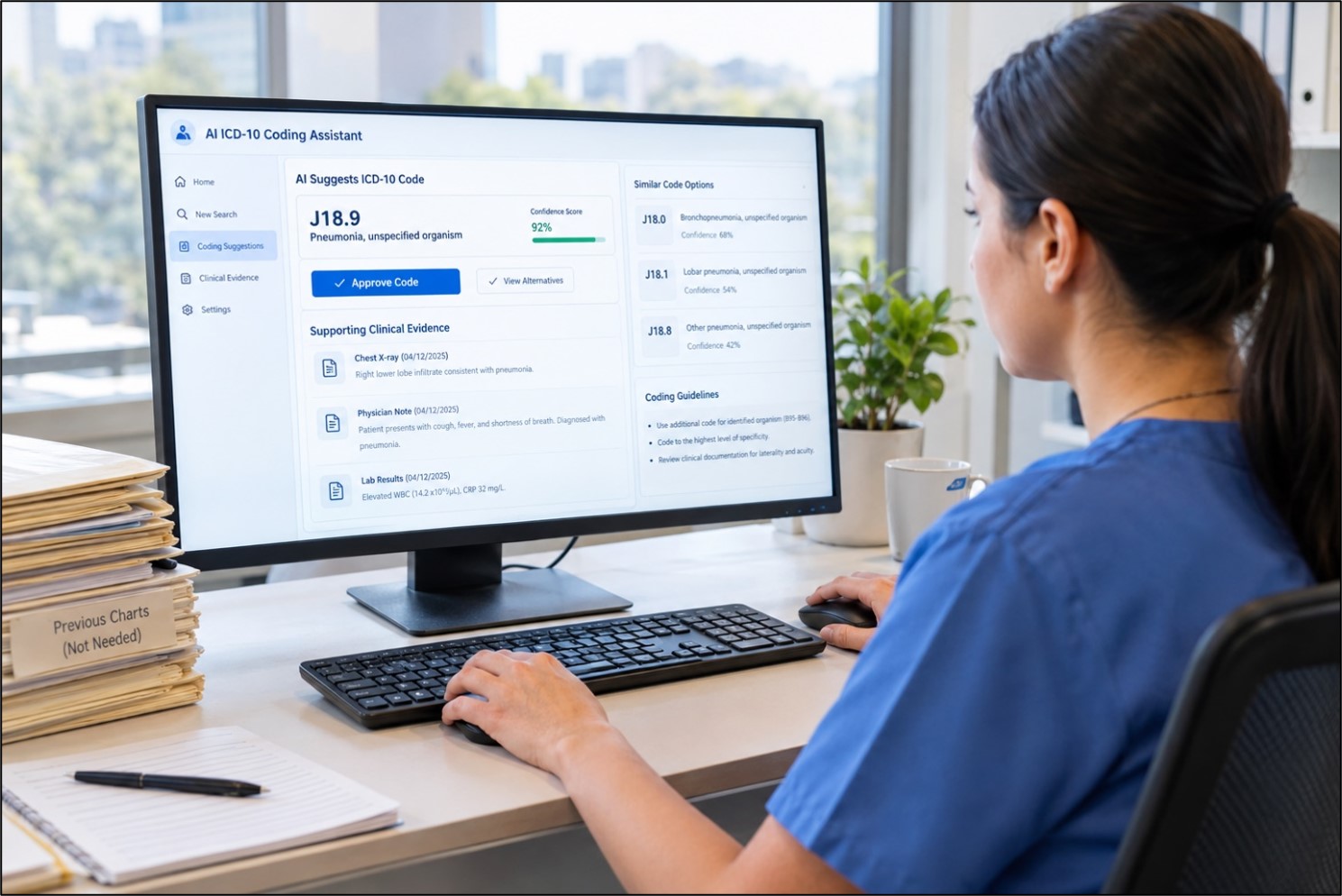
Does QA run continuously and check every chart, or is it a manual sample at the end of the episode? Does coding work from the full clinical picture and flag PDGM issues before the claim, or after the denial? Can the system help you defend an ADR?
Two EMRs at the same price can differ by a huge margin here and that margin is your revenue.
An EMR clinicians resist is a failed purchase, whatever it scored on paper.
The real question is whether documentation is captured from the visit or typed from memory afterward. One gives nurses their evenings back and earns adoption. The other is a new set of forms and a new fight. Sit a real clinician in front of both and you'll know in ten minutes.
Skilled home health is specific PDGM, OASIS-E, the ADR reality, the survey. A team that learned it from operators and clinicians builds differently than one that generalized from other healthcare software.
Ask where the workflows came from. The answer tells you whether the system was designed for your world or adapted to it.
Stop comparing feature lists and price tags they make everything look the same and hide what's different. Compare on the things that decide outcomes:
Is it one system or several stitched together? Is the AI native and compliance-aware, or bolted on? Does QA and coding protect reimbursement or just store the record? Does it reduce clinician burden or relocate it? And was it built by people who actually know skilled home health?
Answer those five honestly for any two EMRs and the "identical" systems stop looking identical fast. One is a filing cabinet with an AI sticker. The other is a system of action.
That's the comparison we welcome because it's the one where the real differences show.
See how AutoMynd is built as one AI-native system for skilled home health.
.svg)


.png)