NEW: AutoMynd Unveils Patient-Centered AI EMR, Automating Episodes From Referral to Reimbursement Read more →
.svg)
.svg)

Most "best home health EMR" lists are written by review sites that have never run a visit schedule. I run an EMR company, so I have a bias too. The difference is I'll tell you mine up front, and I'll be fair to the competition, because operators talk to each other and dishonest comparisons always come back around.
Here's the honest map of the market in 2026, who each platform actually fits, and how I'd decide if I were in your chair.
Homecare Homebase is the market share leader for large home health and hospice organizations, and it earned that position. Deep clinical workflows, mature back-office tooling, and the scale to support multi-state operators. The trade-offs are the ones that come with any dominant enterprise platform: long implementations, meaningful cost, and a system architecture designed in a pre-AI era. HCHB knows this, which is why they announced an ambient scribe partnership in early 2026. It's a bolt-on to a system of record, but it signals where even the incumbents know the market is going.
If you're a 500-plus census multi-state operator with an IT team and an 18-month implementation appetite, these platforms are rational choices. Most agencies aren't that.
Axxess is probably the most common answer for small and mid-size agencies. Cloud-based, covers home health, hospice, and home care lines, faster to implement than the enterprise tier, and priced for smaller operators. The compromise tends to be depth: agencies at the more complex end often add third-party tools for coding review, QA, and analytics, which rebuilds the fragmentation problem one vendor at a time.
KanTime has been rising, especially in hospice, with strong multi-service-line support and a reputation for configurability. Worth a serious look if you run blended lines of business.

Alora, and platforms like it, serve small agencies well: affordable, simpler, quick to stand up. If you're a single-location agency under a hundred census with straightforward payer mix, this tier does the job. The ceiling shows up when you grow, when payers diversify, or when CMS review programs land in your state and your documentation and QA processes get stress-tested.
This is where AutoMynd lives, so read this section knowing that.
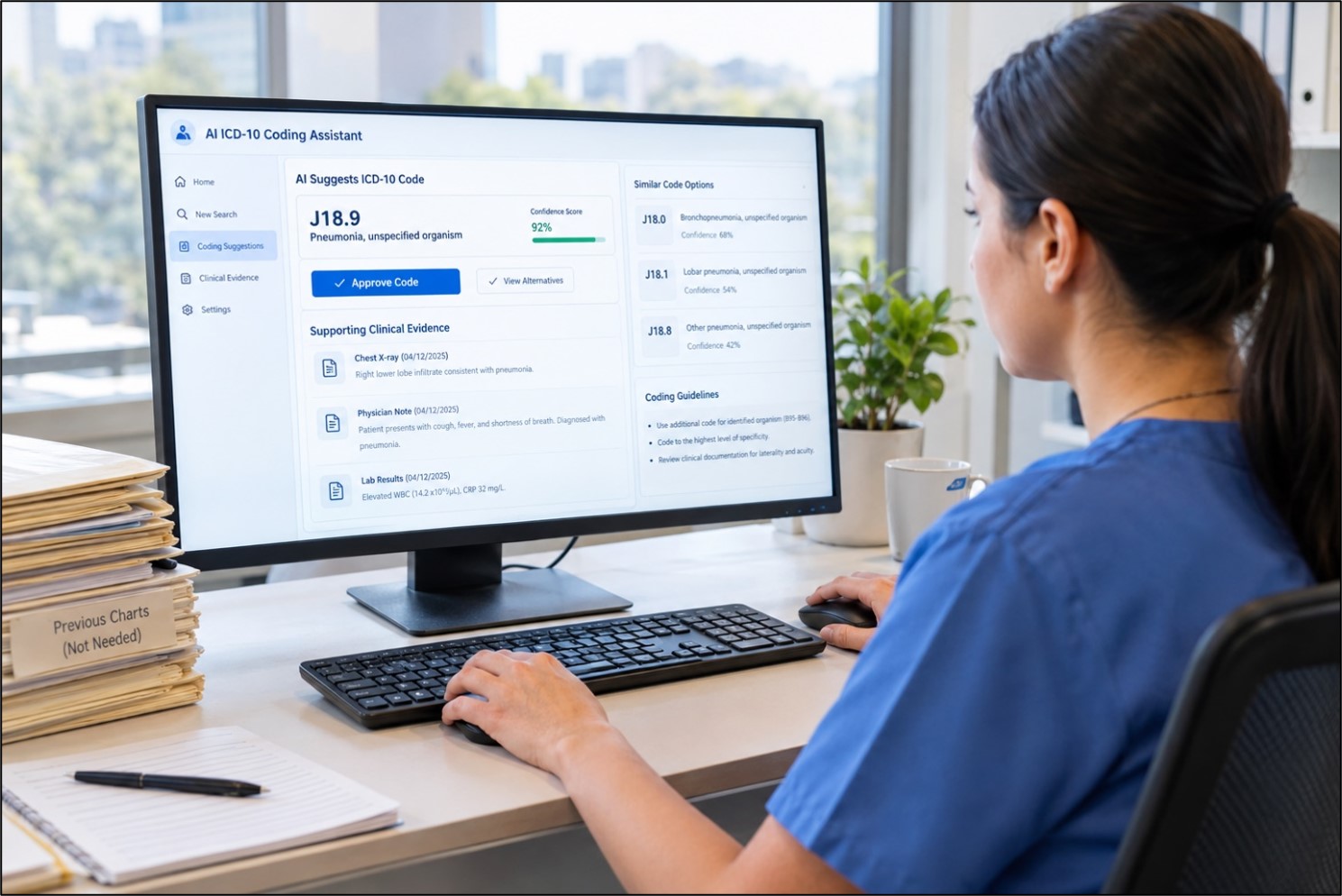
The AI-native generation was built on a different premise: instead of humans doing all the work and software storing the result, the work should arrive drafted and a human should review and decide. Referral documents become patient profiles automatically. Ambient AI captures the visit and structures it for OASIS-E2 or HOPE. QA runs at the point of care instead of days later, with evidence-linked citations. Coding review, billing, and patient engagement live in the same environment as the clinical record, producing one audit trail instead of four.
Honestly, the fair criticism of this tier is maturity. We don't have twenty years of edge cases behind us the way HCHB does. What we have is architecture the legacy platforms can't retrofit, and in a year when CMS froze new enrollments and expanded pre-claim review to six states, the value of documentation that traces to the actual encounter has stopped being theoretical.

Forget feature checklists. Every vendor checks every box in a demo. Decide on four things.
Your size and complexity today, and in three years. Enterprise platforms for enterprise problems. Don't buy an 18-month implementation to run a 60-census agency, and don't run a 1,000-census operation on a tool built for simplicity.
Your compliance exposure. If you operate in Florida, Illinois, North Carolina, Ohio, Oklahoma, or Texas, pre-claim review is your reality now. Weight point-of-care QA and audit-ready documentation heavily.
Your total stack, not the EMR price. Add up the EMR, the outsourced coding, the scrubber, the scribe add-on, the patient app, and the analytics tool. Compare whole stacks against whole stacks. Fragmented stacks look cheaper line by line and cost more in gaps.
Your clinicians' evenings. Ask every vendor the same question: where does documentation actually get finished? Then ask their reference customers the same question and compare answers.
The right EMR is the one that fits your agency, and for plenty of agencies that's still a legacy platform. But if you're choosing in 2026 for the next ten years, choose on architecture. Systems of record store what happened. Systems of action move the work.
We built AutoMynd to be the second kind. See it against whatever else you're evaluating at automynd.com.
.svg)


.png)