NEW: AutoMynd Unveils Patient-Centered AI EMR, Automating Episodes From Referral to Reimbursement Read more →
.svg)
.svg)
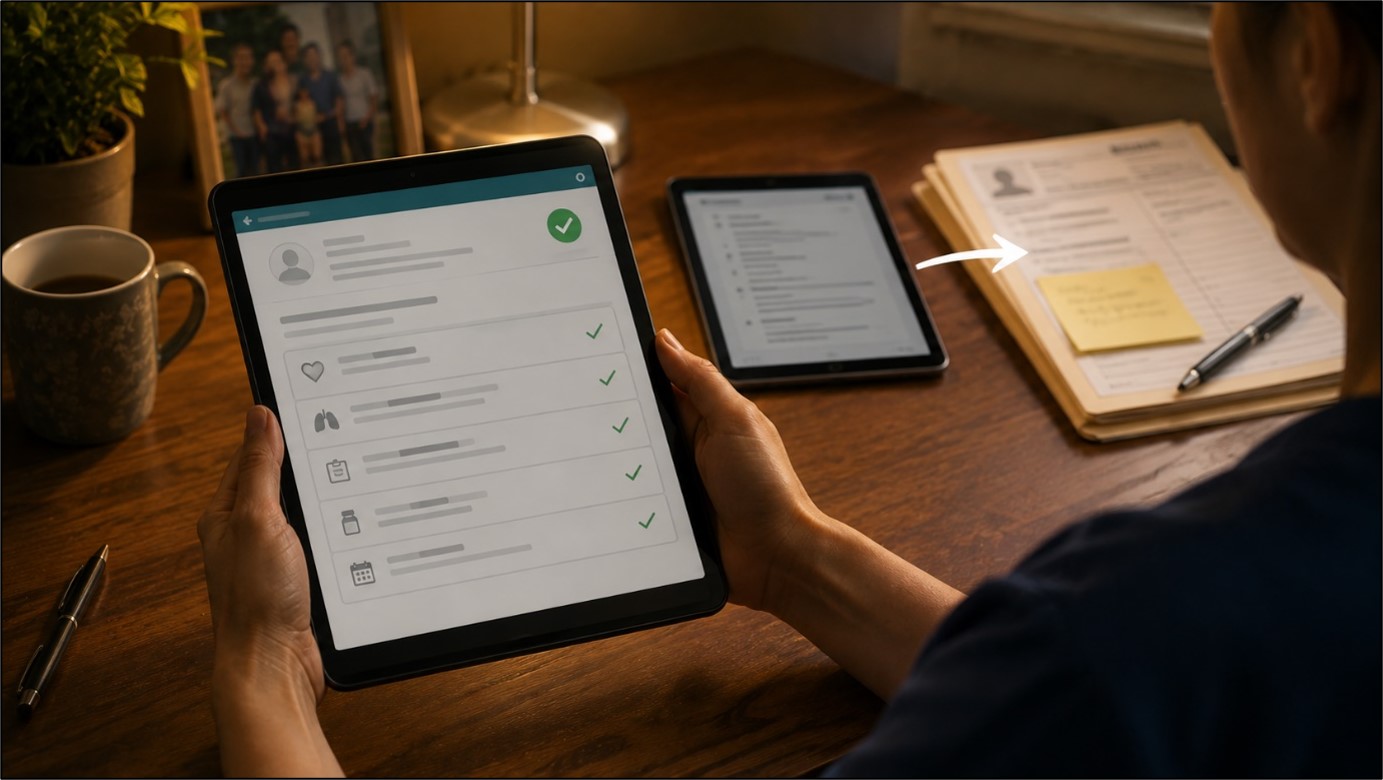
Every EMR is an AI EMR now. Honestly, the label stopped meaning anything about a year ago.
The legacy platforms have all announced something. An ambient scribe partnership here, a chatbot there, an "AI-powered insights" tab in the next release. If you're evaluating software for a home health or hospice agency in 2026, every vendor deck you see will have the same three letters on it.
So let me offer a more useful frame. The question isn't whether an EMR has AI. It's whether the EMR was built assuming AI exists.
That's the difference between AI-native and AI-bolted-on, and it's architectural. You can't demo your way around it, but you can learn to see it.
A traditional EMR is a system of record. Its architecture was designed for one job: a human enters data, the database stores it, another human retrieves it. Every screen, every workflow, every integration assumes the human does the work and the software holds the result.
When you bolt AI onto that architecture, the AI lives at the edges. The scribe add-on generates a note, then hands it to the same manual workflow that existed before. The chart still waits days for a human QA review. The coding still happens in a separate vendor's queue. The claim still goes out on the same timeline with the same blind spots. You've made one step faster inside a process that was designed around the assumption that no step could be automated.
There's a tell for this in the buying process. Bolted-on AI is priced and pitched as an add-on module, often through a partnership announcement, and it touches exactly one workflow. The rest of the platform is unchanged underneath.
None of this makes legacy platforms bad. They're proven systems of record. But a system of record with a scribe attached is still a system of record.
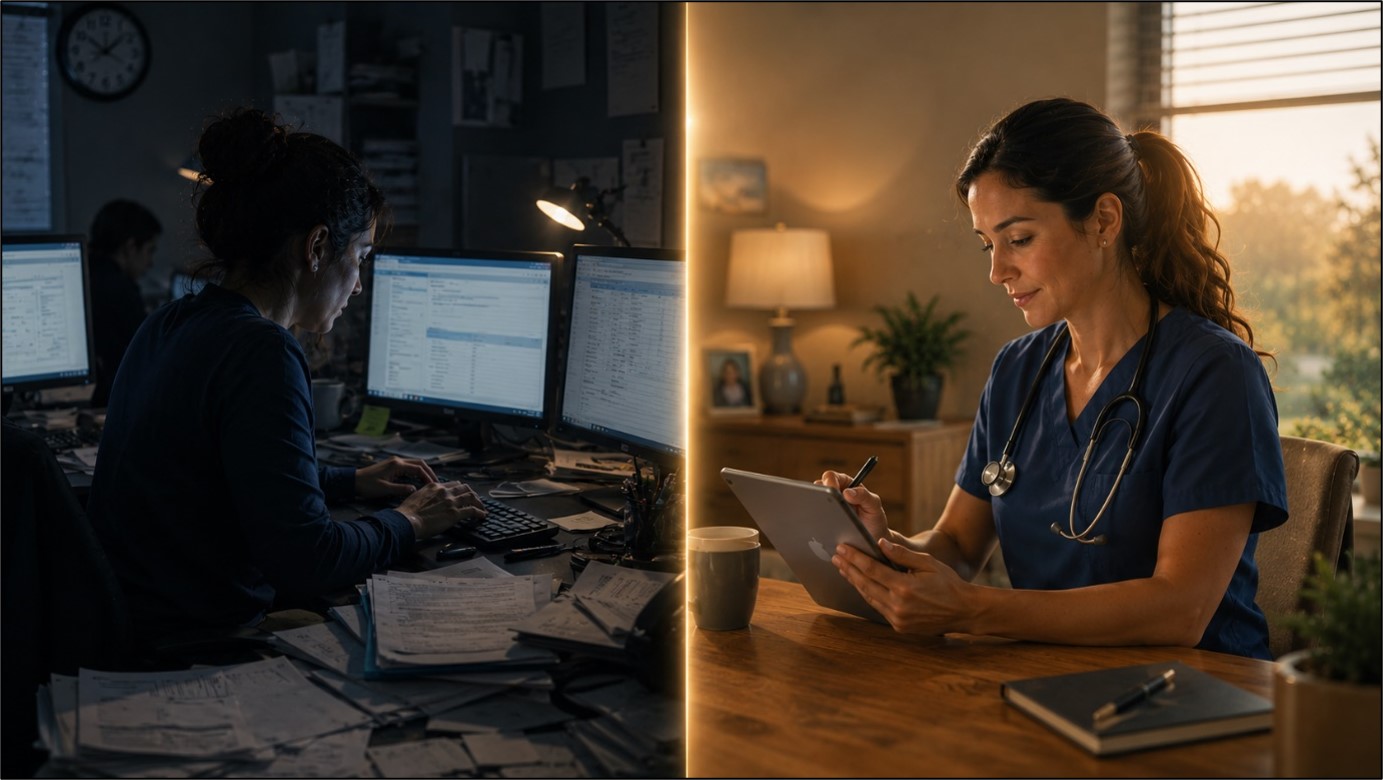
An AI-native EMR starts from a different assumption: the first draft of most work should already exist by the time a human sees it.
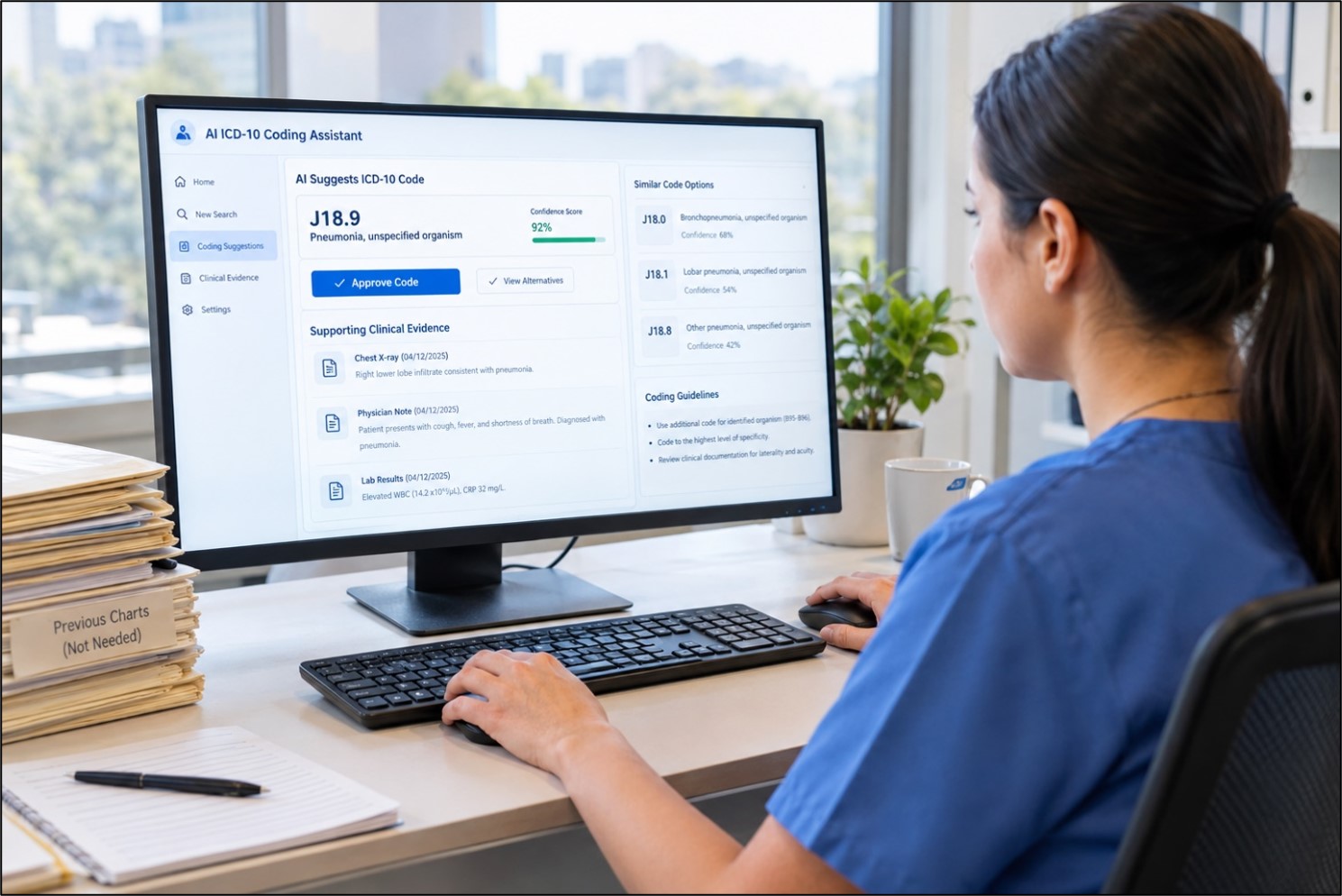
The referral arrives, and the patient profile, eligibility check, and authorization flags are already drafted. The visit happens, and the documentation is already structured for OASIS-E2 or HOPE because ambient AI captured the encounter itself. The chart is submitted, and the QA checks have already run, deterministic rules first because those are authoritative, AI narrative analysis second, flagging discrepancies with verbatim quotes from the record as evidence. The denial comes back, and the appeal package is already assembled.
Work arrives drafted, ranked by what it's worth. Your team reviews, decides, and finishes. The human stays in the loop on every clinical judgment, because in healthcare that isn't a limitation, it's the design.
That's not a feature. It's a different relationship between the software and the work. We call it the shift from system of record to system of action, and it's the entire premise AutoMynd is built on.
Two forces are converging on home health and hospice at the same time, and both punish the bolted-on architecture.
The first is CMS. The May 2026 nationwide enrollment moratorium came bundled with expanded pre-claim review, nationwide hospice site visits, and a public scoring system. The regulatory direction is unambiguous: documentation gets scrutinized closer to the moment of care, and agencies need evidence chains, not reconstructed narratives. A platform where documentation, QA, coding, and billing live in one environment produces one audit trail. A platform stitched together from an EMR, a scribe partner, a coding vendor, and a scrubber produces four, with gaps between them.
The second is margin pressure. PDGM adjustments keep tightening, and the 2026 rate cuts took real money off the table. The agencies that protect margin are the ones catching missed comorbidity adjustments before billing, keeping days-to-claim short, and running lean back offices. Every one of those is a workflow question, and workflow is exactly what bolted-on AI doesn't change.
When I first started AutoMynd, the market wanted to talk about time savings on documentation. Efficiency is table stakes now. The next generation of this technology stack gets judged on outcomes, margins, star ratings, and whether it actually enables value-based care instead of just documenting it.
You don't need to be technical to tell these apart. Ask a vendor these five questions and listen carefully.
Where does the AI's output go? If the answer is "into a note the clinician copies forward," it's bolted on. If the answer is "into the assessment, the QA queue, and the coding review as one motion," it's native.
Does the AI cite its evidence? Advisory AI should show its work, verbatim, from the record. If it can't tell you why it flagged something, your QA team can't trust it and your auditor won't either.
What happens between the AI features? Count the handoffs. Native platforms have workflows. Bolted-on platforms have exports.
Was the AI built or acquired? Partnerships and acquisitions can be fine, but ask how deep the integration goes. A scribe that writes into someone else's database is a guest, not a resident.
Who's accountable when the AI is wrong? The right answer keeps a human decision-maker on every clinical call and makes the AI's confidence and evidence visible. Anything vaguer than that is a risk you'll own later.
The traditional platforms will keep adding AI, and some of it will be genuinely useful. But architecture is destiny in software. A system designed for humans to do all the work will always treat AI as an accessory. A system designed for work to arrive drafted treats AI as the foundation and your people as the judgment layer, which is where they belong.
Home-based healthcare is having its moment. The operators who pick their platform on architecture rather than feature checklists are the ones who'll still be compounding the advantage five years from now.
We built AutoMynd AI-native from the first line of code, for home health, hospice, and personal care. One system, from referral to reimbursement to patient satisfaction.
See the difference in a demo at automynd.com.
.svg)


.png)