NEW: AutoMynd Unveils Patient-Centered AI EMR, Automating Episodes From Referral to Reimbursement Read more →
.svg)
.svg)

A Quality Assurance manager at a fast-growing care agency recently confessed that her team spends nearly forty minutes analyzing a single patient chart before billing, only to still miss tiny, expensive compliance errors. In home healthcare, a single mismatched detail between a field nurse's routine visit note and the master OASIS assessment can freeze a Medicare payment for months. The traditional method of manual, line-by-line chart reviews is too slow to keep up with aggressive documentation demands. Implementing intelligent, automated AI chart auditing for home health is fundamentally changing this dynamic, enabling agencies to clear four out of five charts perfectly on the very first pass.
The core problem stems from how legacy billing software treats compliance. Older platforms operate like a simple spell-checker, looking only for blank fields or missing signatures rather than analyzing the actual clinical story. This deep dive covers exactly how an intelligent auditing architecture reads a patient's story, automatically catches hidden clinical contradictions, and speeds up the entire revenue cycle.

A claim is rarely rejected for a nurse to not sign her name. Denials occur where the clinical story is not consistent among documents. For example, a physical therapist might record a patient's ability to walk fifty feet with little assistance and a nursing note would record the patient's complete bed rest on the same day.
To a standard digital filing cabinet, both fields look complete. But to a human auditor or a federal reviewer, that contradiction is an immediate red flag that triggers an audit. Manual QA teams are forced to act like detectives, scrolling back and forth through deep digital menus to catch these subtle errors. It is an exhausting game of hide-and-seek that delays billing and leaves money on the table.
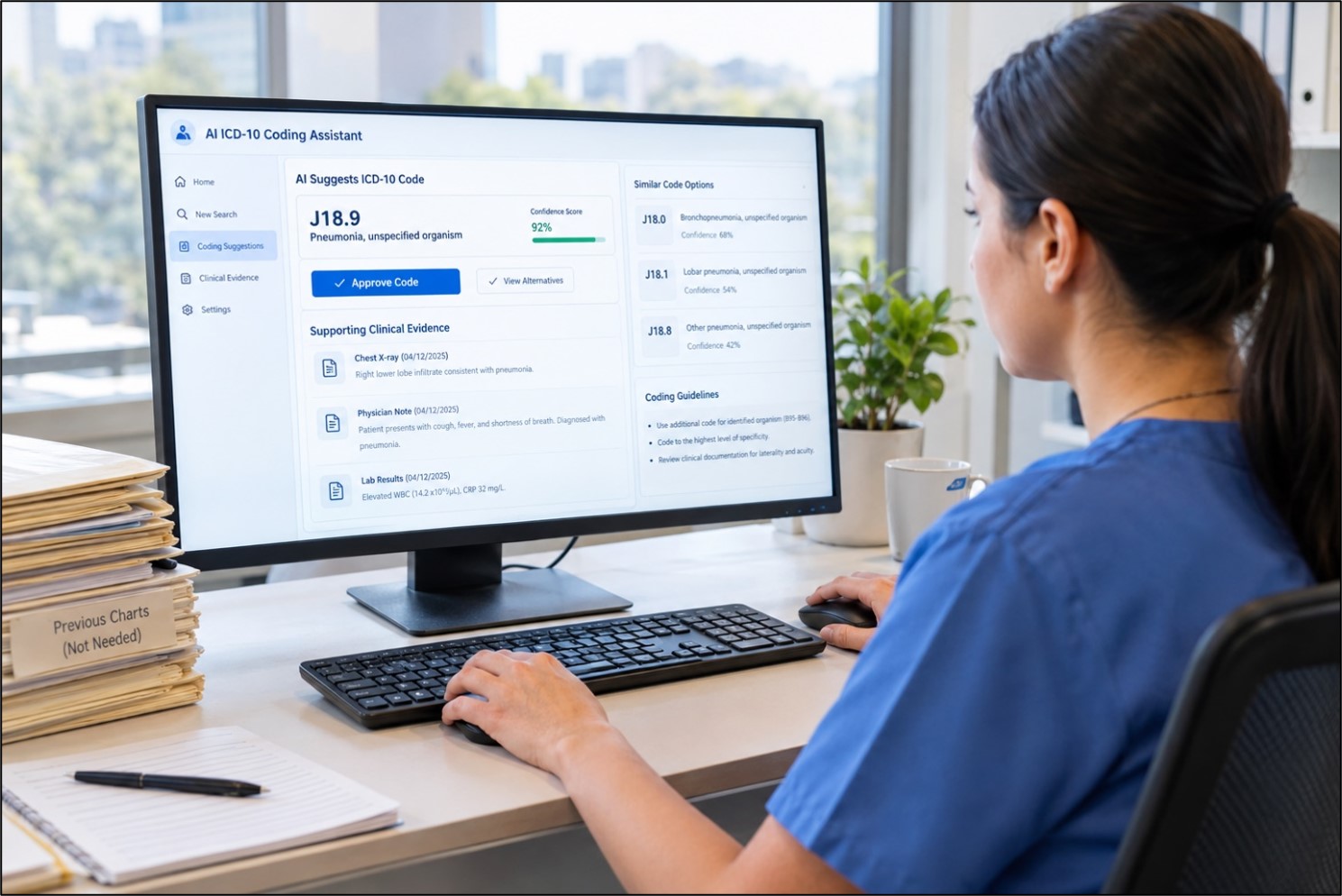
An intelligent, native system does not view a patient chart as a collection of isolated text boxes. It reads the documentation holistically, processing the entire clinical record simultaneously to find patterns, inconsistencies, and compliance risks.
• Cross-Document Validation: The software instantly compares intake paperwork, recent hospital discharge summaries, physician orders and daily field notes to ensure every clinical statement perfectly aligns.
• Smart Omission Detection: If a nurse records a complex wound dressing change but forgets to document the specific size or fluid drainage of the wound, the system flags the missing clinical context immediately.
• Proactive Correction Prompts: Instead of waiting for a weekly review pile field clinicians receive immediate, gentle alerts on their tablets while the details of the patient visit are still completely fresh in their minds.
• Risk Stratification: Charts are automatically categorized by complexity and error likelihood, allowing human QA managers to spend their valuable time focused only on the most difficult cases.

Moving away from the old manual review model completely changes the day-to-day culture of an office. Quality Assurance teams stop acting like administrative police who constantly nag field staff about typos and missing checkboxes. Instead, they become high-level reviewers who verify clean data.
When eighty percent of incoming charts pass through the system cleanly without requiring a human touch, the administrative backlog vanishes. Claims are submitted to payers within hours of a visit rather than weeks. This dramatic acceleration of the billing cycle provides agencies with the steady, predictable cash flow needed to expand services and invest in their communities.
Agencies looking to automate their review processes must look past flashy marketing promises. Ask how a vendor's system handles complex Medicare regulations. A basic text-matching tool will fail to catch the nuanced discrepancies that cause real-world payment delays.
The ideal setup operates invisibly and seamlessly alongside your field staff. It should support your clinicians in the background, catch errors before they leave the building, and give your leadership team complete confidence in your agency's compliance health.
Relying on slow, manual chart reviews in an era of strict federal oversight is a major risk to an agency's financial stability. The volume of paperwork required for home-based care is simply too high for human eyes to track perfectly without tech support. Securing your revenue requires an architecture built specifically to master the complexities of modern clinical documentation. AutoMynd provides a fully native platform equipped with an intelligent QA agent that automates chart reviews, allowing agencies to clear eighty percent of their documentation on the first pass while protecting their bottom line.
Most payment delays stem from subtle contradictions between different clinical documents, missing measurements in wound care notes, or discrepancies between field observations and the initial physician orders.
The software utilizes advanced linguistic analysis to read and understand the entire patient record as a single narrative. It flags conflicting information, such as mismatched mobility scores or conflicting medication lists, across separate visits.
Not at all. The technology acts as a powerful assistant that filters out the easy, error-free documentation, allowing human managers to focus their specialized expertise strictly on highly complex clinical cases that require human judgment.
Getting immediate, clear guidance while writing a note prevents the frustration of being questioned about a visit weeks later. It helps clinicians fix errors instantly, keeping their evenings free from administrative rework.
.svg)


.png)