NEW: AutoMynd Unveils Patient-Centered AI EMR, Automating Episodes From Referral to Reimbursement Read more →
.svg)
.svg)
Most "AI" in skilled home health today is a feature. It's a button someone added to a system that was designed fifteen years ago.
An AI-native EMR is a different thing entirely. It's not an old EMR with AI bolted on. It's an EMR designed from the first line of code around the assumption that the software should do the work, not just store the record of it.
That distinction sounds academic until you sit with a skilled home health agency for a day. Then it's the whole game.
For most of its history, the EMR had one job: hold the chart. Capture the OASIS, store the visit note, keep the record so it's there when a surveyor or a payer asks.
That's a system of record. It's passive. It waits for a human to type into it, and it tells you what hap-pened after the fact.
Skilled home health has outgrown that. The margins are thinner, PDGM is less forgiving, CMS scru-tiny is heavier, and the clinical documentation burden on nurses and therapists has never been higher. A filing cabinet doesn't help with any of that. It just holds the paperwork you're drowning in.
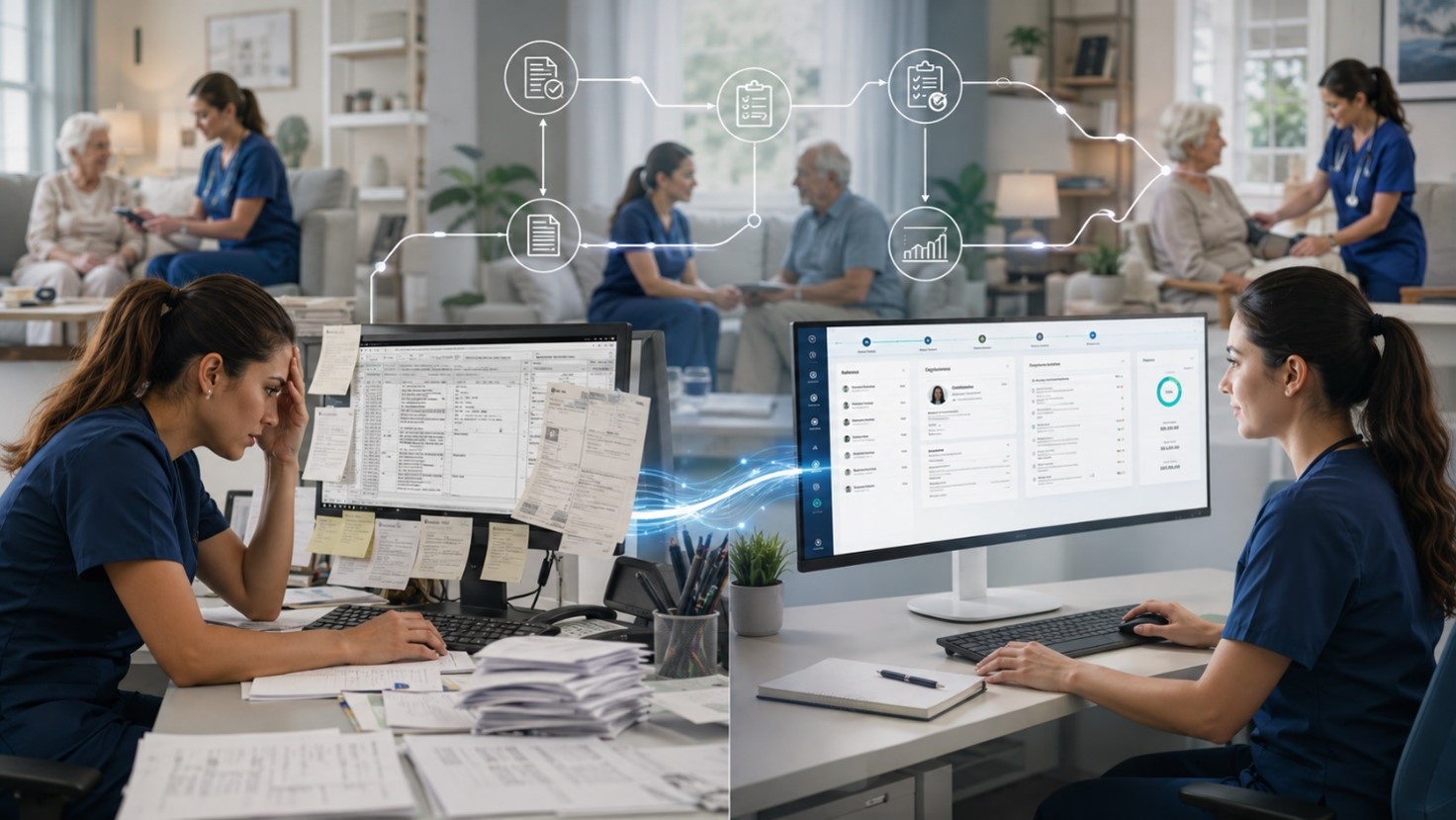
Here's the reframe we built AutoMynd around: the EMR should move from a system of record to a system of action.
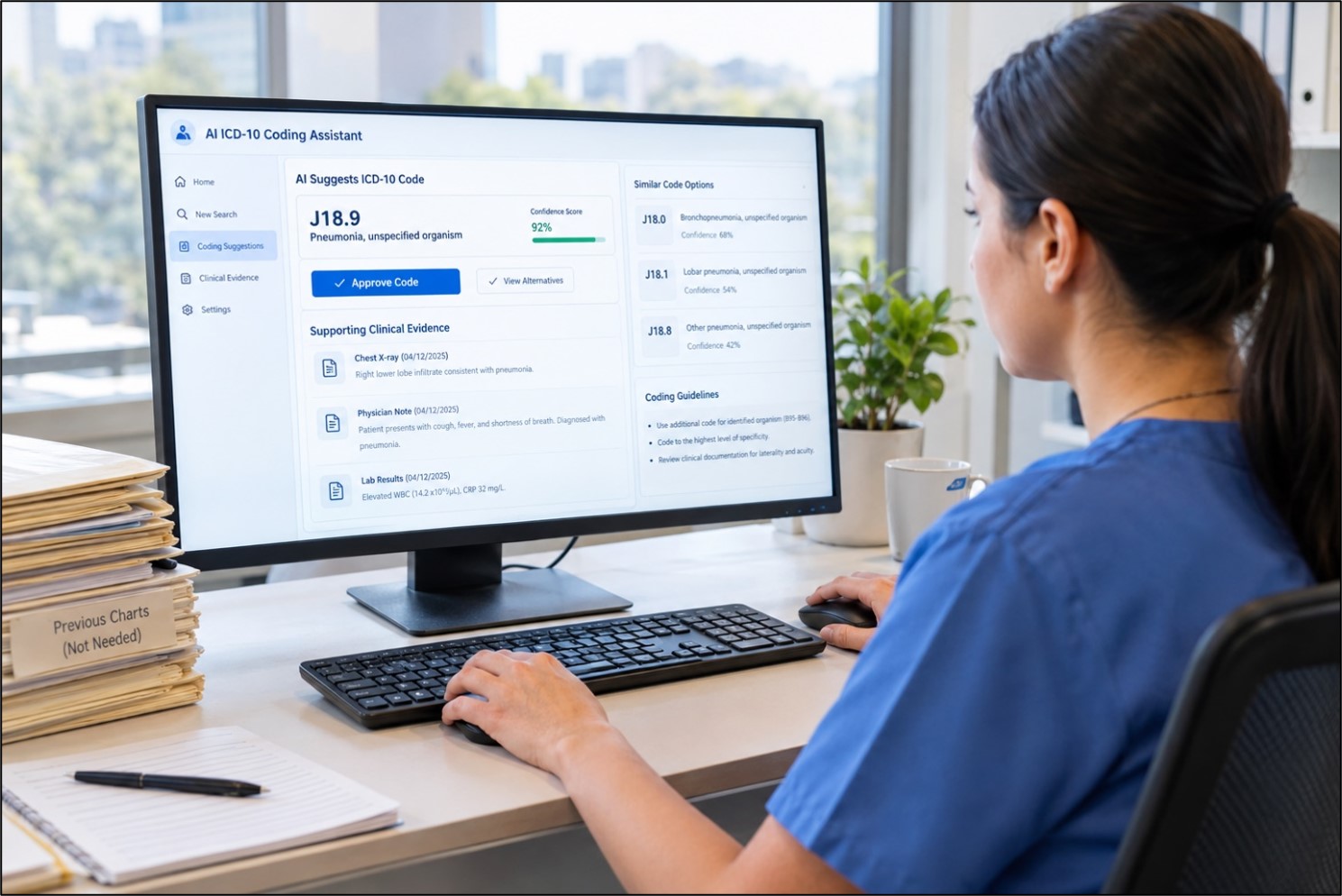
That means the work arrives already started. A referral comes in and the intake is drafted, not dumped in a queue. A visit happens and the documentation is structured from the actual encounter, not typed at 9pm on the couch. A chart is ready for QA and the coding and OASIS issues are already flagged, ranked by what they cost you, before anyone touches it.
The AI isn't a helper sitting off to the side. It's the layer the whole workflow runs through, from refer-ral to reimbursement to patient satisfaction.
You can't retrofit this. When AI is added to a legacy EMR, it lives in a corner a scribe here, a sugges-tion there while the underlying system still assumes a human does every step manually. The data model, the workflow, the screens: all of it was designed for a world where the software's job was to remember, not to act.
An AI-native EMR inverts that. The workflow is built around AI doing the first pass on everything, with clinicians and QA staff reviewing, correcting, and deciding. Deterministic rules handle what must be exact compliance, billing logic. AI handles the narrative and the judgment calls, always showing its evidence, never quietly overriding a human on the things that matter.
That architecture isn't a feature you can add later. It's a foundation you either poured or you didn't.
Concretely, in an AI-native EMR for skilled home health:
Intake stops being a bottleneck, because referral packets turn into structured, ready-to-act admissions instead of PDFs someone has to read.
Documentation stops eating clinicians' evenings, because the note is built from the visit as it happens.
QA and coding stop being a scramble at the end of the episode, because issues surface continuously and get triaged by dollars at risk.
None of these live in separate tools. They work as one system. That's the point of building it native the pieces were designed to talk to each other, because they were designed together.
Efficiency and time savings are table stakes now. Honestly, they're already dated. The reason an AI-native EMR matters for skilled home health isn't that it saves a few minutes it's that it changes what an agency can expect from its own software. Better documentation accuracy, cleaner claims, stronger compliance evidence, and clinicians who get their time back for care instead of charts.
A traditional EMR remembers what you did. An AI-native EMR helps you do it. For skilled home health in 2026, that's not a nice-to-have. It's the new operational standard.
This is the shift we're building for the home health community and we're just getting started.
Curious what an AI-native EMR looks like end to end? See how AutoMynd runs skilled home health from referral to reimbursement.
.svg)