NEW: AutoMynd Unveils Patient-Centered AI EMR, Automating Episodes From Referral to Reimbursement Read more →
.svg)
.svg)
In skilled home health, agencies don't usually lose money on the visit. They lose it in the gaps.
The gap between a referral arriving and someone acting on it. The gap between a visit happening and the note being finished. The gap between the chart being done and the claim going out clean. Every one of those gaps is a place where a day slips, an error creeps in, or a dollar walks out the door.
Most EMRs were never designed to close those gaps. They were designed to hold a record at each stop. The stitching between the stops was always a human's job and humans are expensive, tired, and stretched thin.
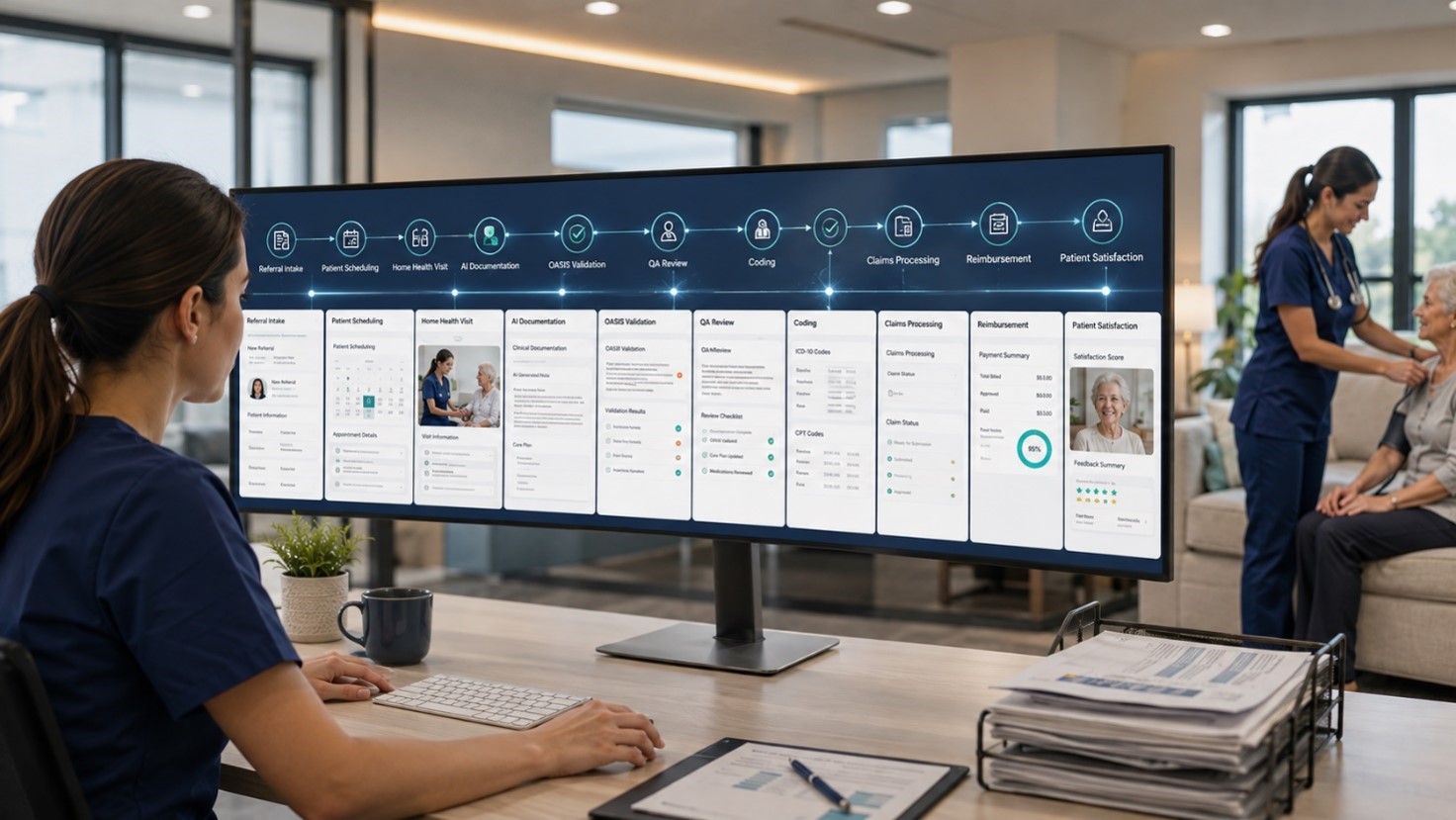
An end-to-end AI EMR is built to run the whole episode as one flow. Not five tools taped together. One system, from referral to reimbursement to patient satisfaction.
A skilled home health referral shows up as a messy packet a fax, a PDF, a portal dump. In a traditional setup, it lands in a queue and waits for a coordinator to read it, key it in, and chase what's missing.
An AI EMR turns that packet into a structured, ready-to-act admission on arrival. Diagnoses, orders, insurance, missing items extracted and organized before a human even opens it. The work arrives drafted.
That's not a convenience. Faster, cleaner intake is how you say yes to more referrals without adding headcount, and how you stop losing admits to the agency that called back first.
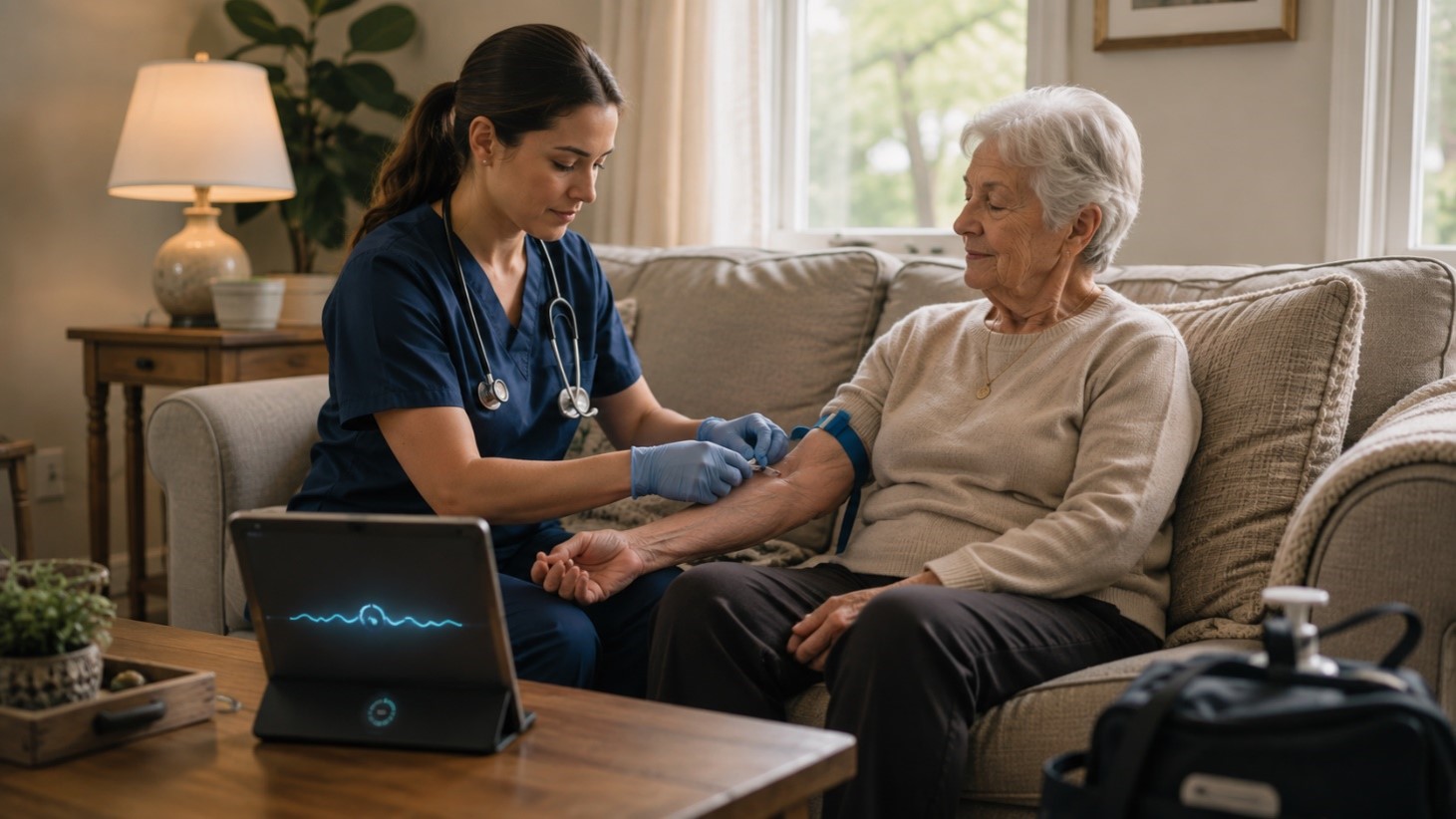
The next gap is the biggest one for clinicians. The visit happens in the home. The documentation happens hours later, from memory, at night.
An AI-native EMR closes that by building the note from the actual encounter ambient AI capturing the visit and structuring it into compliant documentation, OASIS included. The clinician reviews and signs instead of typing from scratch.
Give a nurse their evening back and you don't just improve their life. You improve the accuracy of the record, because it's captured when it's fresh, not reconstructed when it's not.
Then comes the end of the episode, where traditional agencies do their scrambling. Charts pile up for QA. Coders hunt for errors. Claims go out and some come back denied.
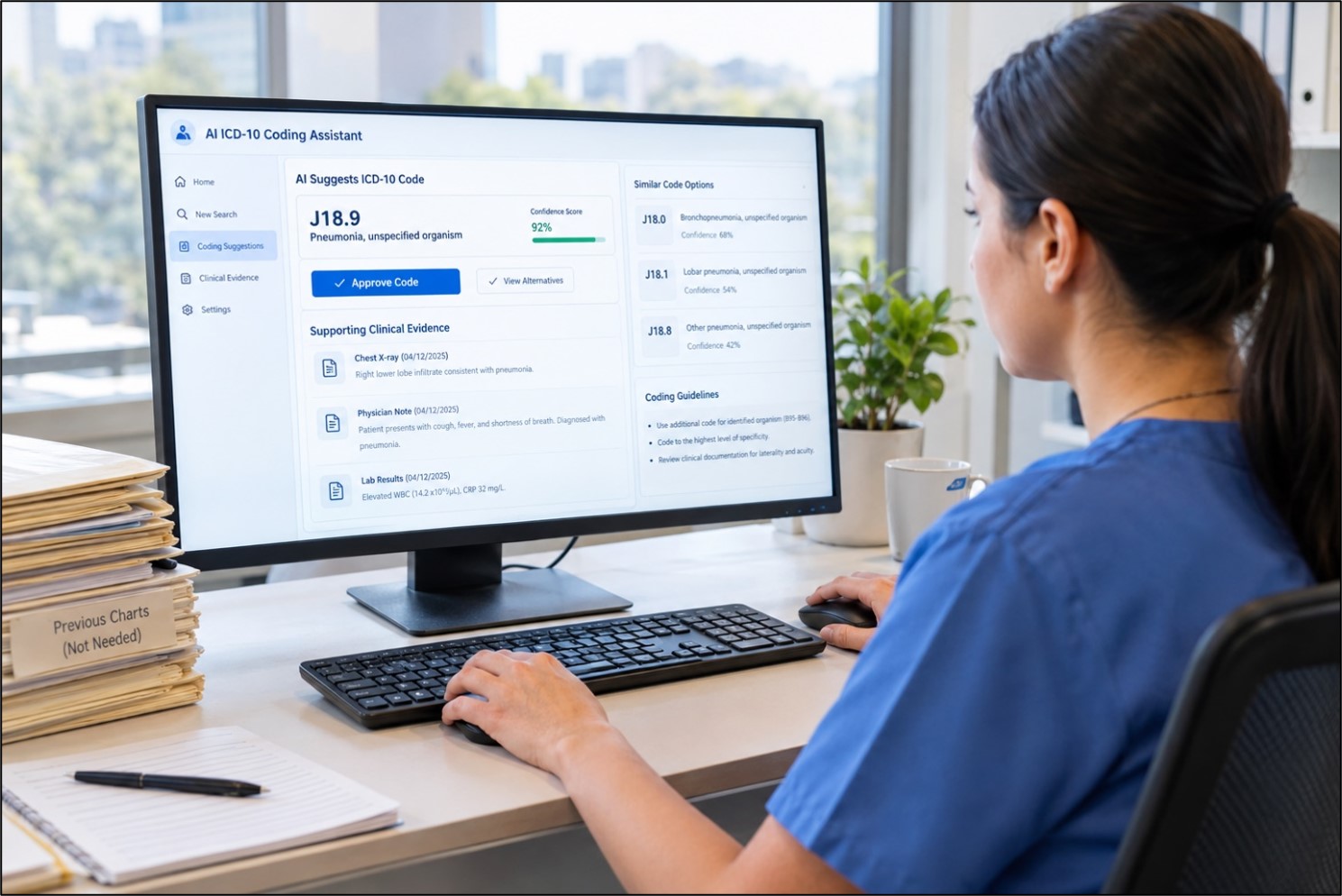
An end-to-end AI EMR runs QA and coding continuously, not as a last-minute gate. Issues surface as they happen, ranked by dollars at risk, so your team works the chart that's about to cost you first not the one that happened to be on top of the pile. OASIS accuracy, PDGM coding, documentation gaps that would trigger an ADR or a denial: flagged while there's still time to fix them.
The claim that goes out is cleaner because the whole episode fed it clean.
You can buy a point solution for any one of these. An intake tool. A scribe. A QA vendor. Plenty of agencies have.
But every handoff between separate tools is a new gap and gaps are exactly what was costing you. Stitching five vendors together just moves the seams around. It doesn't remove them.
The transformation comes from solving the problem as a whole. When intake, scheduling, documentation, QA, coding, and revenue cycle are one system, the data flows without a handoff, and the AI can see the entire episode instead of one slice of it. That's when a system of record becomes a system of action.
Cleaner claims and fewer denials. Faster admissions without more coordinators. Documentation that holds up under CMS scrutiny because it was captured right the first time. Clinicians who spend their energy on patients. And an operator who can finally see the whole episode in one place instead of reconciling five dashboards.
Efficiency was table stakes. This is about margin, compliance, and outcomes the things that actually decide whether a skilled agency thrives.
That's the standard we're building toward with the home health community. From referral to reimbursement, as one flow.
See how AutoMynd runs the full skilled home health episode end to end.
.svg)


.png)