NEW: AutoMynd Unveils Patient-Centered AI EMR, Automating Episodes From Referral to Reimbursement Read more →
.svg)
.svg)
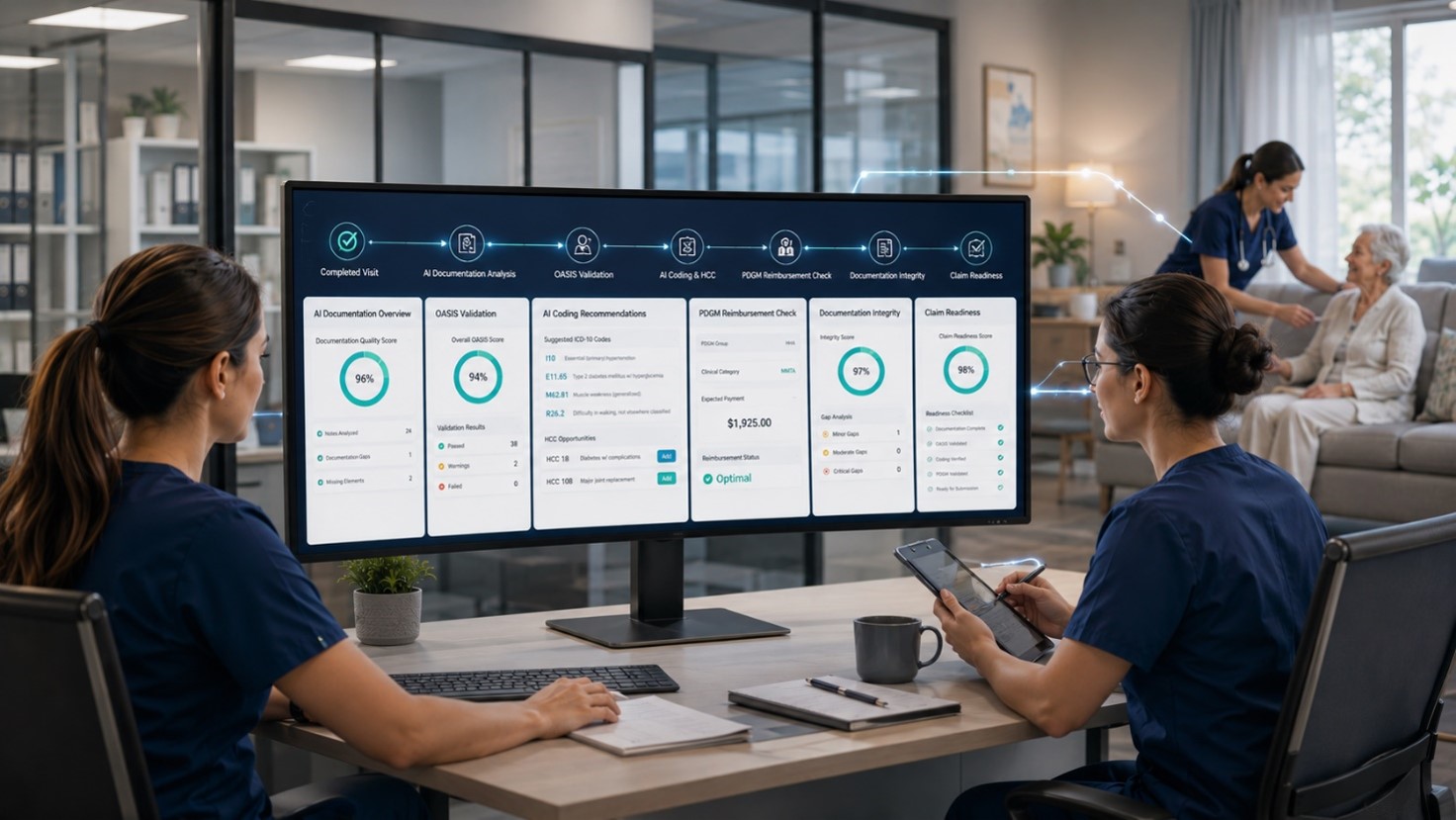
QA and coding are usually the last thing a skilled home health EMR thinks about. That's exactly why they're where agencies bleed.
In most setups, QA is a separate step at the end of the episode. Coding is a separate team, or a separate vendor, working from the finished chart. By the time either of them catches a problem, the visit is long over, the clinician has moved on, and the fix is either a painful callback or a write-off.
A modern EMR can't treat QA and coding as an afterthought bolted onto the record. In skilled home health, they have to be built in running continuously, on the same system, as the documentation happens.
When QA is a downstream gate, three things go wrong, every episode.
The volume is impossible. Reviewers can't read every chart deeply, so they sample, and the errors they don't reach go out the door.
The timing is wrong. A gap found two weeks after the visit is a gap you can barely fix the clinician doesn't remember, the window is closing, the correction is weak.
And the priorities are blind. A QA team working a stack top-to-bottom has no idea which chart is about to trigger a denial and which is fine. They're spending the same attention on both.
Built-in QA fixes all three. Because it's part of the EMR, it can check every chart, not a sample. Because it runs on events the moment a visit note is submitted it catches issues while the visit is still fresh. And because it sees the whole episode, it can rank what's wrong by dollars at risk, so your team works the chart that matters most first.
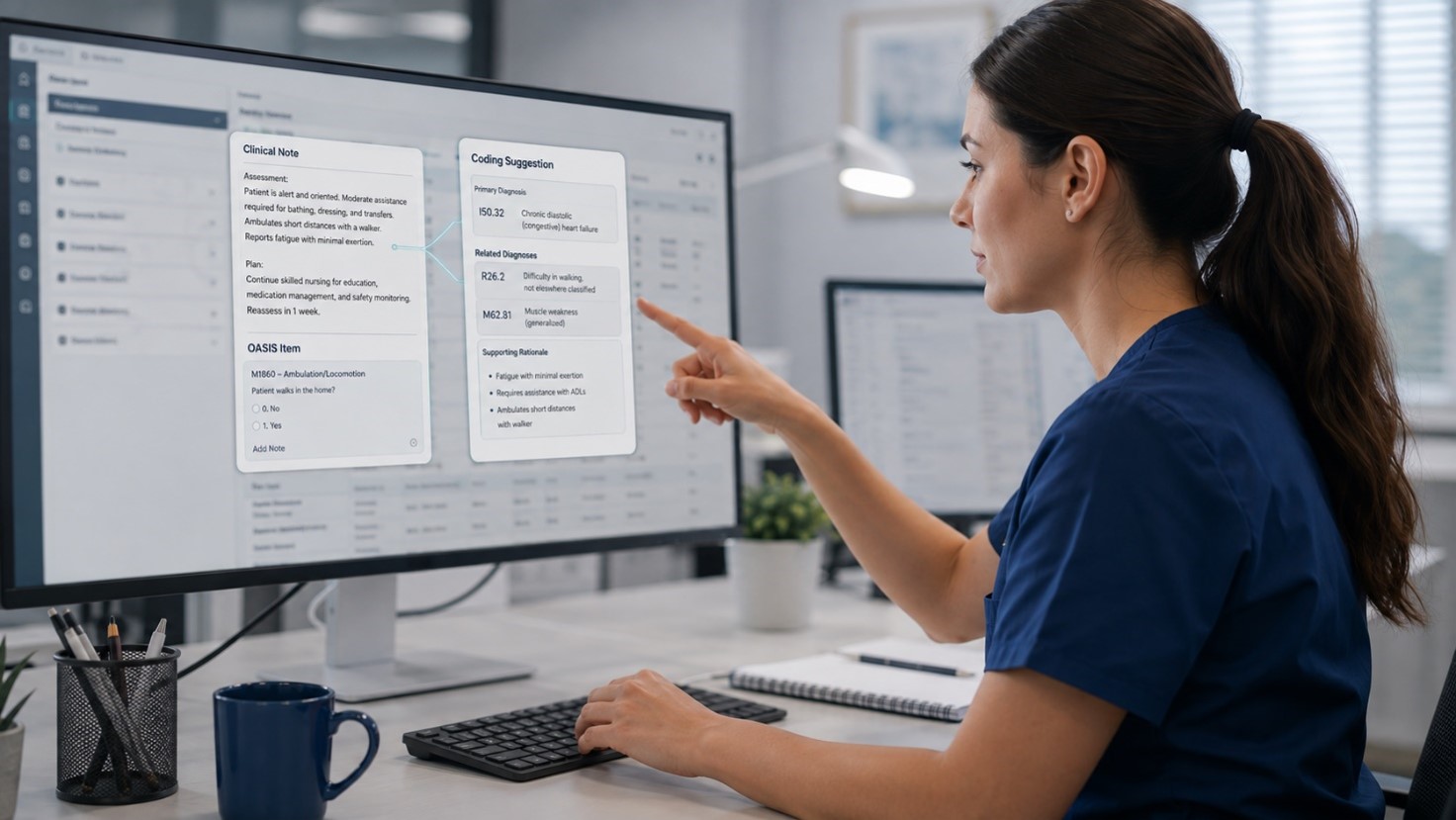
The same logic applies to coding. When coding is separated from the documentation, coders work from whatever the clinician wrote, guessing at intent, chasing clarification, and leaving money on the table when the documentation doesn't support the acuity that was actually there.
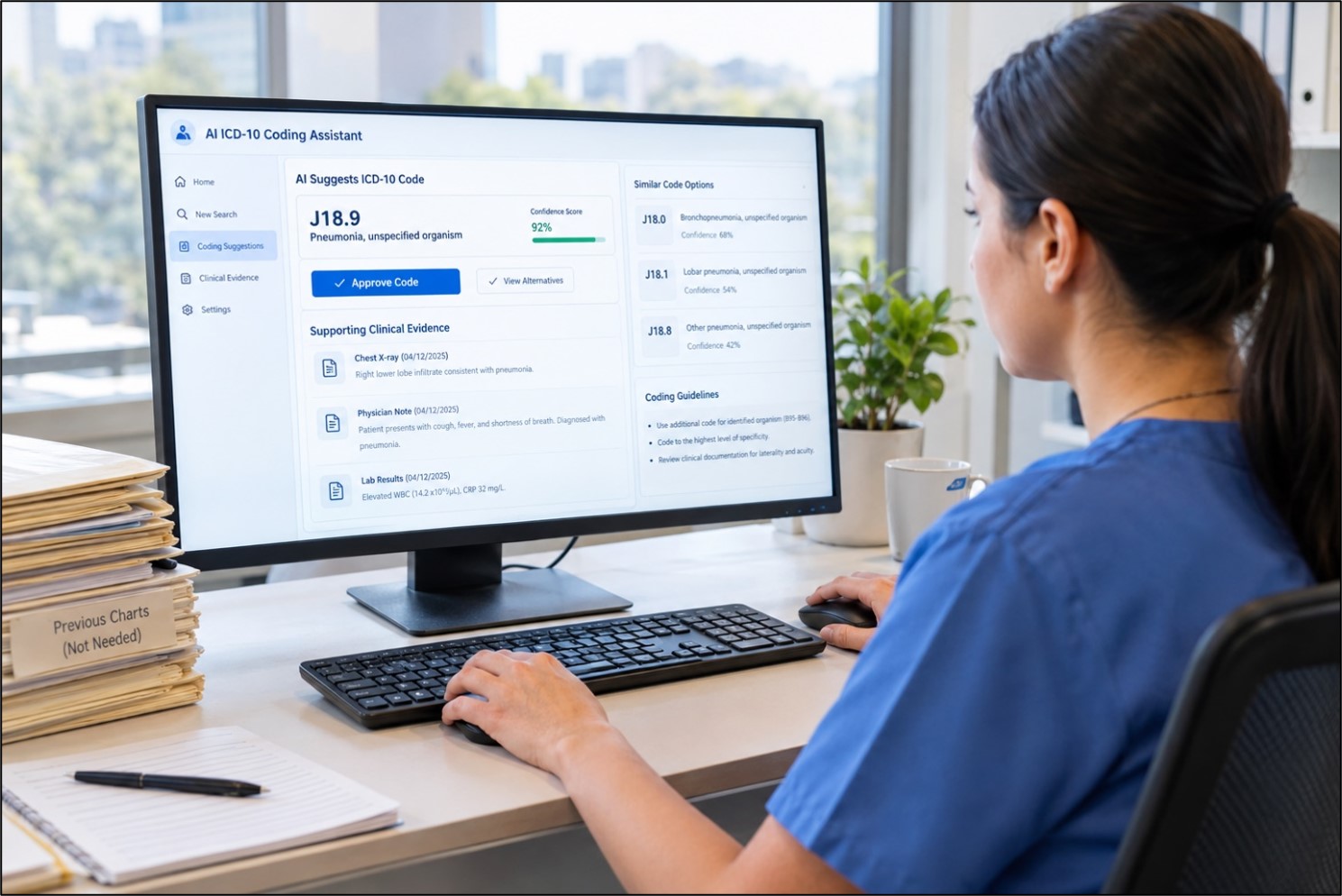
Build coding into the EMR and it works from the full clinical picture the visit, the OASIS, the diagnoses with AI surfacing the coding and OASIS issues that affect PDGM reimbursement before the claim is built. Not to replace the coder's judgment, but to put the right questions in front of them at the right time, with the evidence attached.
Accurate OASIS and accurate coding aren't a compliance chore. Under PDGM, they're the difference between getting paid for the care you actually delivered and getting paid for less.
There's a right way and a wrong way to do AI here, and skilled home health can't afford the wrong way.
The compliance and billing logic the rules that must be exact should be deterministic and authoritative. AI shouldn't quietly decide whether something meets a Medicare requirement. Where the judgment is narrative is this documentation strong enough, is this note going to hold up under an ADR that's where AI analysis earns its keep, always showing the verbatim evidence, always advisory, never hard-blocking a clinician in a black box.
Get that split right and QA becomes something your team trusts instead of fights.
Your revenue cycle, first. Cleaner claims, fewer denials, fewer write-offs, and accurate reimbursement for real acuity.
Your compliance posture, second. As CMS scrutiny of home health intensifies, documentation that was reviewed continuously and captured accurately is your best evidence that a visit was valid and appropriate.
And your people, third. QA staff stop drowning in charts and start working the ones that matter. Coders stop chasing clarification. Clinicians get feedback while it's still useful.
QA and coding aren't the boring back office of a skilled home health EMR. Built in, they're the part that decides whether you keep the money you earned.
That's why we built them into the core, not the corner.
See how AutoMynd's QAgent runs chart review and coding QA inside the EMR.
.svg)


.png)