NEW: AutoMynd Unveils Patient-Centered AI EMR, Automating Episodes From Referral to Reimbursement Read more →
.svg)
.svg)
Intake doesn’t get keynotes. Nobody starts an agency dreaming about referral processing. And yet intake decides more about your census and your revenue than almost any function in the building.
Here’s the uncomfortable math. Referral sources send to the agency that responds first with a yes. Every hour a fax sits in a queue is an hour a competitor can answer. And every error that enters at intake, wrong payer, missed authorization, incomplete demographics, compounds downstream through scheduling, documentation, and billing until someone pays to fix it.
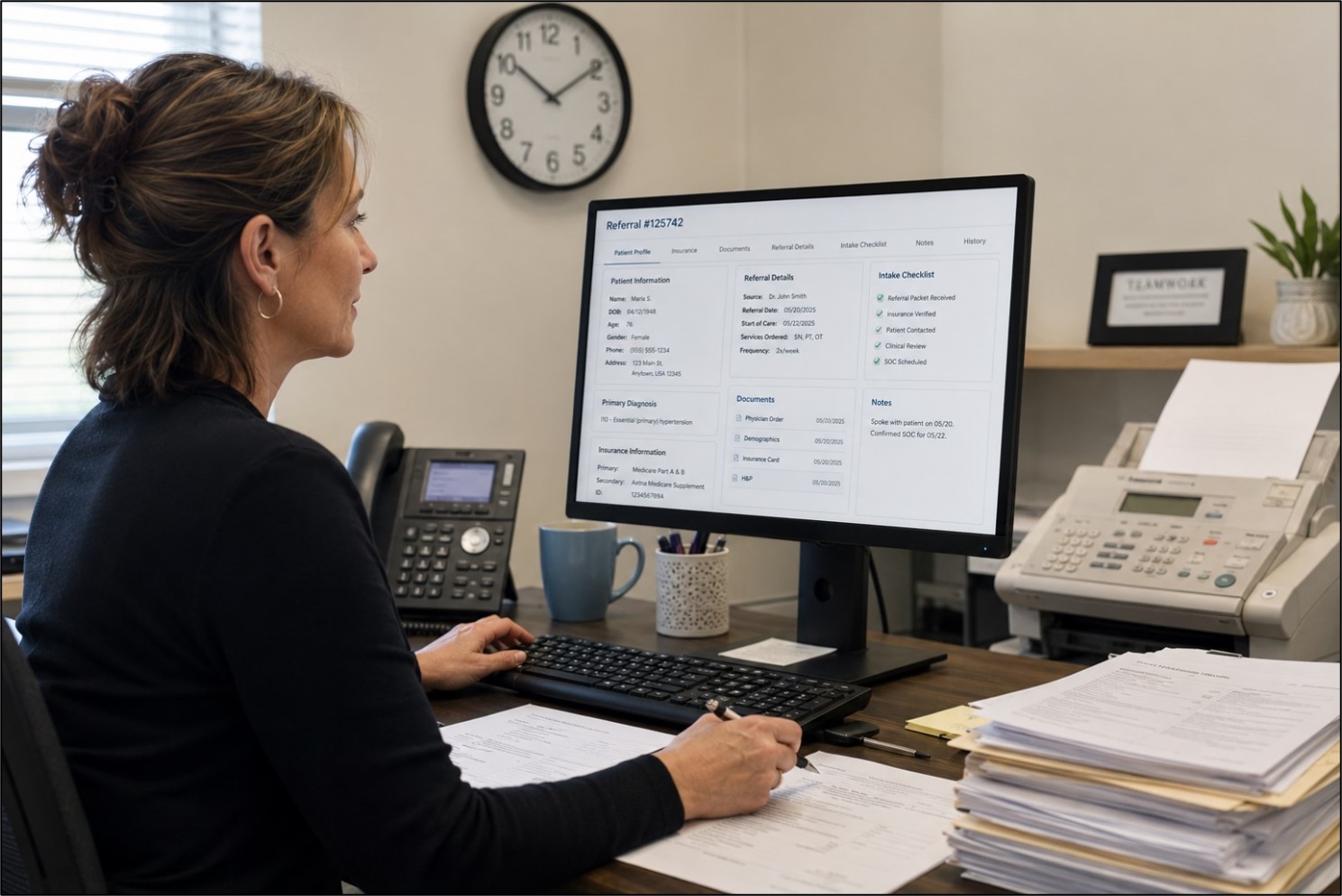
A referral arrives, still usually as a fax or portal PDF: face sheets, H&P, medication lists, orders. Someone has to read it, build the patient profile, verify eligibility, check authorization requirements, assess whether the agency can staff it, and get back to the referral source. Then comes scheduling the SOC visit and getting the clinician what they need to walk in prepared.
At most agencies this is manual re-keying under time pressure, which is exactly the combination that produces errors. Intake coordinators are talented people doing data entry that software should have done.

The documents are the bottleneck, and documents are what AI reads well now. Our IntakeIQ takes the referral packet and drafts the patient profile automatically, flags eligibility and authorization issues at the point of entry, and surfaces what’s missing before anyone commits. The coordinator reviews and decides instead of transcribing. Work arrives drafted; the human stays the judgment layer.
The output that matters are time. Referral-to-response drops from hours to minutes. Referral-to-admission compresses by days. And in a business where the fastest credible yes wins the patient, that speed is market share.
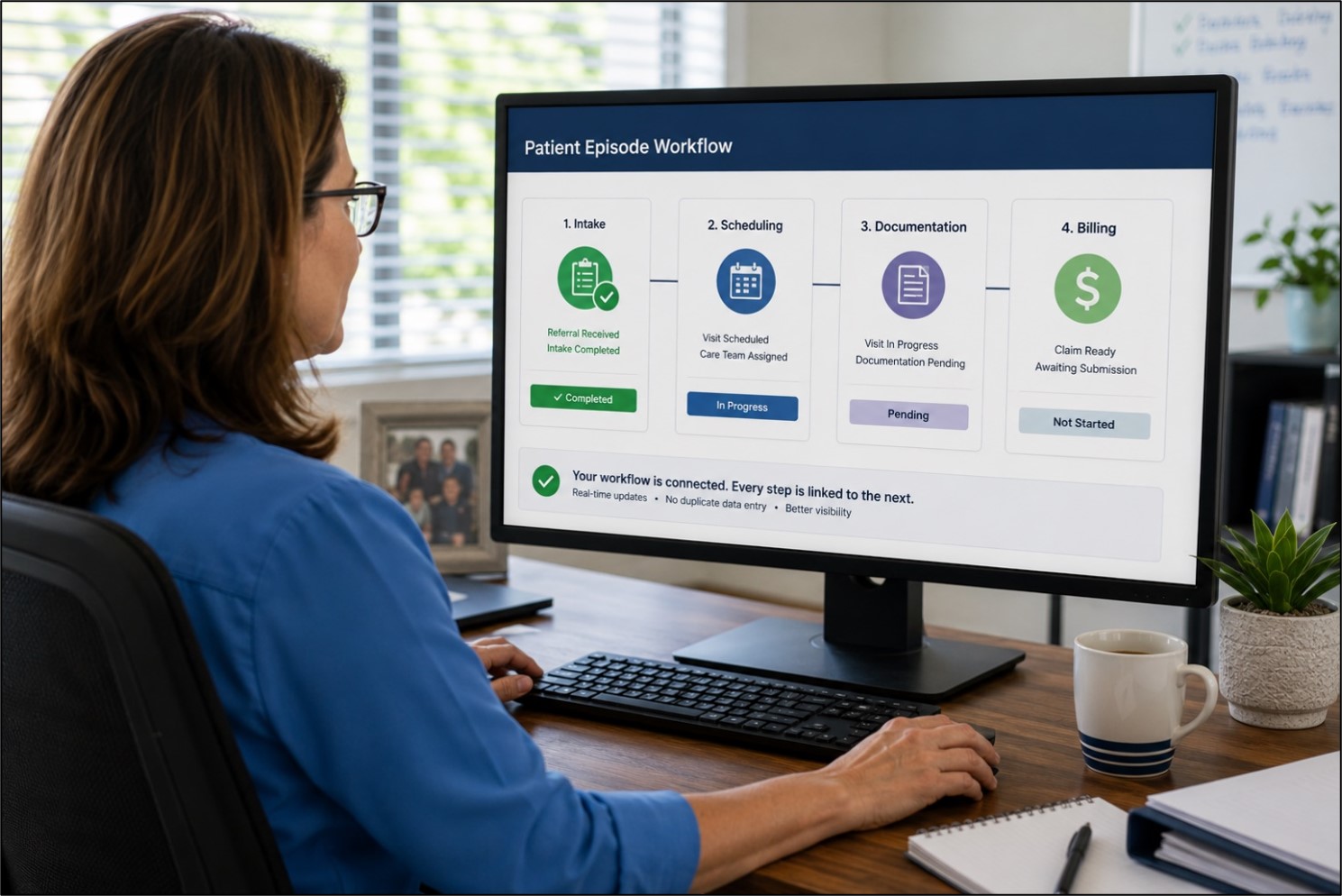
The second output is quieter but worth as much: an episode that starts clean stays clean. Correct payer from day one means the claim doesn’t bounce in week five. Authorization confirmed up front means the visits actually pay. The intake profile flows into the same environment where documentation, QA, and billing live, so nothing gets re-entered and nothing drifts between systems. From referral to reimbursement, one chain.
Agencies obsess over the back end of revenue cycle, the denials and the appeals. Honestly, the cheapest denial is the one intake prevented. Fix the front door and the whole house gets easier.
See what your intake could look like at automynd.com.
One AI-native EMR for intake, documentation, QA, coding and billing, built for home health agencies.
Book a demo.svg)