NEW: AutoMynd Unveils Patient-Centered AI EMR, Automating Episodes From Referral to Reimbursement Read more →
.svg)
.svg)

A business director sits at a desk on Tuesday morning looking at a falling star rating graph. For years, the agency held a solid four-star ranking, but the recent shift in federal quality measurements has triggered a slow, painful slide. Many home care owners do not realize that the data hitting their records right now dictates the official government ratings that will be published much later. Federal adjustments to the Home Health Value-Based Purchasing metrics and Care Compare scoring have fundamentally changed the rules of the game. Relying on an old-school data registry that was not built to track complex clinical trends in real time is a recipe for operational failure. To protect your revenue, you need an intelligent home health AI EMR that anticipates compliance shifts and guides your staff before mistakes hit the official record.
This deep dive covers how federal scoring systems are shifting their focus toward specific outcomes, why delayed documentation destroys your public standing, and how a natively intelligent infrastructure fixes your clinical scores automatically.

A major point of confusion for local providers is the timeline of federal feedback loops. The quality marks displayed on government public comparison websites are never a reflection of your current performance. They are a rearview mirror looking back at documentation submitted months or even years prior.
If your field staff is making systematic errors on their clinical forms today, you will not see the financial or public penalties until the scoring cycle catches up down the road. Traditional software platforms act as passive storage lockers. They let your staff type whatever they want into a chart, saving the text without analyzing if the metrics will trigger a structural penalty. By the time you notice your scores dropping on a quarterly preview report, the financial damage is already done.
The government has significantly changed the weight of specific clinical categories. General process tracking is out, and highly specific functional improvements are in. The scoring algorithms place immense weight on clear, measurable progress in patient independence.
• Granular Functional Progress Score: Systems look deeply at distinct mobility improvements, specifically charting how well a patient handles bathing, upper body dressing, lower body dressing, and basic bed transfers.
• Claims-Based Value Measures: Agencies are held accountable for total medical spending per beneficiary, which tracks patient care metrics for a full sixty-day treatment block and an additional thirty days post-discharge.
• Acute Care Prevention: Hospitalization rates within the stay remain a massive percentage of an agency's total performance score, requiring immediate clinical interventions the moment a patient condition begins to waver.
• Patient Experience Focus: Public surveys have narrowed down to core holistic ratings, meaning the entire patient interaction needs to feel coordinated and professional from the very first visit.

Old software setups rely heavily on post-visit quality assurance reviews. A nurse drives to a home, types up her assessment on a laptop, and hits submit. A few days later, an office compliance officer opens the chart, notices a contradiction in the assessment details, and sends it back to the nurse for corrections.
This delay breaks the operational flow. It forces the nurse to remember a patient state from days ago, resulting in guesswork, late corrections, and inaccurate tracking. Even worse, if a field clinician fails to document a tiny, specific improvement in a patient's medication management routine, the legacy platform will not flag it as a missed statistical opportunity. The agency simply loses the quality points without ever knowing why.
An architecture built from the ground up with native intelligence changes the entire dynamic of clinical charting. Because the platform understands medical language and regulatory rules naturally, it acts as a live coach for the field staff.
As a clinician utilizes ambient audio during a routine visit, the system processes the verbal discussion against strict clinical guidelines. It ensures that every functional improvement is captured precisely during the encounter. If a nurse notes that a patient can now wash their upper body independently but forgets to adjust the lower body dressing score, the system catches the mismatch instantly before the note is locked. This real-time course correction guarantees that your official records perfectly reflect the excellent Care your team is delivering in the field.
Sustaining a premium healthcare business requires an operational foundation that can look over the horizon. The days of fixing charting mistakes weeks after the visit are completely gone. To maintain top rankings, win hospital referrals, and maximize federal reimbursements, your technology must be as smart as your clinicians. AutoMynd provides a fully native platform built specifically to master complex care workflows, automating compliance capture at the point of Care and securing the high-quality ratings your team earns every day.
The rating calculations rely heavily on specialized clinical data sets and insurance claims records. The scoring focuses directly on functional improvements, acute care hospitalization rates, and successful discharges back into the community.
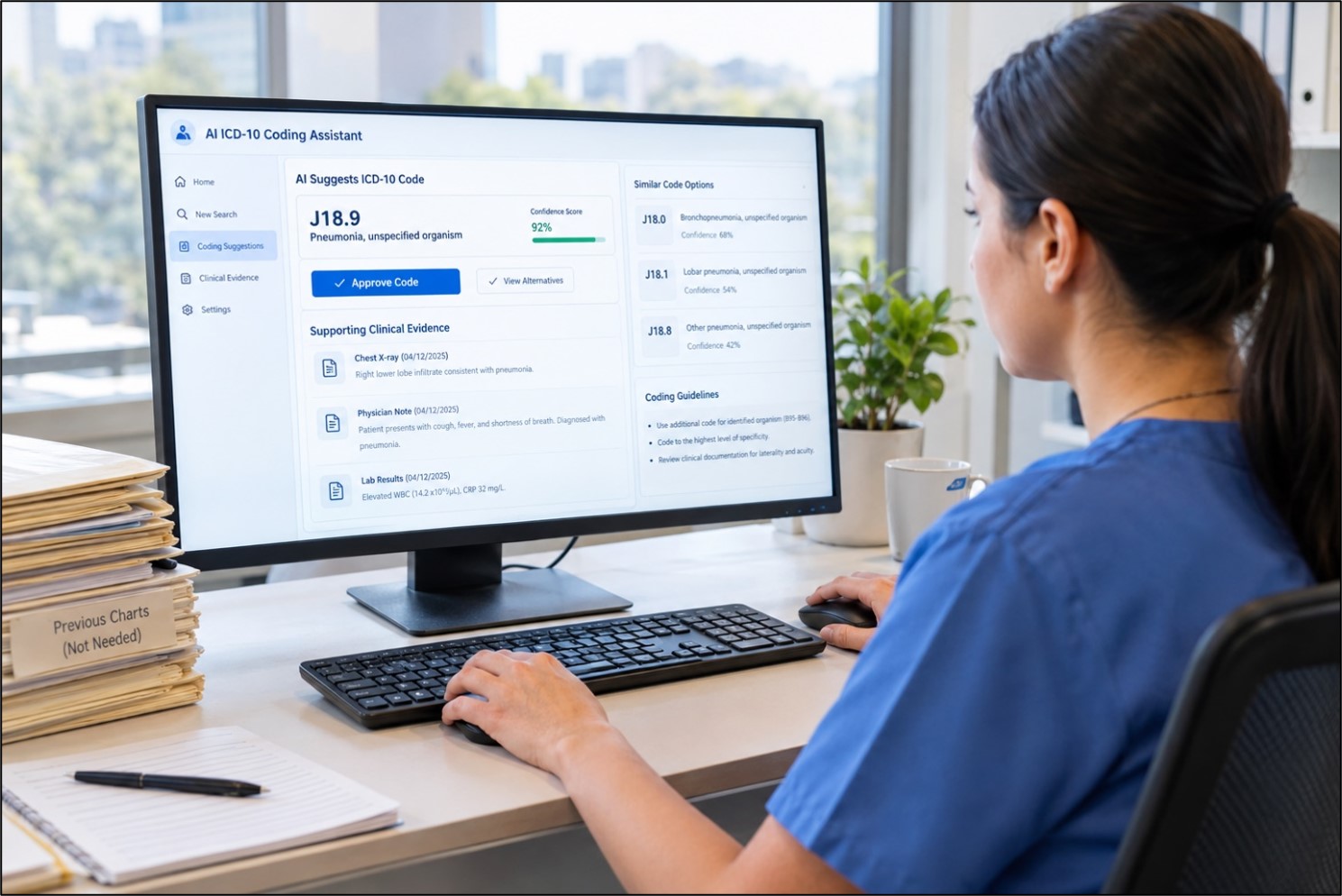
Automated systems review clinical documentation instantly during the note-creation phase. By flagging contradictions or missing compliance details before a chart is locked, the software prevents billing rejections and keeps quality metrics accurate.
Basic add-on tools only record or transcribe text without understanding the complex rules behind federal scoring models. They cannot cross-reference data points across multiple visits to ensure that functional improvements are being tracked accurately.
Yes, the platform continuously analyzes patient data to spot subtle signs of physical decline or medication errors. This allows the clinical team to intervene early with extra visits, keeping high-risk patients safe at home and out of the emergency room.
.svg)


.png)