NEW: AutoMynd Unveils Patient-Centered AI EMR, Automating Episodes From Referral to Reimbursement Read more →
.svg)
.svg)
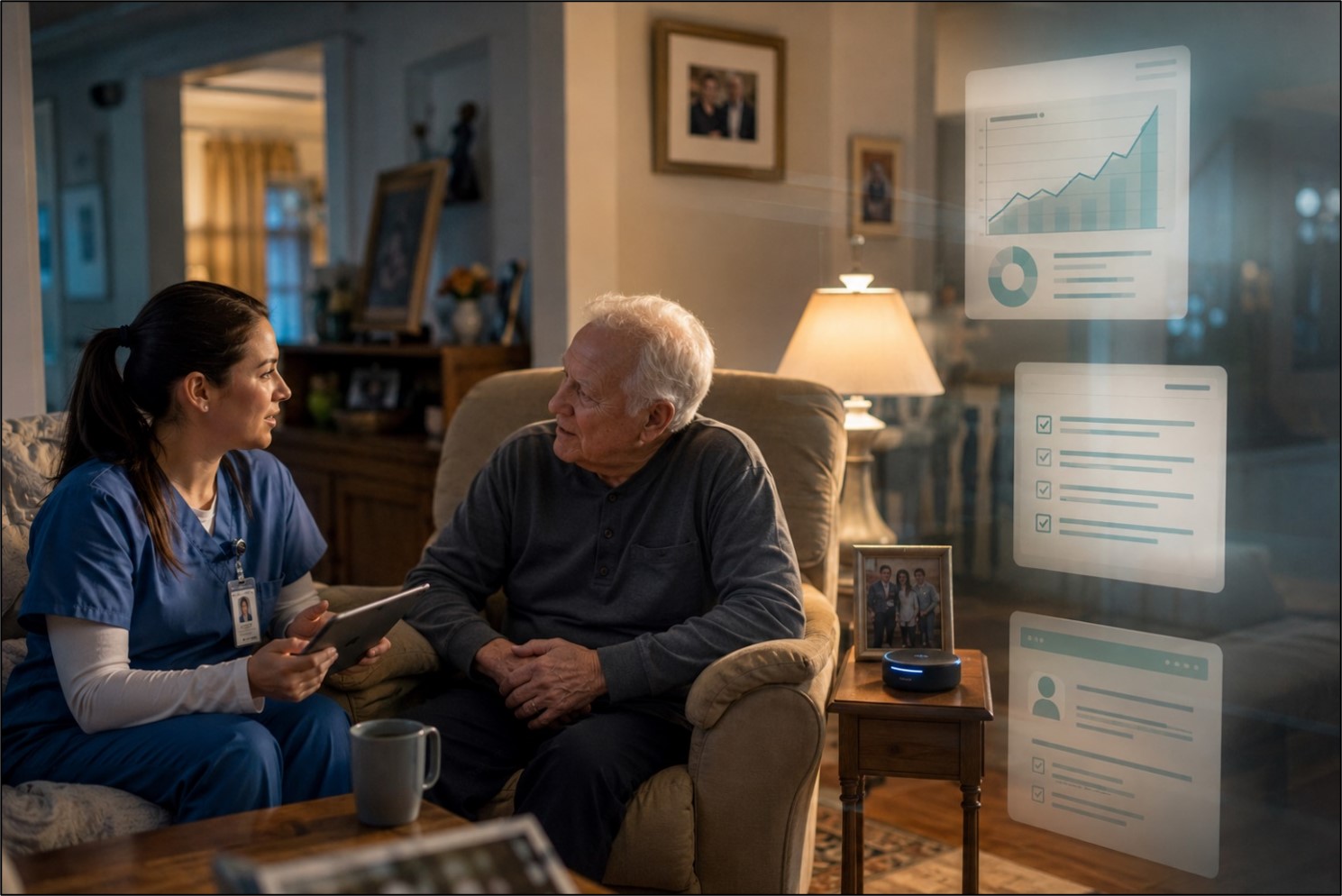
Ambient AI walked into home health wearing a scribe costume. Capture the visit, draft the note, save the nurse an hour. That pitch is true, and it’s the least interesting thing about the technology.
Here’s what I mean. Once the encounter itself is captured, structured, and connected to the patient record, you’re no longer limited to writing notes faster. You’ve changed what the agency knows and when it knows it.
Traditional QA reviews a chart days after the visit and checks whether the documentation is internally consistent. Ambient capture makes a better question possible: is the documentation consistent with what actually happened in the home?
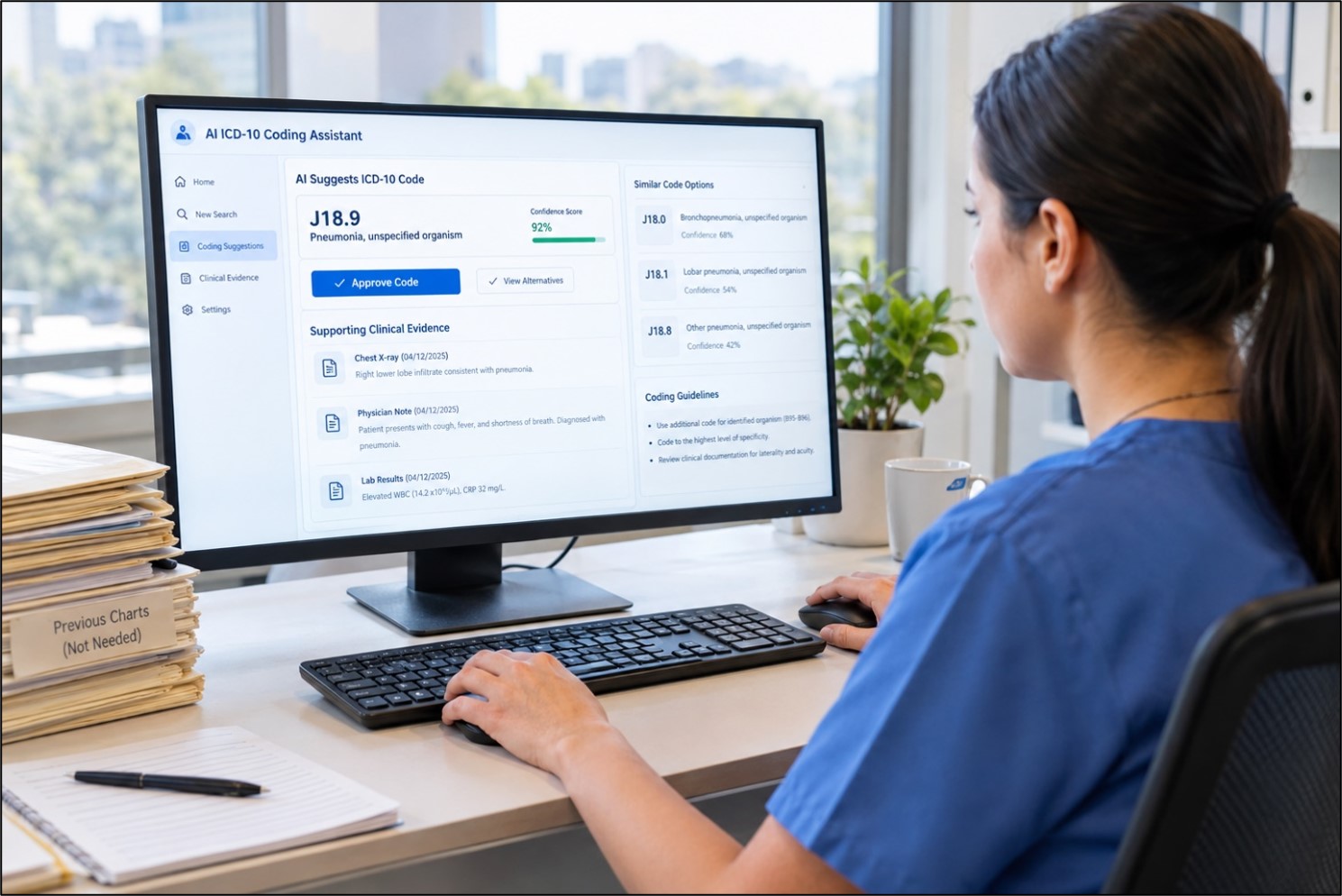
Our QAgent runs exactly that comparison. Deterministic rules check the authoritative logic, and AI analysis reads the narrative against the transcript and the record, flagging discrepancies with verbatim evidence quotes and confidence scoring. Nothing hard-blocks a clinician; everything arrives as a reviewable flag with its evidence attached. The chart gets validated while it’s still open, not after the claim is queued.
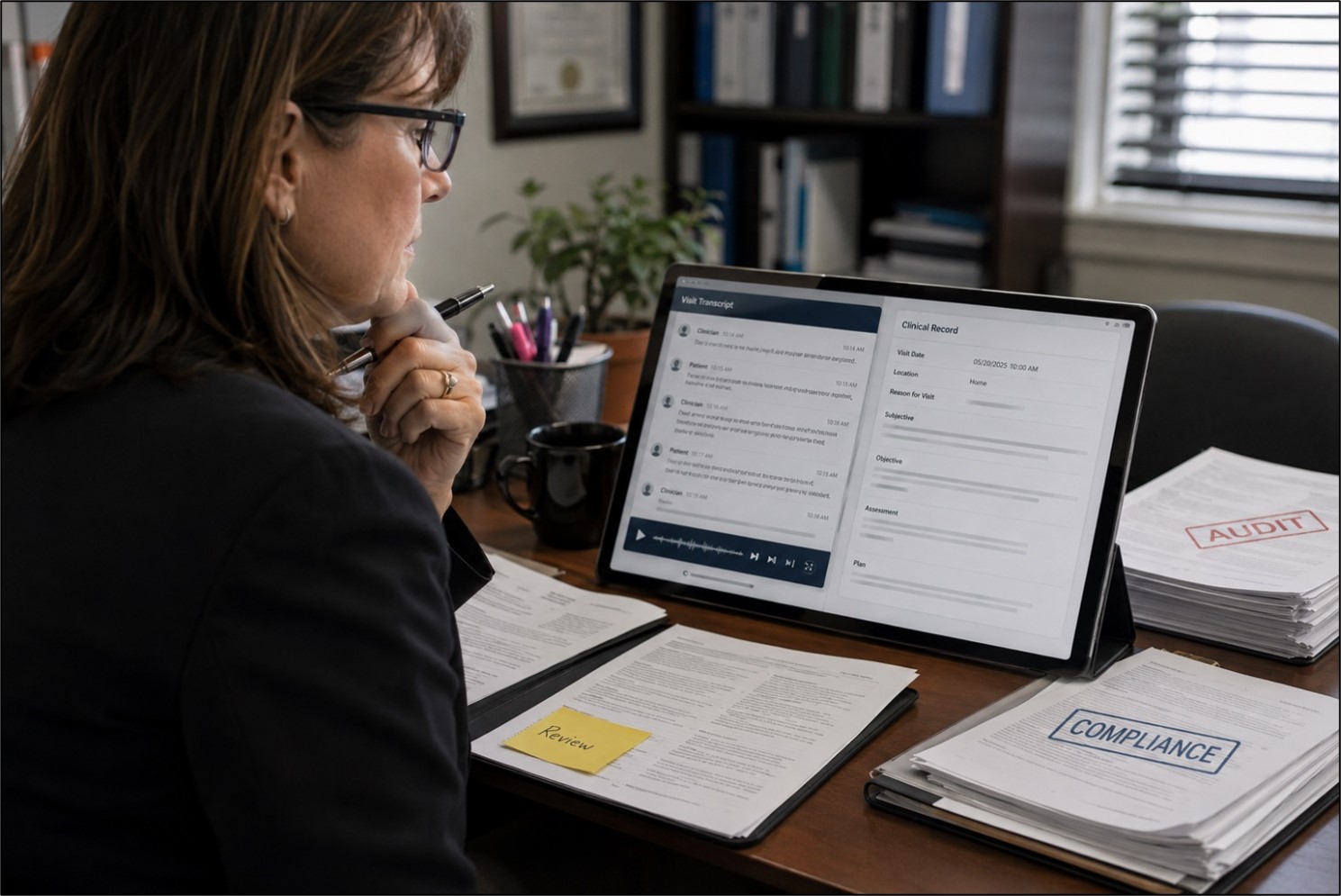
As CMS scrutiny of home health and hospice has intensified, the compliance value of encounter capture has become much clearer. A transcript is supporting evidence that a visit was real, appropriate, and covered what the assessment claims. In the six states under expanded pre- and post-claim review, and for any hospice preparing for nationwide site visits, that evidence chain is worth more than any efficiency statistic.
A care plan built from a reconstructed note inherits everything the clinician forgot between the driveway and the keyboard. A care plan grounded in the actual encounter catches the offhand comment about dizziness, the caregiver’s question about the new medication, the thing the patient said once and never repeated. Between visits, patient engagement through Patient360 keeps that thread alive: medication logging, vitals, visit confirmation. The record stops being a snapshot and starts being a story.
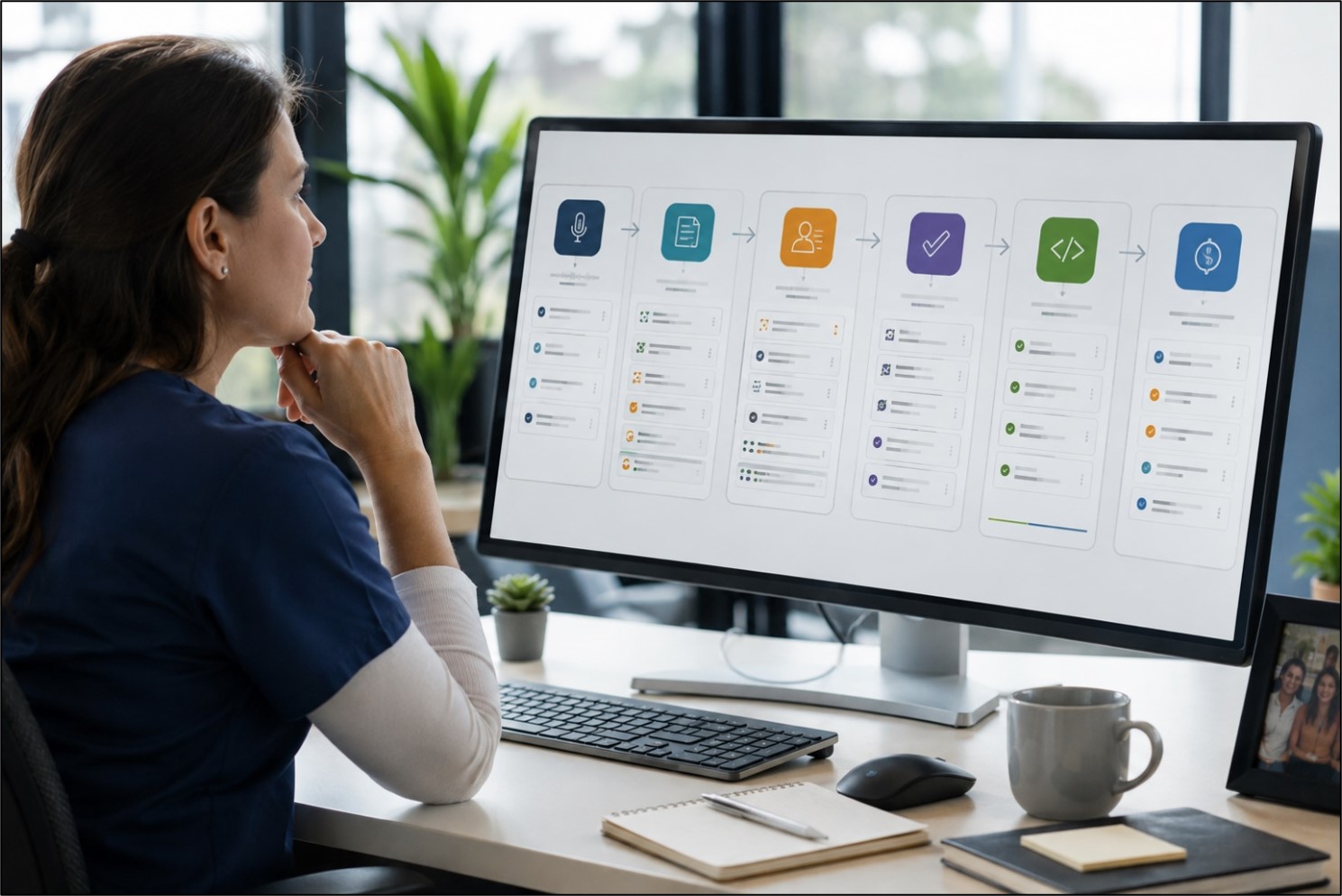
None of this works if the ambient layer is a standalone app. The capture, the assessment, the QA, the coding, and the claim have to live in one environment, or you’re exporting your evidence chain across vendor boundaries and hoping nothing falls in the gaps. It’s the difference between a system of record with a microphone and a system of action.
It’s not just the documentation that’s evolving. It’s what an agency can see, prove, and act on. Home-based healthcare is having its moment, and ambient AI is a bigger part of it than the scribe pitch suggests.
See the wider version in practice at automynd.com.
.svg)


.png)