NEW: AutoMynd Unveils Patient-Centered AI EMR, Automating Episodes From Referral to Reimbursement Read more →
.svg)
.svg)
When people ask where AI fits in skilled home health, they usually expect one answer the scribe, the note-taker. That's the part everyone talks about.
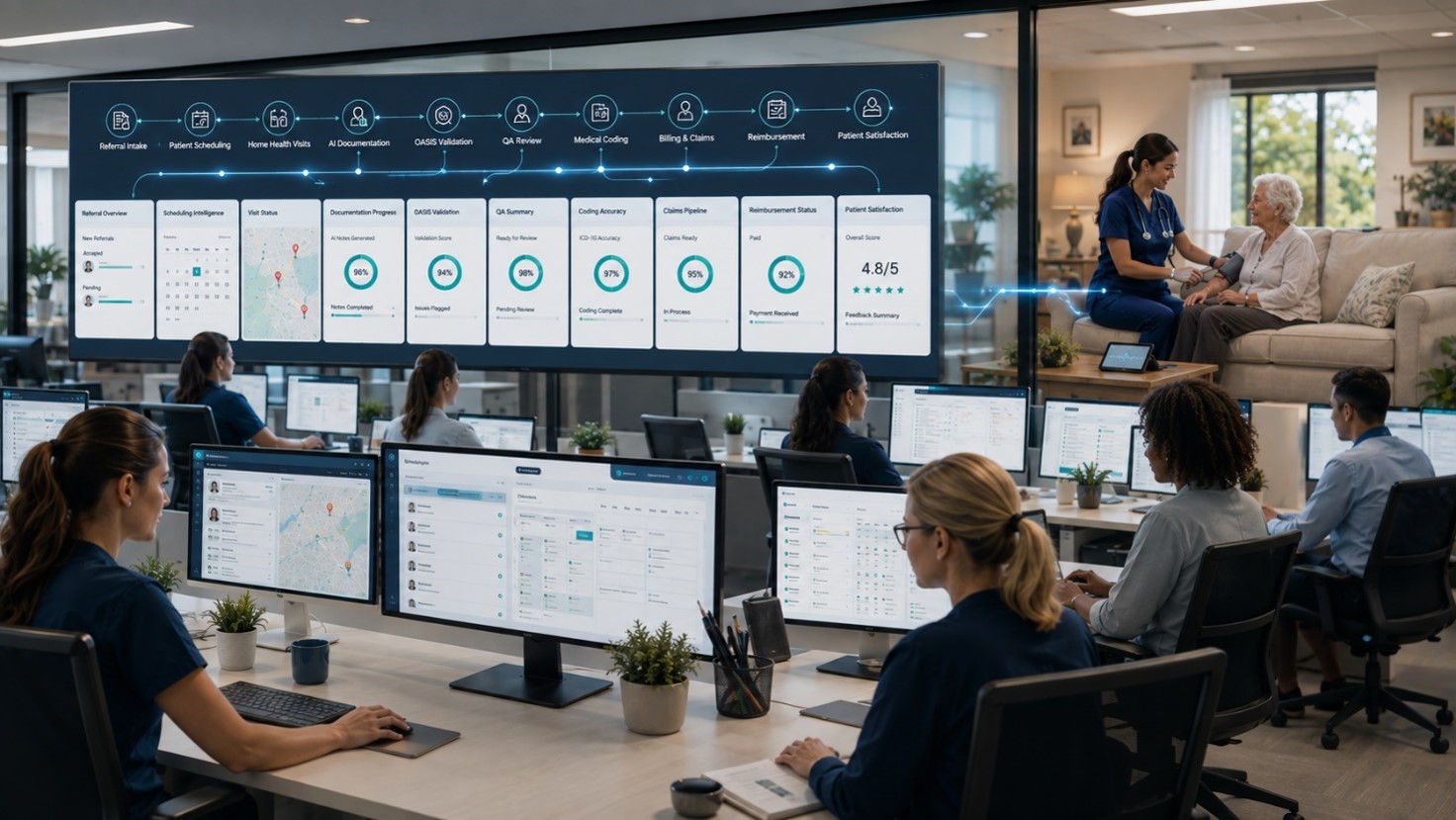
But documentation is just one stop. The more interesting story is that AI is now doing real work at every step of the workflow, from the referral coming in to the claim going out. Not as a pile of disconnected features as a single layer running underneath the whole episode.
Here's the honest map of where it's actually working.
The episode starts with a referral, and referrals are a mess faxes, PDFs, portal dumps, missing pieces.
AI reads the packet on arrival and turns it into a structured admission: diagnoses, orders, insurance, and the gaps that need chasing, all extracted before a coordinator opens it. The work arrives drafted, ranked, and ready to act on.
For a skilled agency, that's how you say yes to more referrals without adding staff, and how you stop losing admits to whoever called the referral source back first.
The next quiet bottleneck is scheduling. Getting the right nurse or therapist to the right patient with the right skills, geography, and timing is a daily puzzle that eats coordinator hours.
AI can build and rebalance the schedule around acuity, proximity, and availability, so the match happens automatically and the day doesn't fall apart when one visit changes. Continuity of care goes up, windshield time goes down.
This is the part everyone knows, and it's still transformative. Ambient AI captures the visit as it happens and structures it into compliant documentation including OASIS so the clinician reviews and signs instead of rebuilding the visit from memory at night.
Better for the clinician's life, and better for accuracy, because the record is built when the encounter is fresh instead of hours later.
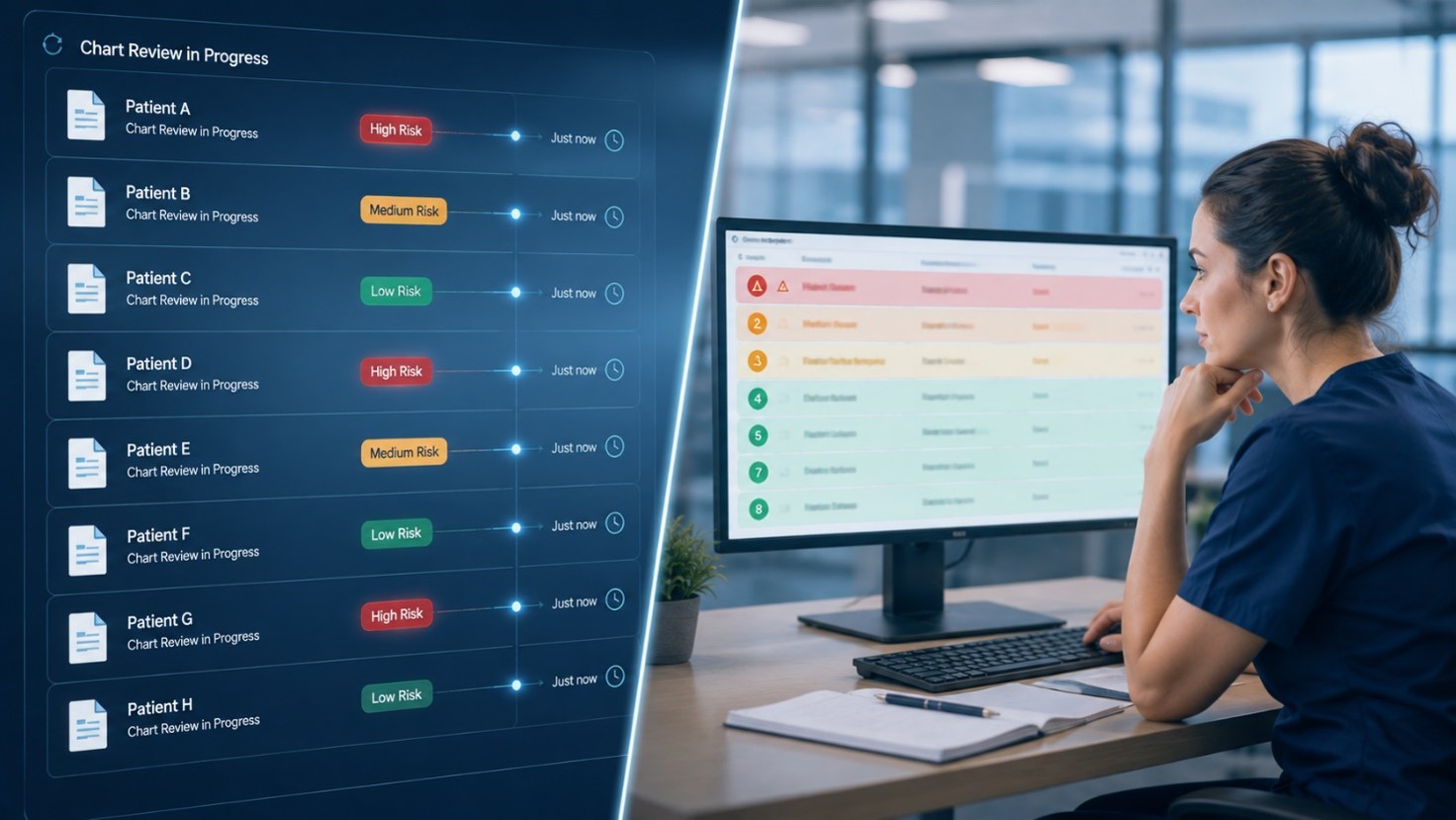
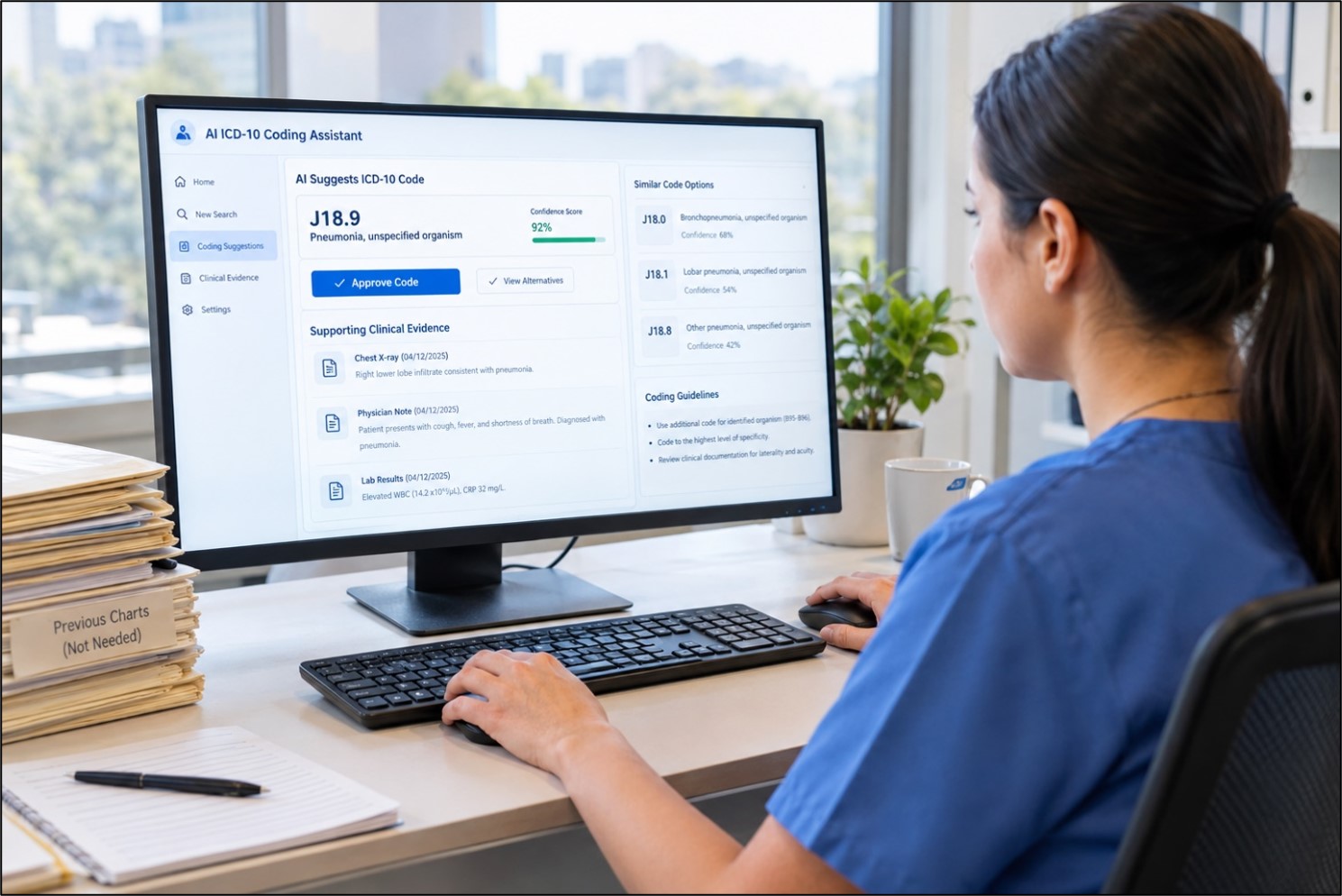
Once documentation exists, AI runs QA and coding continuously instead of as a last-minute gate. Every chart gets checked, not a sample. Issues surface the moment a note is submitted, ranked by dollars at risk. OASIS accuracy and PDGM coding get flagged while there's still time to fix them and before they become an ADR or a denial.
The rules that must be exact stay deterministic. The judgment calls get AI analysis with the evidence attached. Humans stay in charge of the decisions.
At the end, AI helps the claim go out clean and stay clean validating documentation and coding against requirements, catching the things that trigger denials before submission, and flagging underpayments and variances on the way back.
Because the AI saw the whole episode, it isn't guessing at the end. It's carrying forward everything it already knows.
Any one of these could be a standalone product and plenty of vendors sell them that way. But a scribe that doesn't talk to your QA, an intake tool that doesn't feed your billing, a schedule that doesn't know your acuity: those are still five islands with a human rowing between them.
The shift happens when it's all one layer. When AI sees the episode from referral to reimbursement to patient satisfaction, each step makes the next one smarter. That's a system of action, not a system of record.
Which of these are already on your agency's roadmap and which one would move your margin the most this quarter?
That's the conversation we're having with the home health community, and it's the system we're building for it.
See how AutoMynd runs AI across the full skilled home health workflow.
.svg)


.png)