NEW: AutoMynd Unveils Patient-Centered AI EMR, Automating Episodes From Referral to Reimbursement Read more →
.svg)
.svg)
.png)
Hospice organizations have long recognized hope as a critical dimension of end-of-life care. It influences symptom tolerance, family dynamics, spiritual well-being, and even care decisions. Yet in most agencies, hope assessment remains confined to documentation — recorded in the EHR, reviewed intermittently, and rarely operationalized.
At a time when healthcare is rapidly adopting AI in healthcare, predictive analytics, clinical documentation optimization, and workflow automation, hospice cannot afford to treat psychosocial data as passive information.
The future is not better documentation.
The future is an Intelligent System of Action.
Most hospice technology stacks function as systems of record:
· Clinical documentation stored in the EHR
· Assessment scores archived for compliance
· Psychosocial notes buried in narrative fields
· Care plans updated periodically
· Billing and revenue cycle management processes triggered downstream
This model supports regulatory requirements. It supports medical billing, medical coding, and survey readiness. It ensures claims flow through the revenue cycle.
But it does not ensure action.
When a patient’s hope score declines, what happens?
· Is the interdisciplinary team alerted automatically?
· Is spiritual care prioritized?
· Does social work receive triggered tasks?
· Is caregiver distress flagged for intervention?
· Does risk scoring updates in real time?
In most cases, the answer is no. The signal exists — but the system does not respond.
Hope is not a soft metric. It is a leading indicator of:
· Spiritual distress
· Depression escalation
· Family conflict
· Disengagement from care
· Complicated grief risk
· Crisis-driven transitions
From an operational perspective, unmanaged psychosocial deterioration can lead to:
· Increased after-hours calls
· Emergency department transfers
· Care plan instability
· Lower CAHPS scores
· Staff burnout
· Revenue cycle disruption
Hospice executives already track clinical KPIs, value-based care metrics, and operational performance dashboards. The next evolution is incorporating psychosocial signals like hope into predictive risk frameworks.
That requires moving from documentation to orchestration.
A System of Action does three things:
1. Interprets data
2. Prioritizes risk
3. Activates workflow
In practical terms, this means:
· Hope assessment trends trigger automated alerts
· AI-powered risk scoring updates patient priority tiers
· Workflow automation assigns tasks to the right clinician
· Interdisciplinary team rounds are dynamically informed
· Leadership dashboards reflect real-time psychosocial health
This is the same transformation happening across healthcare:
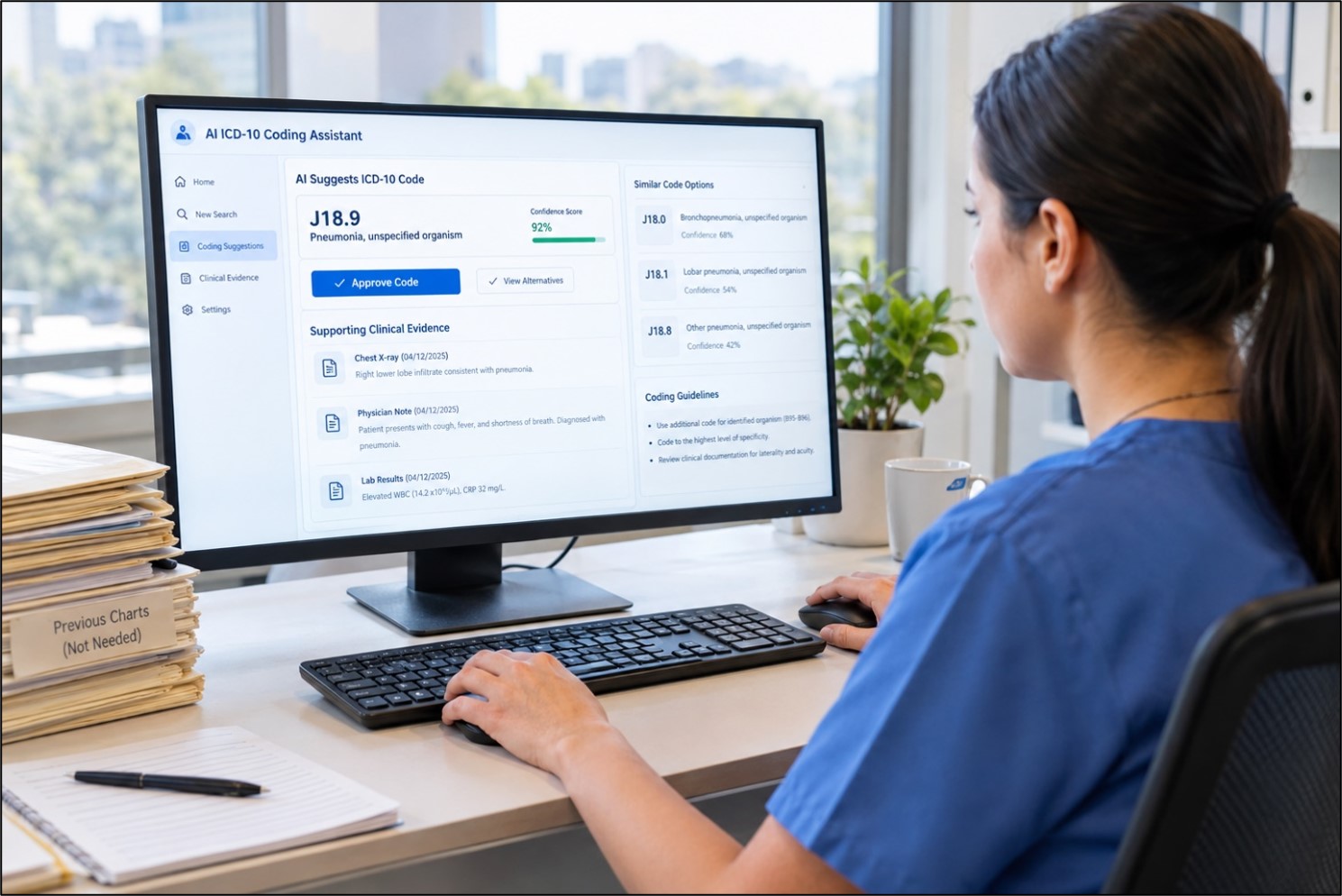
· AI-driven medical coding
· Intelligent revenue cycle management
· Automated prior authorization
· Predictive analytics for readmission prevention
· AI agents optimizing clinical documentation
Hospice should apply the same intelligence layer to psychosocial care.
Hospice organizations have invested heavily in:
· EHR optimization
· Clinical documentation improvement (CDI)
· Compliance-focused workflows
· Billing automation
· Coding accuracy
These investments improve operational efficiency and reimbursement integrity. However, they do not necessarily improve patient experience in real time.
Hope scores are often:
· Entered during admission
· Updated at recertification
· Not trended meaningfully
· Not integrated into automated care pathways
In an era of AI automation and healthcare AI agents, static documentation represents an opportunity cost.
If we can use AI to:
· Automate claims scrubbing
· Improve medical billing accuracy
· Detect coding anomalies
· Optimize revenue cycle performance
Why aren’t we using similar intelligence to detect psychosocial deterioration?
To transform hope assessment into a System of Action, hospice leaders should focus on five pillars:
I hope assessments must be standardized and consistently scored. Free text narratives limit downstream automation. Structured scoring enables:
· Trend analysis
· Predictive modeling
· Risk stratification
· Integration with broader AI healthcare systems
Declines in hope should generate system-level awareness, not just chart entries.
Modern AI systems can:
· Detect negative score trajectories
· Compare patient-level patterns against historical cohorts
· Identify compounding risk factors (pain + caregiver stress + low hope)
This mirrors how predictive analytics are used in hospital readmission models and value-based care frameworks.
A System of Action connects signal to response:
· Auto-escalation to social work
· Triggered spiritual care consult
· Caregiver outreach tasks
· IDT agenda prioritization
· Leadership dashboard flagging
This is not additional work — it is smarter work distribution.
Interventions should feed back into the system:
· Did the hope score improve?
· Did call volume decrease?
· Did caregiver satisfaction stabilize?
This creates measurable ROI — similar to tracking performance gains in AI-powered revenue cycle management or coding automation.
C-suite leaders need visibility into psychosocial risk trends at the population level:
· Geographic patterns
· Team performance variation
· Staffing implications
· Correlation with hospitalization rates
· Impact on reimbursement stability
Hope becomes not just a clinical metric — but a strategic one.
For CEOs, COOs, CIOs, and Clinical Directors, the shift to a System of Action has implications across:
· Stronger defensibility of psychosocial care
· Improved survey readiness
· Enhanced alignment with CMS Conditions of Participation
· Reduced crisis-related costs
· Stabilized length of stay
· Improved caregiver satisfaction scores
· Better alignment with value-based reimbursement models
· Reduced cliniciancognitive load
· Smarter taskdistribution
· Early burnout signaldetection
· Increasedinterdisciplinary coordination
· Demonstrable whole-person care maturity
· Data-driven referral conversations
· Competitive advantage in integrated delivery networks
In competitive hospice markets, sophistication matters. Referral partners increasingly expect measurable, data-backed care models.
Hope assessment does not need to remain in a checkbox exercise.
It can become:
· A predictive signal
· A triage input
· A staffing guide
· A quality improvement lever
· A financial stability factor
The infrastructure for intelligent automation already exists in healthcare — from AI coding engines to revenue cycle AI platforms. Hospice leaders now have the opportunity to apply the same intelligence to psychosocial care.
The transformation does not begin with replacing the EHR.
It begins with layering intelligence on top of It.
When hope assessment moves from documentation to orchestration, hospice evolves from recording care to activating it.
And that is the difference between a system that stores information — and a true Intelligent System of Action.
.svg)


.png)