NEW: AutoMynd Unveils Patient-Centered AI EMR, Automating Episodes From Referral to Reimbursement Read more →
.svg)
.svg)

Fully autonomous AI coding for PDGM is often marketed as inevitable, but in practice it remains unrealistic. PDGM reimbursement depends on clinical nuance across OASIS responses, diagnoses, functional scores, and narrative consistency. Traditional OASIS scrubbing tools only catch surface level errors and checklist issues. They do not address the deeper clinical and coding discrepancies that drive denials, rebills, and audit risk.
In today’s reality, an experienced home health coder spends an average of 45 minutes per chart reviewing clinical narratives, plans of care, assessments, diagnoses, and supporting documentation. This manual effort exists because accuracy requires context, not just rules. The opportunity for AI is not to replace coders, but to remove the cognitive overload that slows them down.
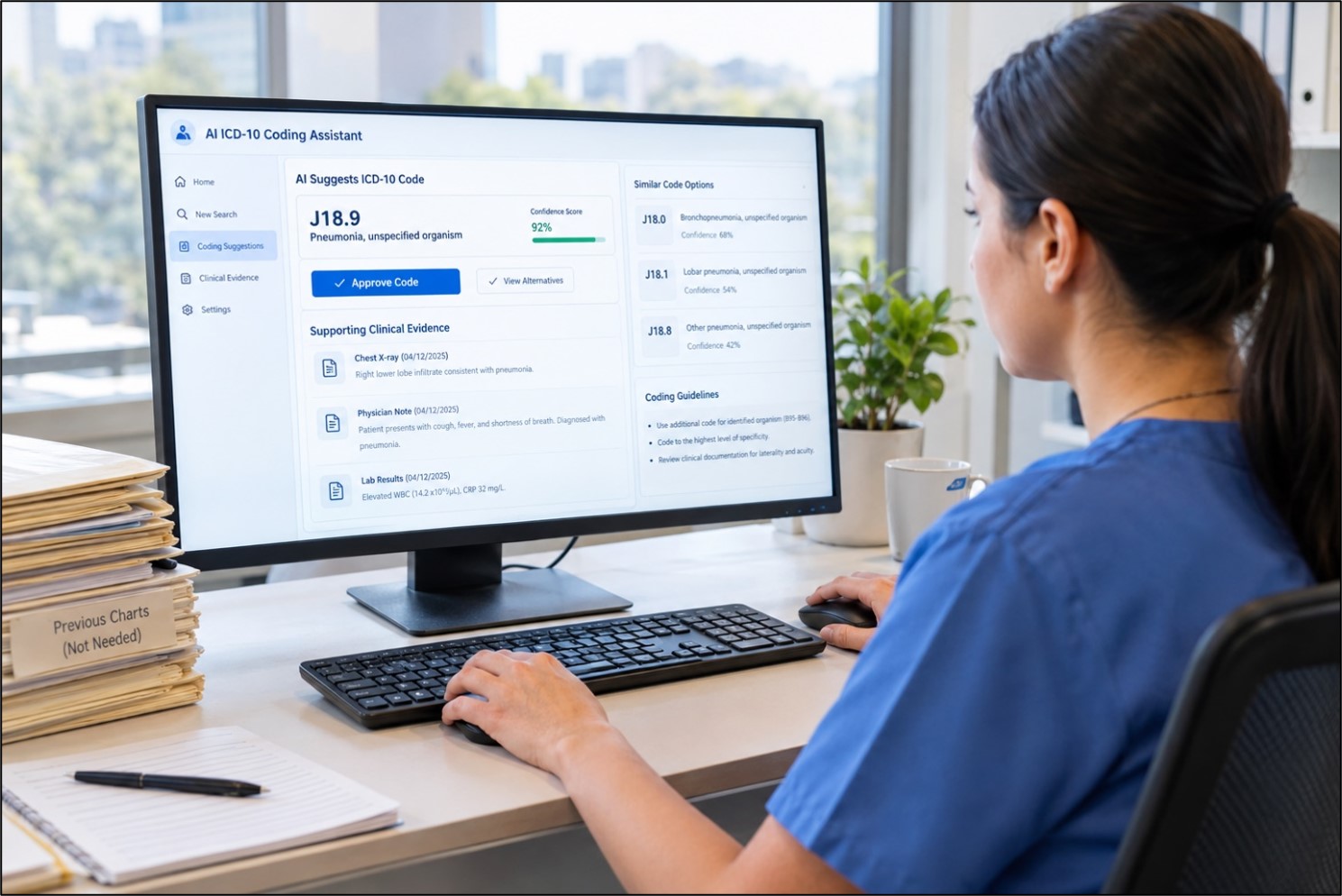
AutoMynd’s QAgent was built with this principle in mind. Rather than claiming autonomous coding, QAgent applies an agentic AI layer that operates as a pre QA intelligence pipeline. Before a chart reaches clinical QA or coding review, it passes through multiple validation engines designed for home health and hospice workflows.
QAgent flags inconsistencies across OASIS responses, diagnoses, functional scores, and narrative documentation. It recommends diagnoses with clinical justification, surfaces missing or conflicting evidence, and highlights areas of reimbursement and compliance risk. Automated chart review focuses human coders on decision-making rather than document hunting.
The result is faster chart turnaround, higher coding accuracy, and reduced variability across QA teams.
.svg)


.png)